METALLIC PEN
A capillary ink distributer in 1856 — Waterman's feed idea, thirty years early
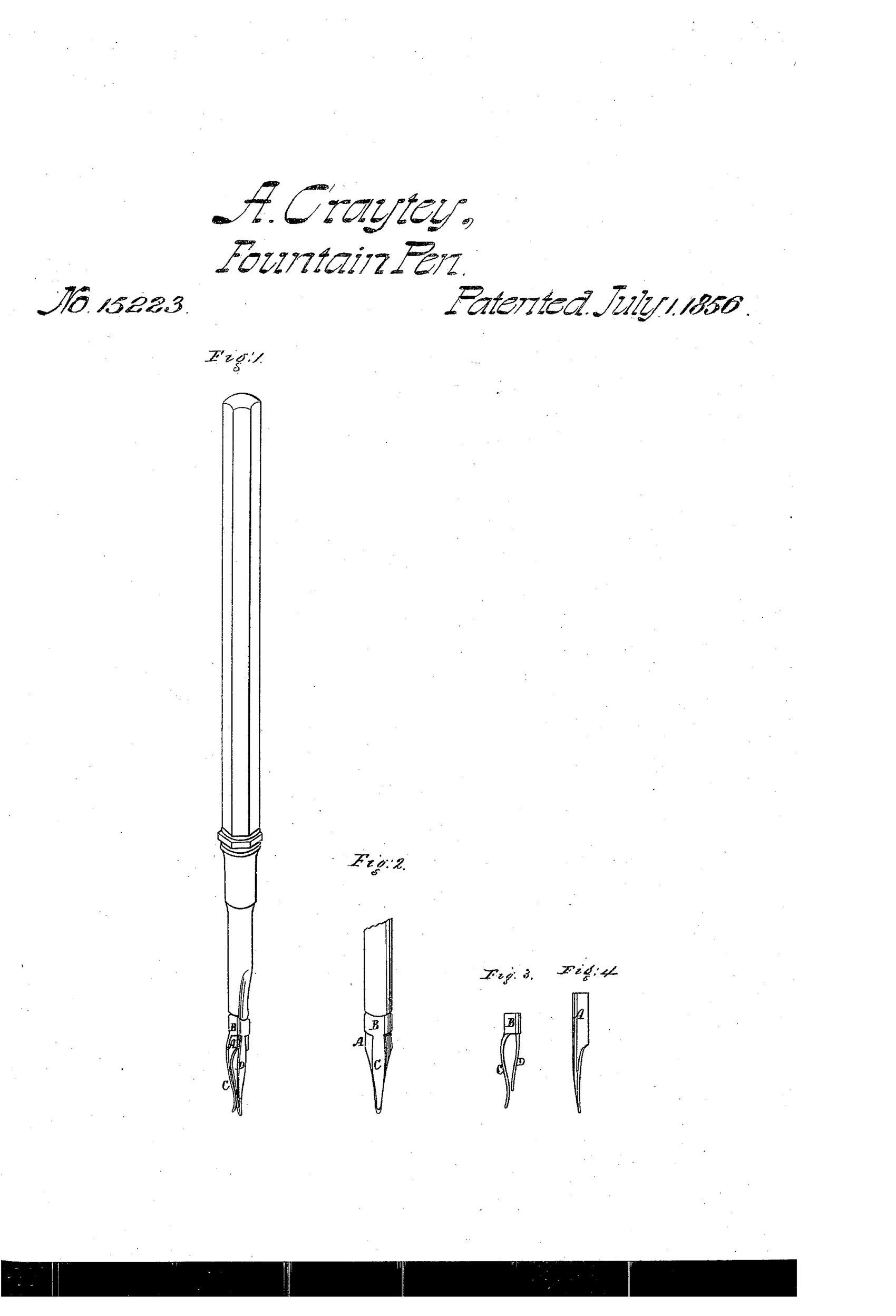
A metallic pen with slide-on point protector
✒ How it works
A collar or slide (B) fits over the shank of a metallic pen (A) and carries two metal tongues, C and D. Tongue C covers the back of the pen and extends slightly past its point, with its tip bent back out of the way of writing, so that it shields the nib from bending or breaking if the pen is dropped. Tongue D sits on the front or inside of the pen and acts as an ink distributer, using capillary action to draw excess ink from the pen points and protector, preventing blotting. The inventor explicitly states neither tongue functions as a spring or stiffener for the pen point.
✒ What was claimed
“The pen point protector C, and ink distributer, in combination with metallic pens substantially as hereinbefore set forth.”
In plain English: The claimed invention is the combination of a pen point protector (C) and an ink distributer attached to a metallic pen, as described.
✒ In the inventor’s words
“Its greater length receives the force of the fall, and by its bent up end acts in conjunction with the point of the pen as a crotch or fork to steady the point of the pen and thereby save it from damage or destruction as is almost universally the case with all diamond pointed pens when falling upon their points.”— Alphonso Craytey, from the specification
Fate unknown
The device is cheap enough to have been made, but no marked example or maker's advertisement is documented; a surviving collar or trade listing would settle it.
✒ Commentary
This is filed as a nib protector, and the protector is the part Craytey clearly cared about: tongue C rides behind the pen point, extends past it with a bent-back tip, and catches the impact when the pen drops nose-first — his own words say diamond-pointed pens were 'almost universally' ruined that way. Fair enough. Steel and iridium-tipped nibs were expensive consumables, and a slide-on collar that saves the point pays for itself.
But the quiet star is tongue D, the 'ink distributer.' It sits against the underside of the nib and uses capillary action to pull excess ink away from the point, preventing blots. That is, functionally, a feed — or half of one. Waterman's 1884 breakthrough was managing the ink-air exchange with capillary channels; Craytey, twenty-eight years earlier, has grasped that a thin metal tongue held close to the nib will regulate ink by capillarity. He isn't feeding from a reservoir, so he never confronts the air-exchange problem, but the physics is the same and he names it correctly in the specification.
Note too what he disclaims: neither tongue is a spring or stiffener. He's fencing his claim off from the crowded field of nib-spring patents, which tells you he knew that literature. A modest accessory patent, but one that shows the capillary idea circulating decades before anyone made it carry a pen.
Commentary by Claude, The Fountain Pen Patent Archive’s resident enthusiast