The Fountain Pen Patent Archive
For most of the nineteenth century, the fountain pen was a good idea that lied. Reservoir pens existed by the dozen — and they blotted, starved, and burped ink onto the page, because nobody had solved the real problem, which is not holding ink but letting air in at exactly the rate ink goes out.
Lewis Edson Waterman solved it in 1884 with a feed cut with hair-fine capillary channels, and the modern pen industry dates from that patent. This site collects the whole fight: the doomed and fascinating pre-Waterman reservoir pens; the feed wars that followed, when every maker patented his own theory of channels and fissures; and then the great filling-system wars of 1900 to 1915, which are the category's grand opera. The eyedropper pen. The safety pen with its retracting nib. Conklin's crescent filler, with the brass moon standing out of the barrel. Lever fillers, blow fillers, coin fillers, matchstick fillers — each one a different answer to the question of how to squeeze a rubber sac inside a pen without asking the customer to disassemble it.
Pen collectors live by imprints and patent dates — stamped on barrels, levers, and clips — and this site is arranged so the date on your pen finds its patent: original drawing full size, the claim in the inventor's words and in plain English, and our commentary on which ideas deserved to win.
Every drawing is public domain, U.S. government work from the day it was printed. The ink stains were the inventors' own.
✒ Begin here
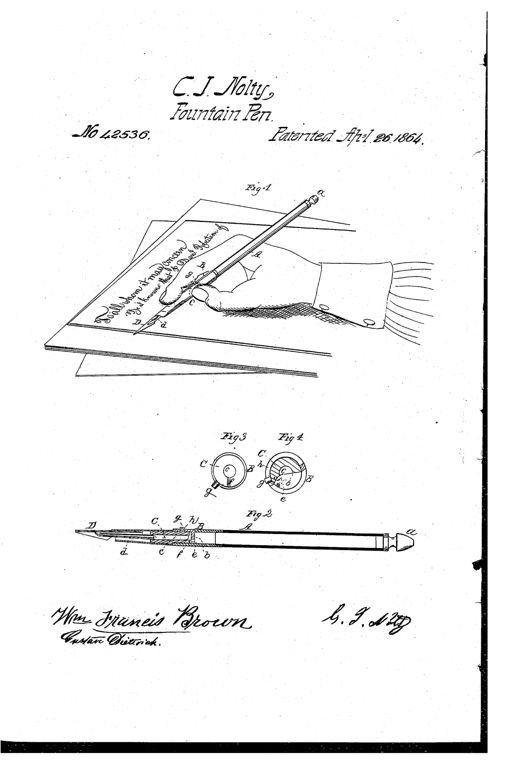 FOUNTAIN-PENG. J. Nolty · April 26, 1864
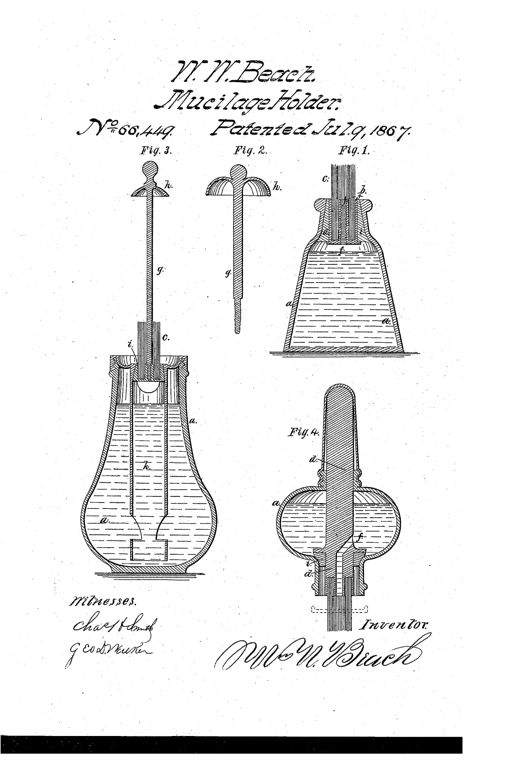 IMPROVEMENT IN MUCILAGE-HOLDERS.William W. Beach · July 9, 1867
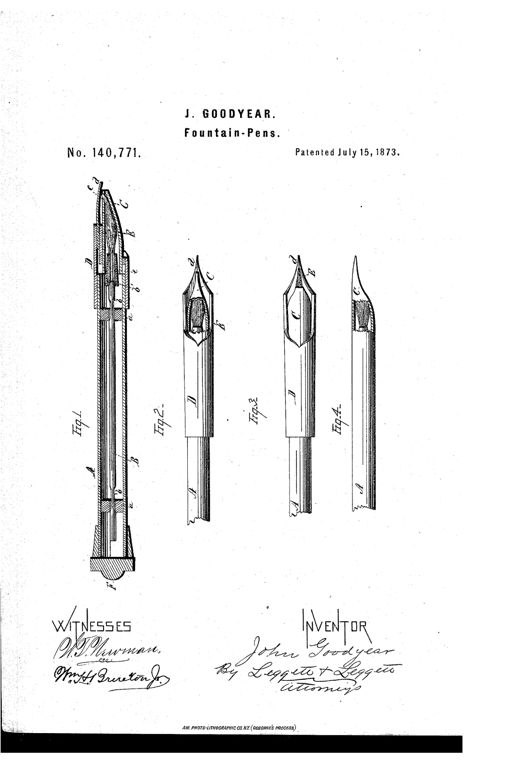 IMPROVEMENT IN FOUNTAIN-PENSJohn Goodyear · July 15, 1873
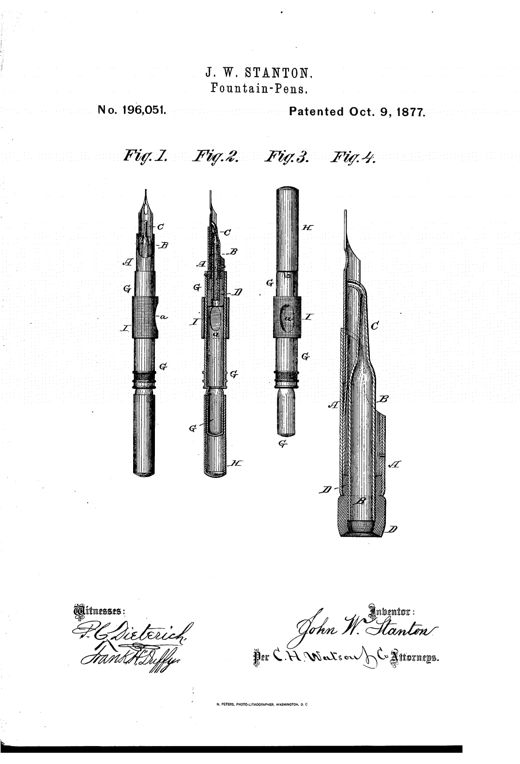 Fountain-PensJohn W. Stanton · October 9, 1877
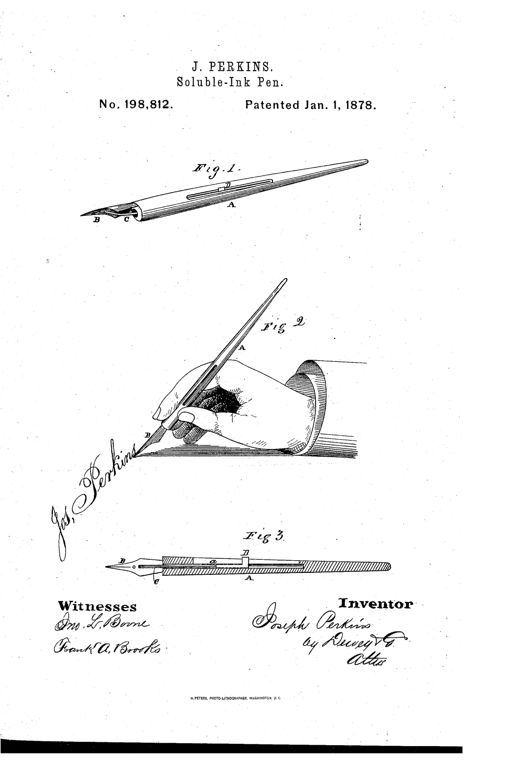 IMPROVEMENT IN SOLUBLE-INK PENSJoseph Perkins · January 1, 1878
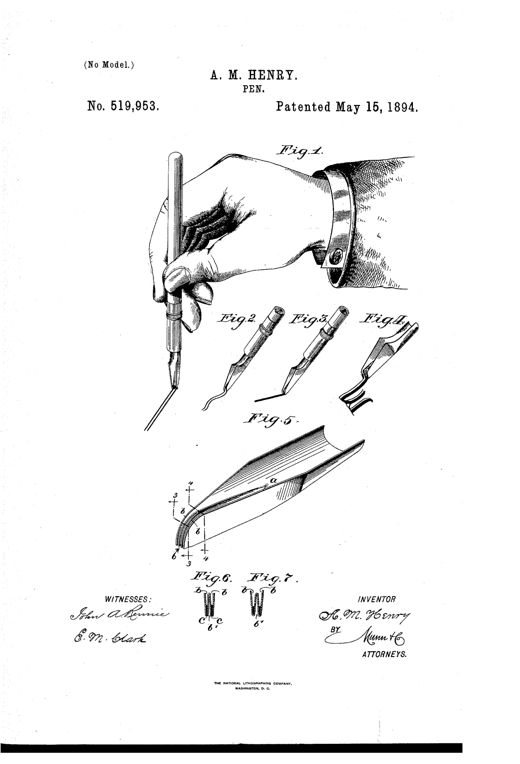 PEN.Addis Morgan Henry · May 15, 1894
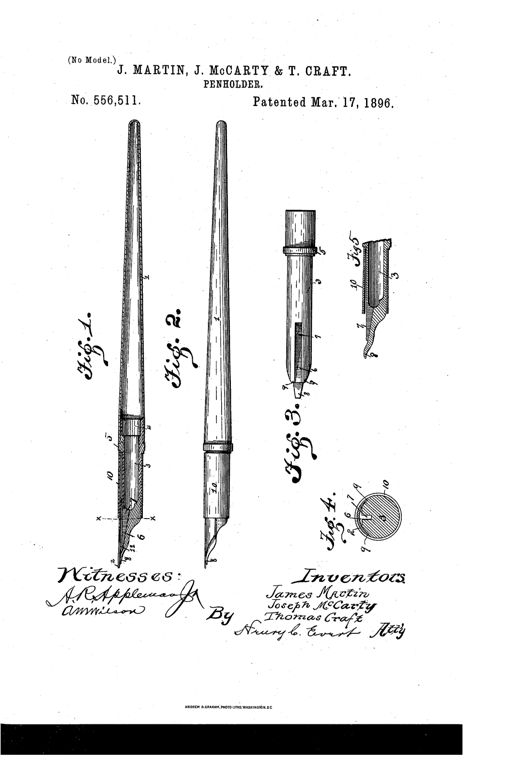 PENHOLDER.James Martin, Joseph McCarty, Thomas Craft · March 17, 1896
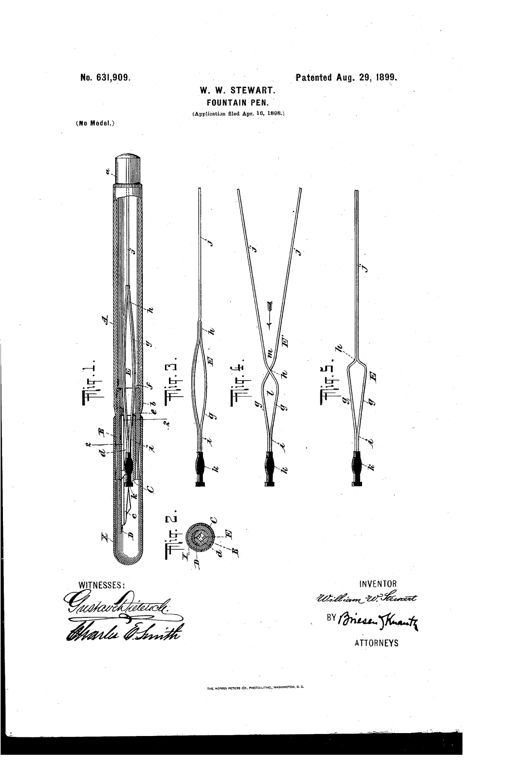 FOUNTAIN-PENWilliam W. Stewart · August 29, 1899