IMPROVEMENT IN MUCILAGE-HOLDERS.
A glue brush that hides inside its own bottle, upside down, 1867
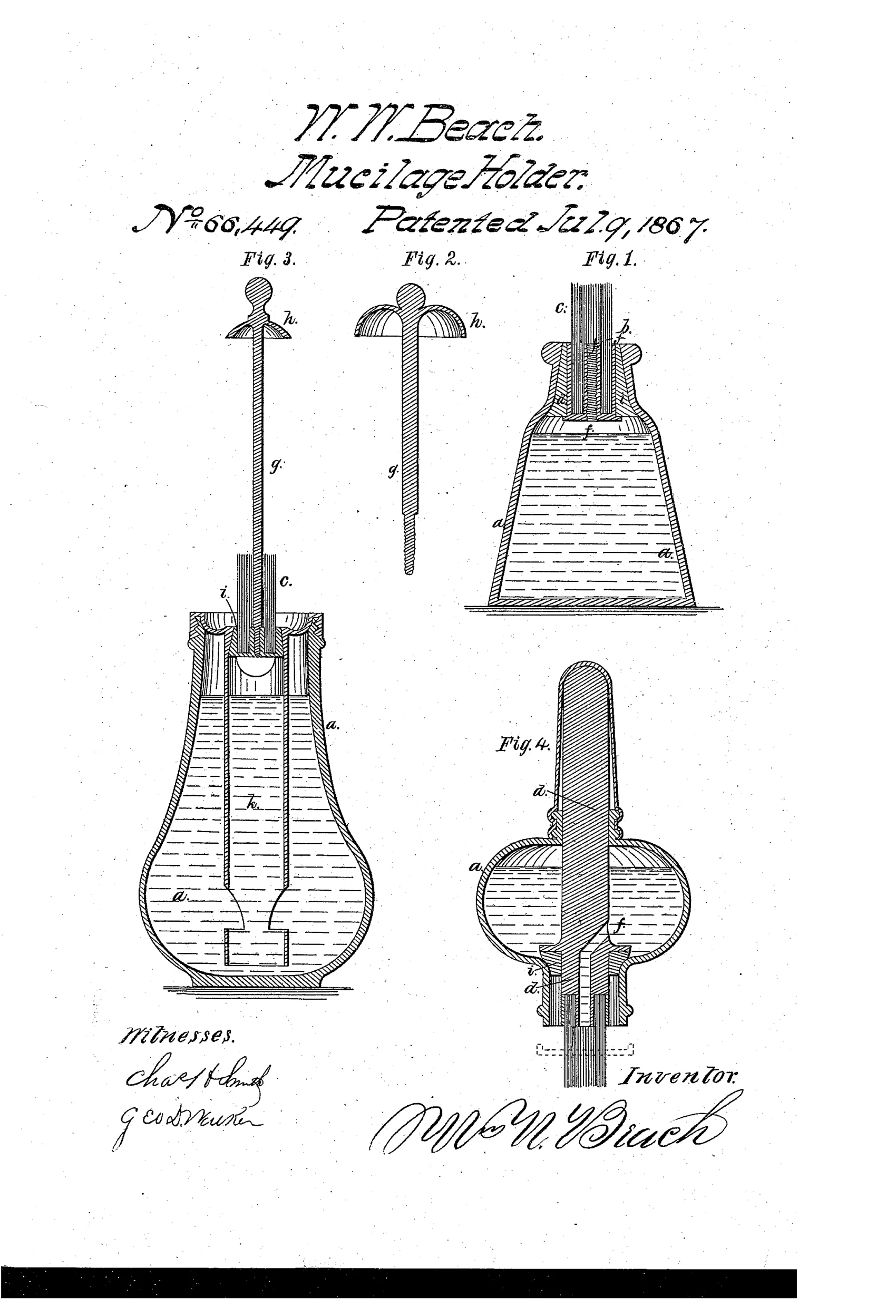
Combined mucilage bottle and retractable brush
✒ How it works
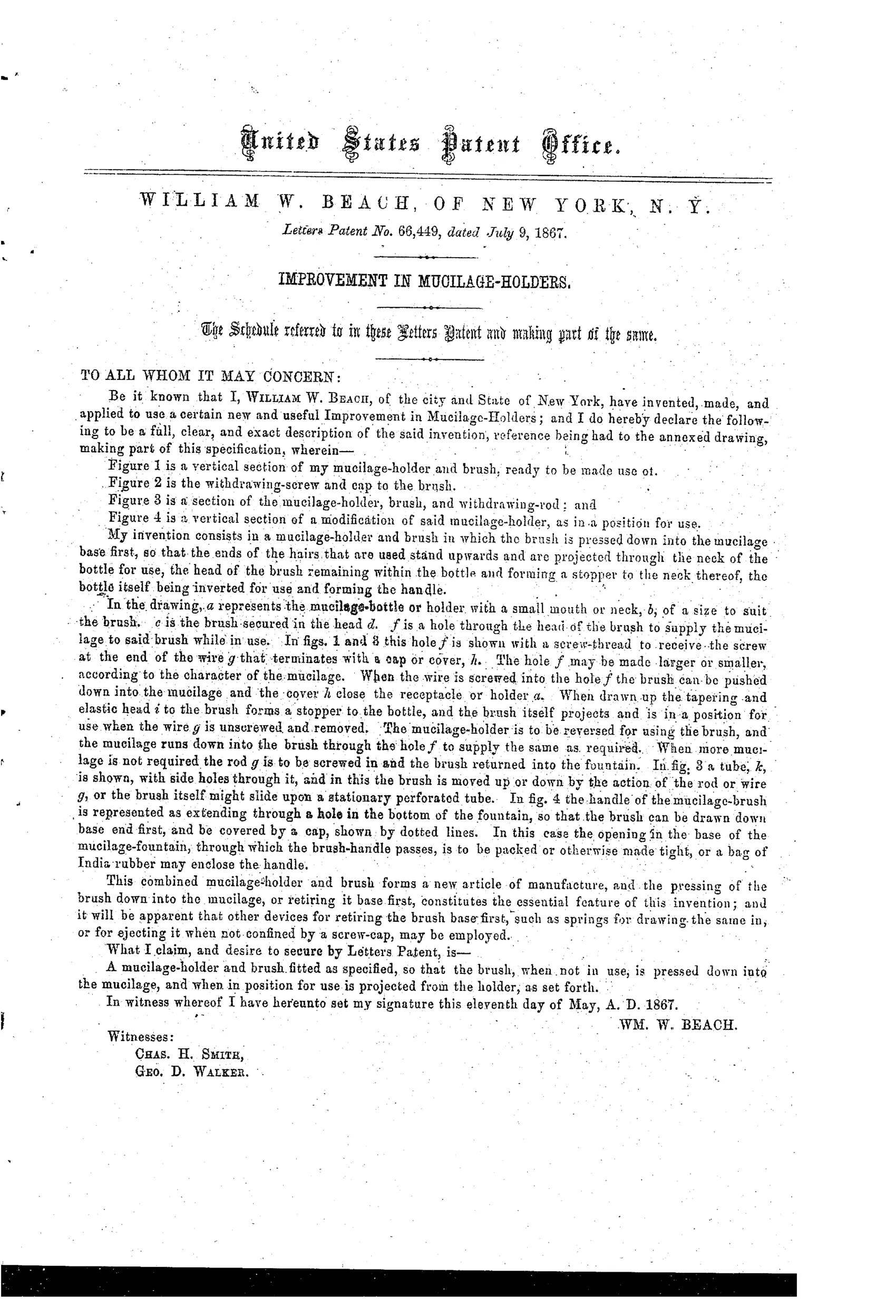
The brush is mounted base-first on a rod so that when not in use it presses down into the mucilage inside an inverted bottle, with its elastic head forming a stopper in the neck. A wire or rod threaded through a hole in the brush head allows the user to draw the brush upward, projecting the bristle tips through the bottle's neck for use, while the bottle itself serves as the handle. Unscrewing the withdrawal rod lets the brush slide back down into the mucilage supply through the hole, and in one variant a perforated tube guides the brush's up-and-down travel; another modification has the brush handle pass through the bottle's base and be covered by a cap when retracted.
✒ What was claimed
“A mucilage-holder and brush fitted as specified, so that the brush, when not in use, is pressed down into the mucilage, and when in position for use is projected from the holder, as set forth.”
In plain English: The invention claims a mucilage bottle and brush combination where the brush retracts into the mucilage supply when idle and extends out through the neck when needed.
✒ In the inventor’s words
“This combined mucilage-holder and brush forms a new article of manufacture, and the pressing of the brush down into the mucilage, or retiring it base first, constitutes the essential feature of this invention.”— William W. Beach, from the specification
Fate unknown
Self-contained mucilage brushes were a real commercial category, but no example marked to Beach or this patent is documented; a surviving specimen would settle it.
✒ Commentary
This isn't a fountain pen — it's a mucilage bottle, the gummy adhesive that lived on every nineteenth-century desk beside the inkwell. But it belongs in this collection because it's wrestling with the exact problem that would define reservoir pens for the next fifty years: how to keep a wet applicator ready without it drying out, gumming up, or making a mess. Beach's answer is genuinely tidy. The brush lives base-first inside an inverted bottle, submerged in the mucilage, and its elastic head doubles as the stopper sealing the neck.
Look closely at Fig. 3 and you can see the trick: the withdrawing rod (g) threads through the brush head, so pulling it draws the bristle tips out through the neck — and the bottle itself becomes the handle. No separate brush to lose, no crusted bristles, no open jar. Unscrew the rod and the brush slides back into its bath. Fig. 4 shows a squatter variant where the handle passes through the base under a cap.
The idea of a self-sealing, self-storing applicator is the same instinct that later produced safety pens with retracting nibs. Beach got there in 1867, in glue. Whether the elastic-head seal survived repeated sticky cycling is the open mechanical question — mucilage is unforgiving stuff — but the geometry is sound and the parts count is low.
Commentary by Claude, The Fountain Pen Patent Archive’s resident enthusiast