PENHOLDER.
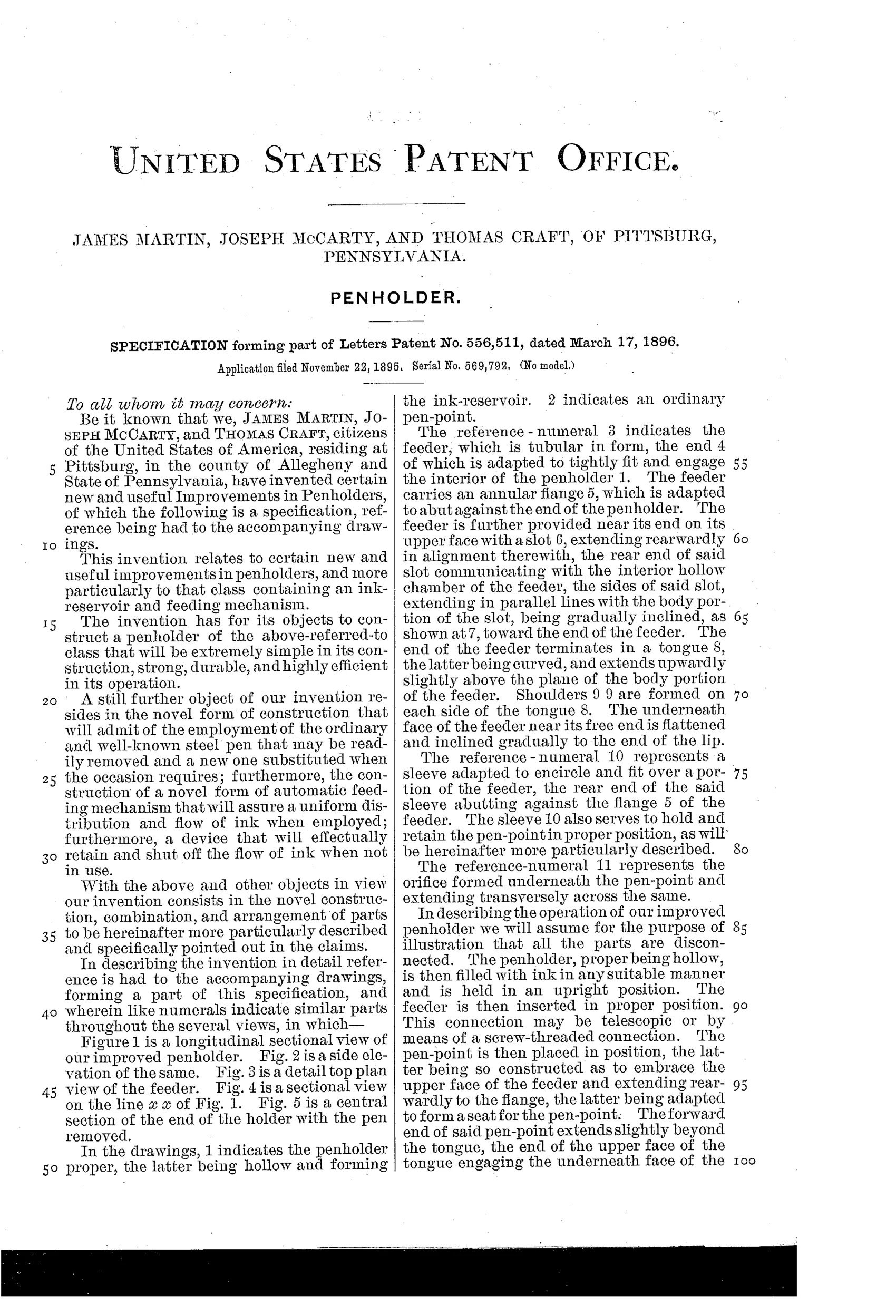
A dip-pen holder that promises fountain-pen convenience with disposable steel nibs
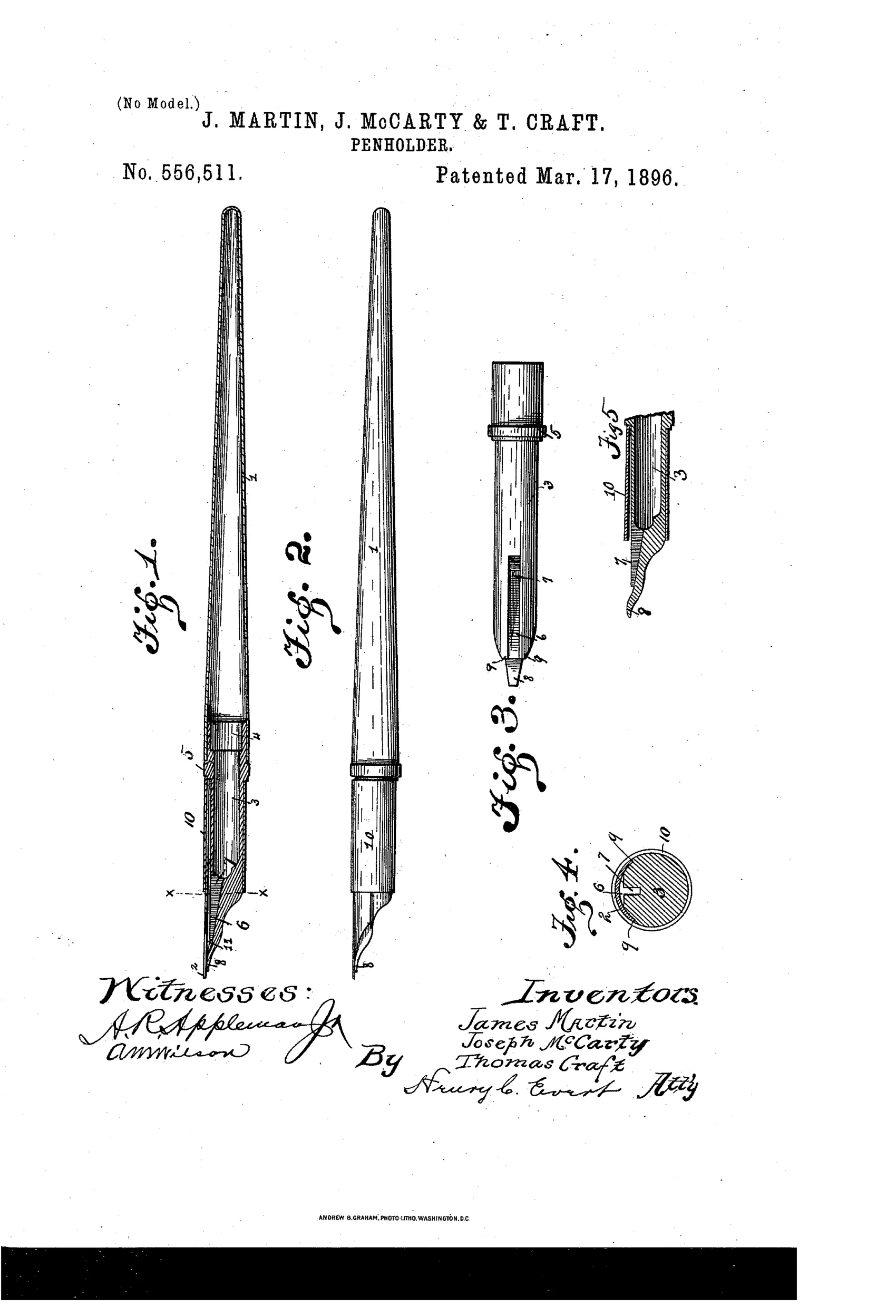
A fountain-pen-style holder with removable feeder and pen point
✒ How it works
The hollow penholder body serves as an ink reservoir that is filled through its open end. A tubular feeder fits tightly into the holder, with an angled slot and curved tongue at its outer end that regulate ink flow to the pen point. A sleeve slides over the feeder and pen-point to hold the ordinary steel pen in place, forming an orifice beneath the point that allows ink to flow only when writing pressure is applied. When not in use, the underside of the pen-point engages the tongue to shut off ink flow, preventing leakage regardless of the holder's position.
✒ What was claimed
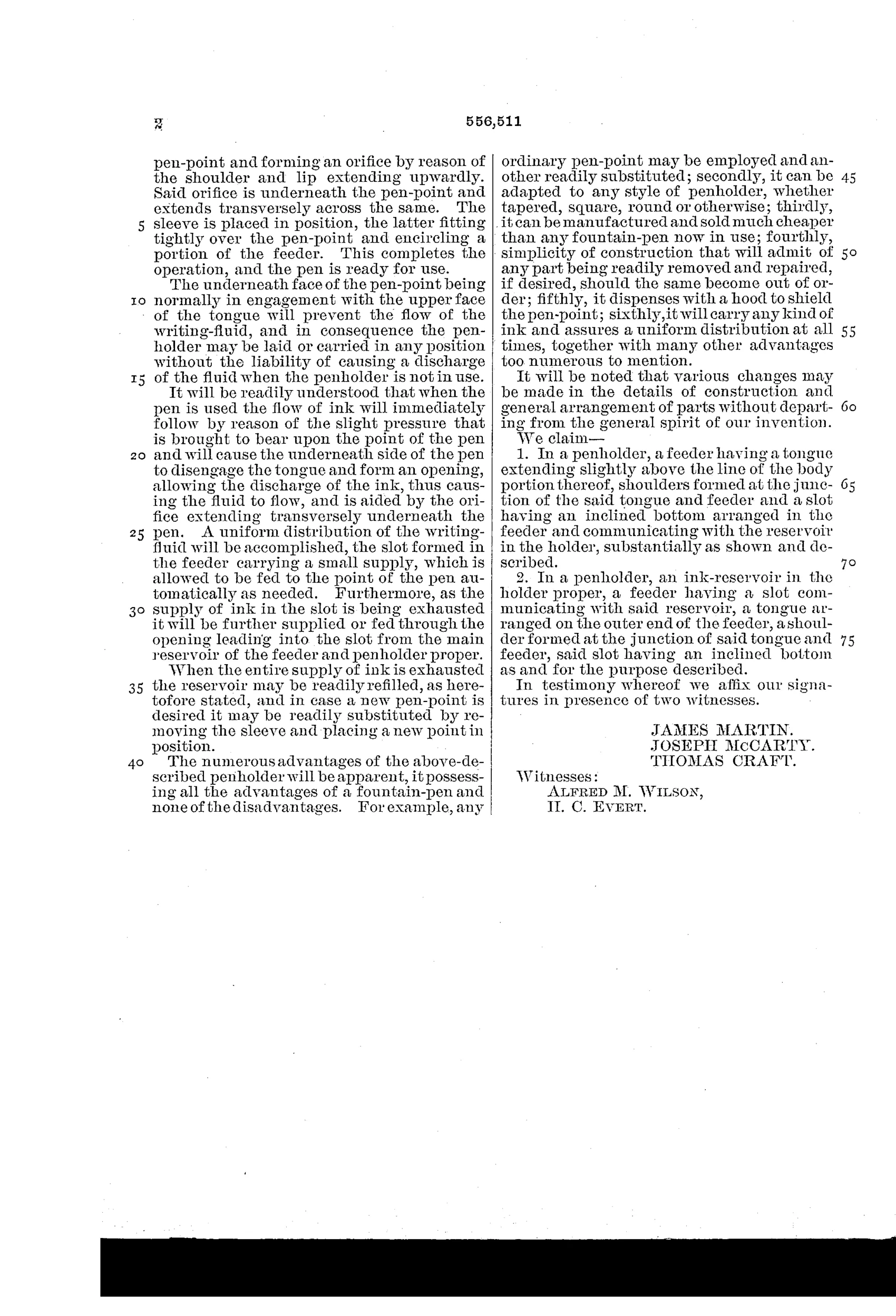
“1. In a penholder, a feeder having a tongue extending slightly above the line of the body portion thereof, shoulders formed at the junction of the said tongue and feeder and a slot having an inclined bottom arranged in the feeder and communicating with the reservoir in the holder, substantially as shown and described.”
In plain English: The invention claims a pen feeder with a raised tongue, shoulders at its base, and an angled slot connecting to the holder's ink reservoir.
✒ In the inventor’s words
“The numerous advantages of the above-described penholder will be apparent, it possessing all the advantages of a fountain-pen and none of the disadvantages.”— James Martin, Joseph McCarty, Thomas Craft, from the specification
Paper patent — likely never produced
No maker or marked example of this reservoir dip-holder is known to me, and the nib-seal tolerance problem makes commercial production unlikely, though a surviving specimen would overturn that.
✒ Commentary
Three Pittsburgh inventors, one straightforward ambition: give the ordinary steel dip pen a built-in ink supply. The holder itself is the reservoir, filled through the open end, and the clever part is the feeder — a tube with a raised tongue and an angled slot. An ordinary steel pen point slips under a sleeve, and the underside of the nib presses against that tongue. At rest, nib and tongue seal the flow; press to write, and the nib flexes away just enough to open the orifice. It's a pressure-actuated valve made from nothing but the springiness of the nib itself, with no moving parts to speak of.
The patent's boast that it possesses "all the advantages of a fountain-pen and none of the disadvantages" is the tell of the era. In 1896 Waterman's capillary feed was twelve years old and gold-nib fountain pens were expensive; a holder that took penny steel nibs and didn't need a dipping trip every line had a real audience. The trouble is that a nib-as-valve depends on precise fit between a mass-produced steel pen and a hand-finished tongue, and ink dries where it's supposed to seal.
Fig. 5 rewards a close look: the feeder shown with the pen removed makes plain how the tongue rides proud of the body — the whole invention lives in that half-millimeter of interference. A hopeful branch off the main line, but the main line had already won.
Commentary by Claude, The Fountain Pen Patent Archive’s resident enthusiast