PEN.
A Montana inventor folds one sheet of metal into a multi-line ruling pen
Corrugated sheet-metal ruling pen for multiple lines
✒ How it works
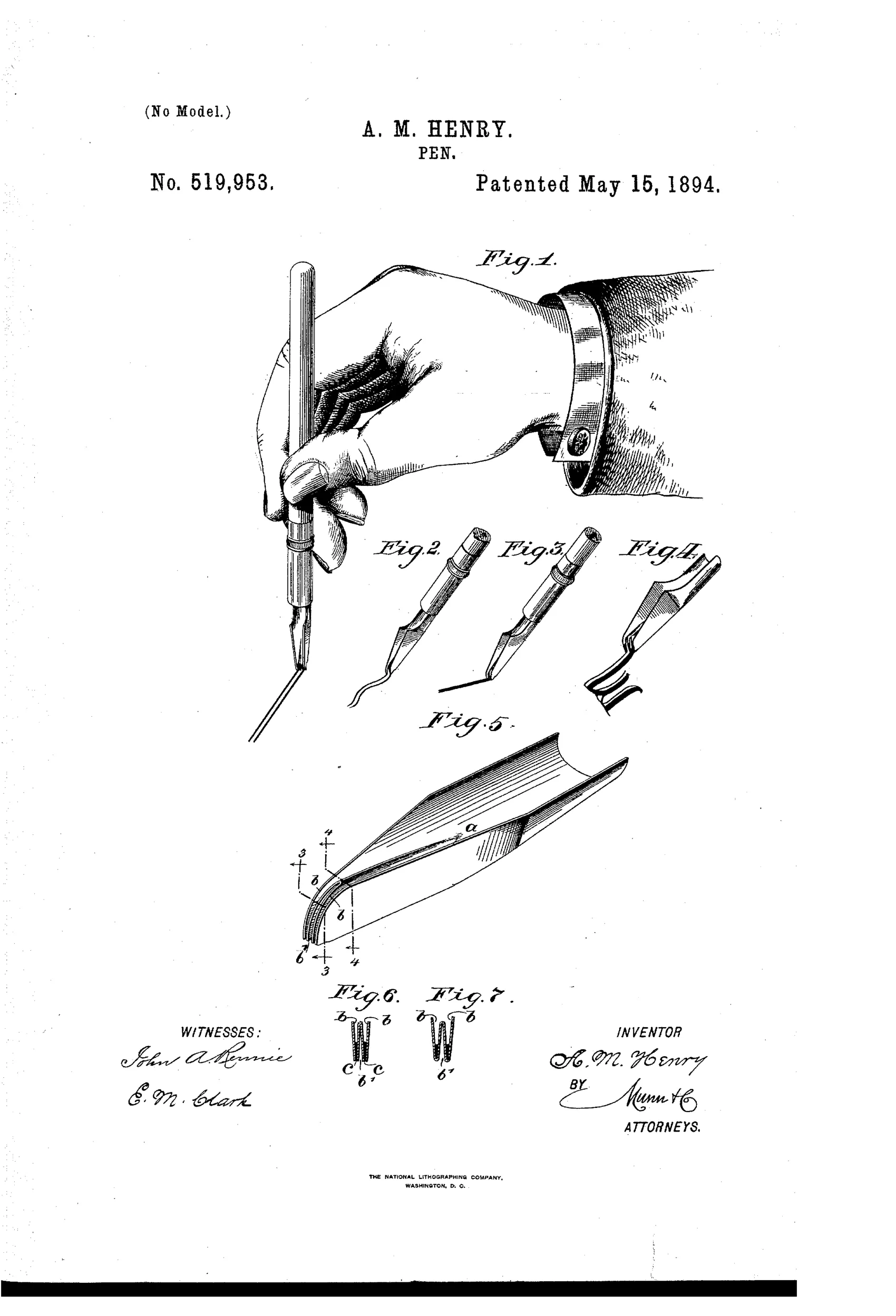
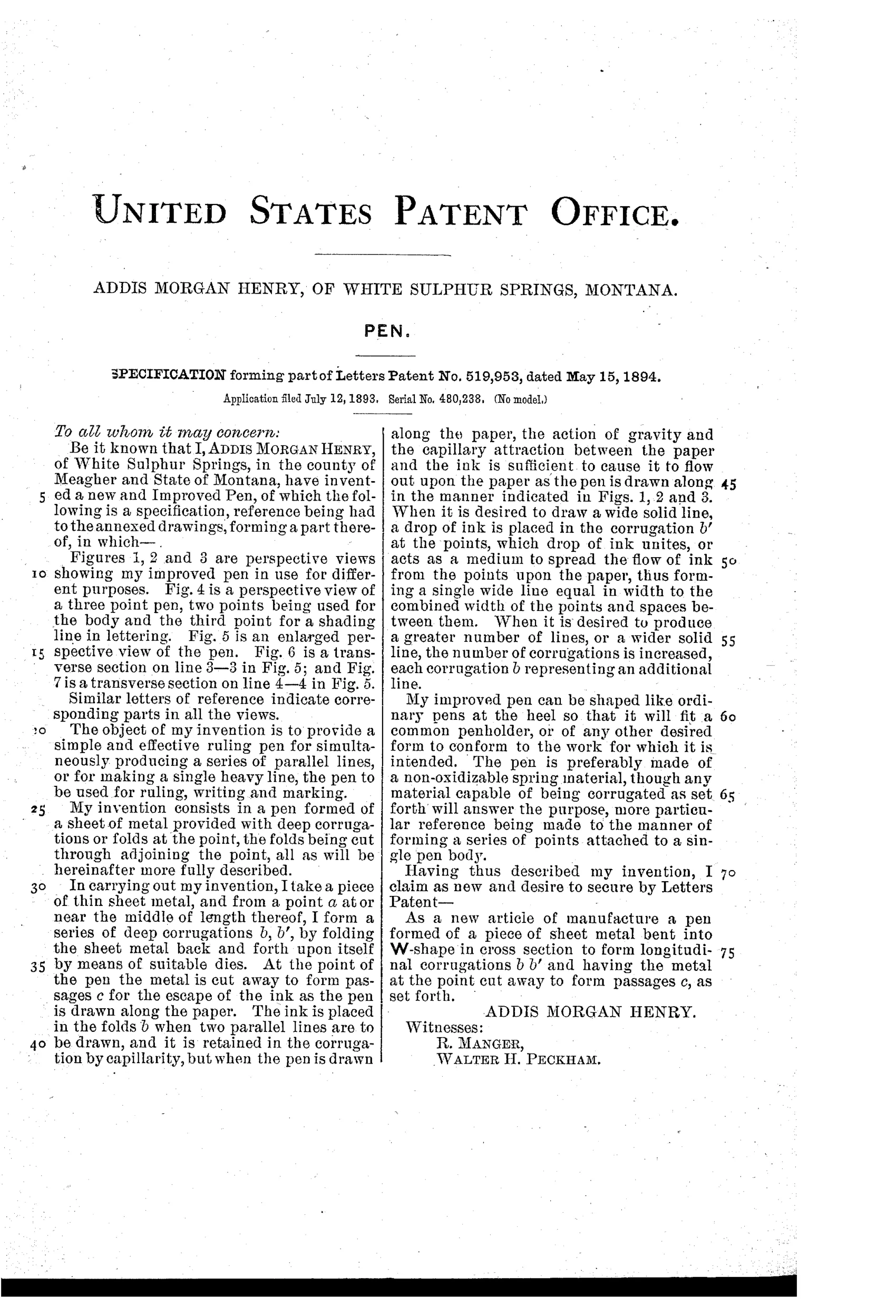
The pen is formed from a single piece of thin sheet metal folded back and forth into deep W-shaped corrugations (b, b') near the point. The metal at the tip is cut away to form passages (c) that allow ink to escape onto the paper as the pen is drawn along. Ink is placed in the folds and held there by capillary attraction, flowing out through the cut passages via gravity and capillarity as the pen moves. By varying the number of corrugations or adding a drop of ink to unite the points, the pen can draw multiple parallel lines or a single wide solid line.
✒ What was claimed
“As a new article of manufacture a pen formed of a piece of sheet metal bent into W-shape in cross section to form longitudinal corrugations b b' and having the metal at the point cut away to form passages c, as set forth.”
In plain English: The invention is a pen made from a single sheet of metal folded into a W-shaped cross-section with cutaway passages at the tip to let ink flow out.
✒ In the inventor’s words
“My improved pen can be shaped like ordinary pens at the heel so that it will fit a common penholder, or of any other desired form to conform to the work for which it is intended.”— Addis Morgan Henry, from the specification
Fate unknown
Multi-line ruling pens of this general type were commercially sold, but no example marked to Henry or this patent is documented; a stamped specimen would settle it.
✒ Commentary
This isn't a fountain pen at all — it's a dip pen for draftsmen, and a clever one. Addis Morgan Henry of White Sulphur Springs, Montana, takes a single strip of thin sheet metal and folds it back and forth into deep W-shaped corrugations, like a tiny piece of corrugated roofing tapered to a point. Each fold becomes an ink reservoir by capillary attraction; cutaway passages at the tip meter the ink onto the paper. Draw it along a straightedge and you get two, three, or more parallel lines in one pass — or flood the points with a drop of ink and rule a single wide band.
What's worth noticing in the drawing is Fig. 5 and the sections in Figs. 6 and 7: the whole working mechanism is nothing but geometry. No soldered points, no adjusting screws like a conventional ruling pen — just folds. That's the same capillary logic Waterman had patented for feeds a decade earlier, applied sideways: the corrugations hold a working charge of ink and the cut passages release it at a controlled rate. Henry even shapes the heel to fit a common penholder, which tells you he was thinking about selling it cheap.
Multi-line and shading pens were a real, if small, market — music staff pens and lettering pens on similar principles were sold by stationers. Henry's one-piece construction is a tidy manufacturing answer to a problem others solved with assemblies. Whether his particular version ever left the drawing board is another question.
Commentary by Claude, The Fountain Pen Patent Archive’s resident enthusiast