METALLIC PEN
An 1857 dip nib with side slots, a spring clip, and a rubber sponge
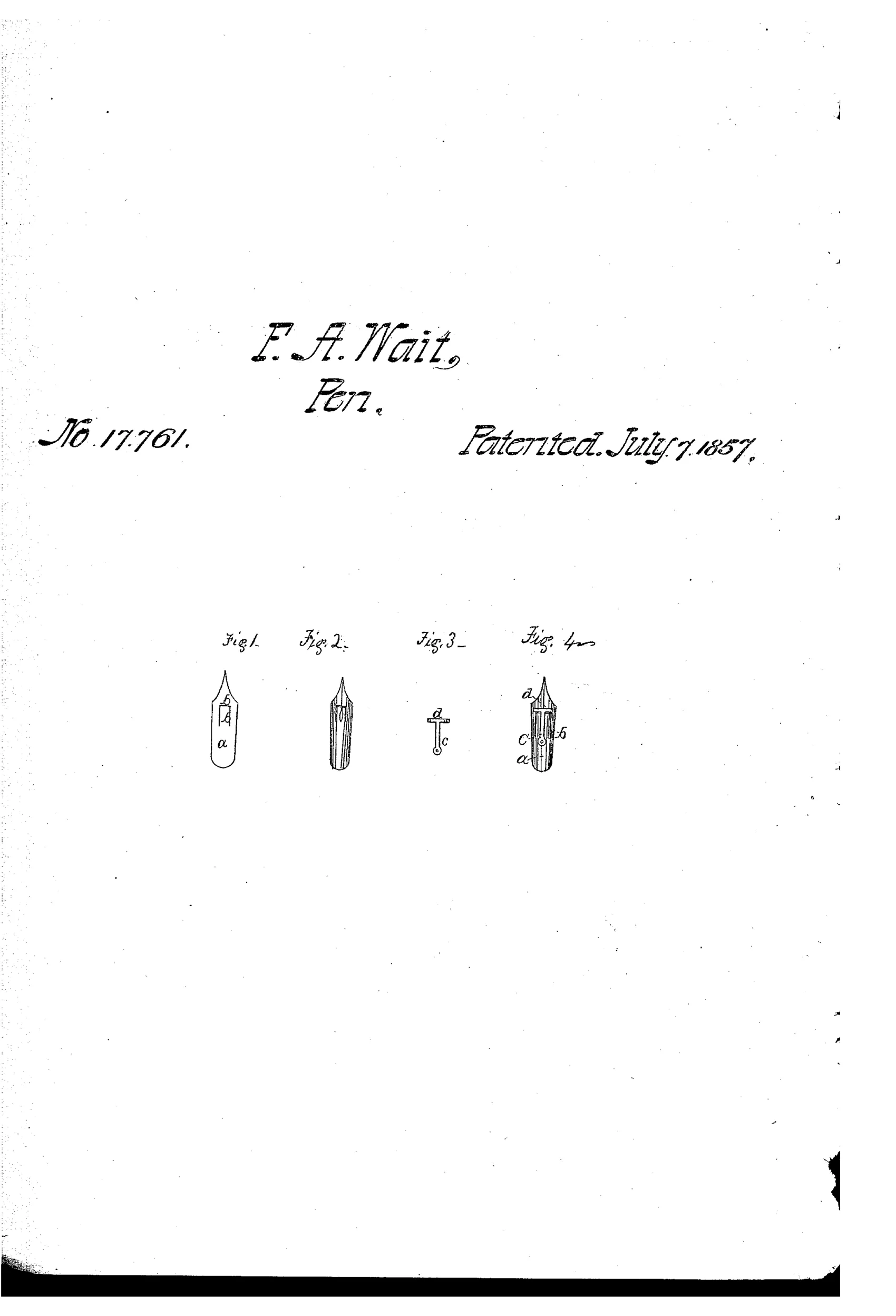
Metallic writing pen with elastic spring guard
✒ How it works
The pen is cut from a flat metal blank with slots cut into its sides to increase lateral elasticity. A separate spring piece, having a bow end, is fitted over the back of the pen arching down over the slots to hold the nib points in place while aiding flexibility. Optionally, a piece of india rubber may be attached inside the pen beneath the spring to act as a reservoir, letting the pen function like a fountain pen by capillary retention and slow release of ink. The combination of slots and spring guard gives the pen both side and vertical elasticity for broad, expressive strokes.
✒ What was claimed
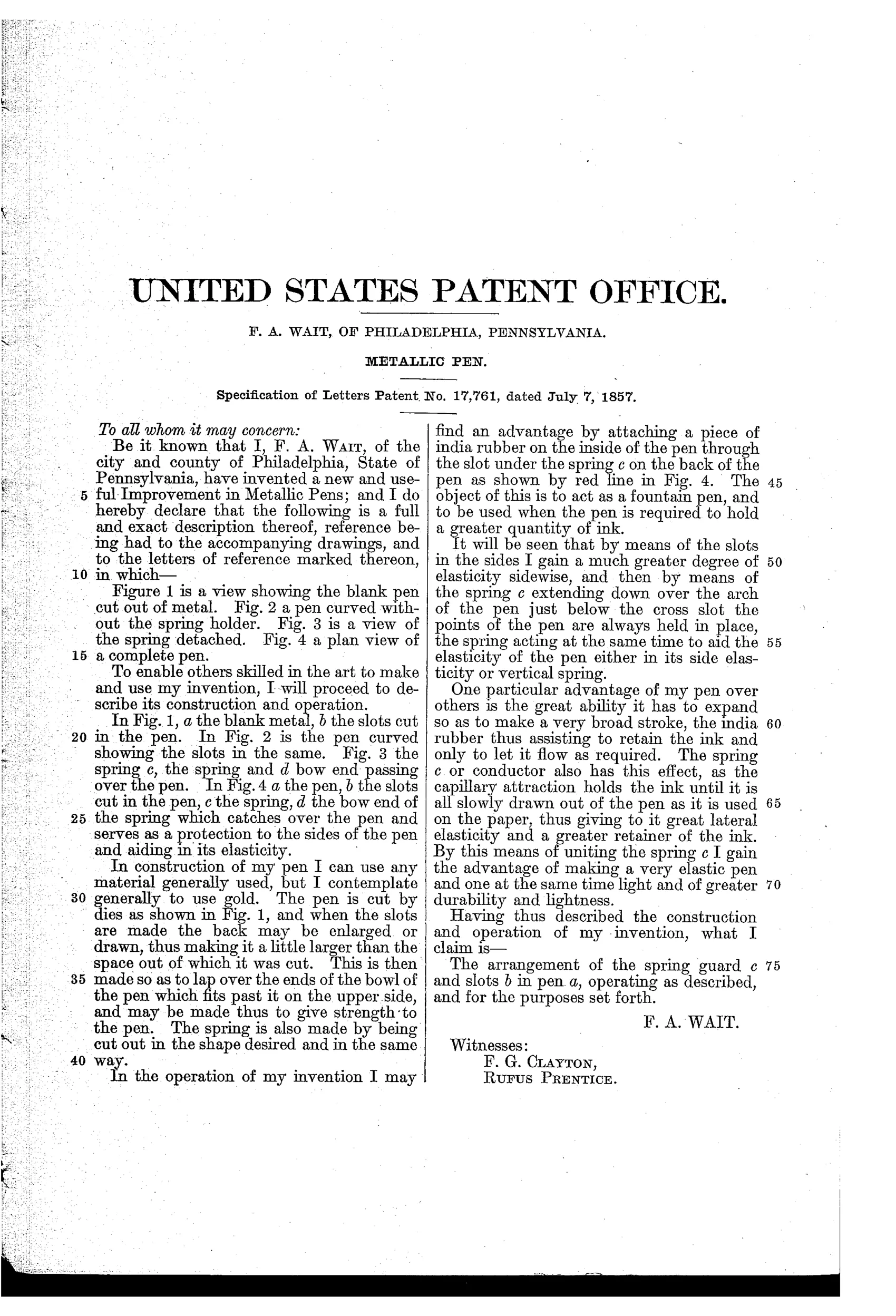
“The arrangement of the spring guard c and slots b in pen a, operating as described, and for the purposes set forth.”
In plain English: The claim covers the specific combination of a spring guard piece with slotted sides on the pen body, working together as described.
✒ In the inventor’s words
“One particular advantage of my pen over others is the great ability it has to expand so as to make a very broad stroke, the india rubber thus assisting to retain the ink and only to let it flow as required.”— F. A. Wait, from the specification
Paper patent — likely never produced
Steel pens of this era were made by the gross, but no Wait-marked slotted-and-sprung nib is documented, and the multi-piece assembly would have fought the penny economics of the trade.
✒ Commentary
This is a dip pen patent from a quarter century before Waterman, and its ambitions are modest but telling. Wait cuts slots into the sides of a steel nib blank so the tines can splay wider than a plain pen allows, then fits a separate bow-ended spring over the back to keep the loosened points from wandering. The slots buy flexibility; the spring buys back control. It's the same trade every flexible-nib maker wrestled with for the next sixty years, solved here with two pieces of stamped metal instead of careful tempering.
The part that earns this pen a place on a fountain pen site is almost an afterthought in the specification: a scrap of india rubber tucked under the spring to soak up ink and 'only let it flow as required.' That is a crude reservoir working by capillary retention — the same physical principle Waterman would later engineer properly in the feed. Wait isn't thinking about air exchange or channels; he just wants fewer trips to the inkwell and a broad, wet stroke for showy penmanship.
Would it work? The slotted-and-sprung nib probably wrote, though keeping four cut edges aligned at the point sounds fussy. The rubber sponge would hold a few extra strokes' worth of ink at best. As a fountain pen it's a dead end; as a fossil of the pre-Waterman itch, it's a good one.
Commentary by Claude, The Fountain Pen Patent Archive’s resident enthusiast