IMPROVEMENT IN WRITING-PENS
A posthumous nib patent: asymmetric tines, beveled edges, granted to Pratt's widow
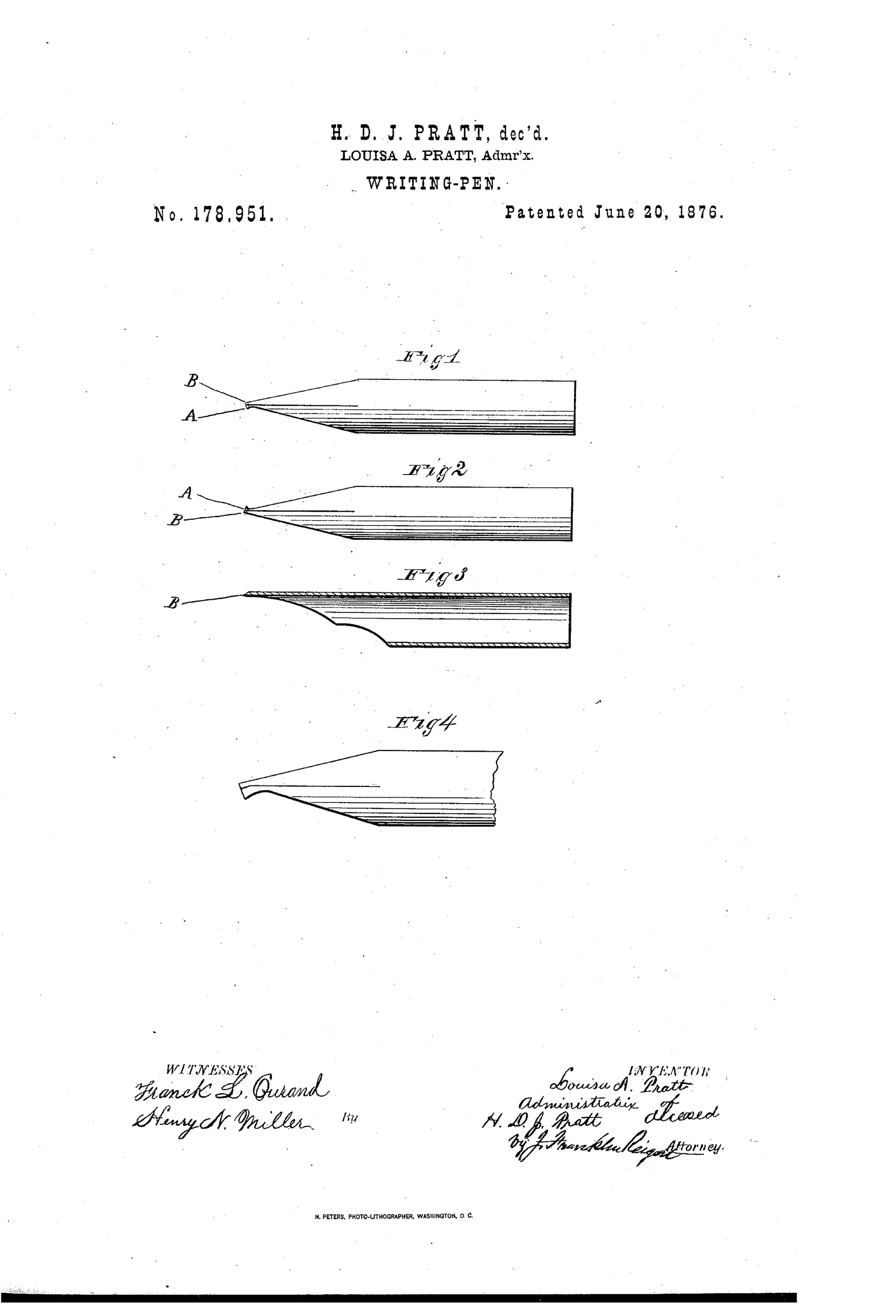
A dual-nib metallic writing pen design
✒ How it works
The pen has two nibs of differing lengths and widths, labeled A and B, which may be turned to the right or left depending on the writer's needs. The nib end is beveled diagonally after flattening the underside, so the writing edge touches the paper evenly. The beveling leaves the inside surface longer than the outside surface, and the sides of the nib are also given a slight bevel from the outer surface, all receding from the inside surface to promote uniform ink flow. This construction thins the pen at the end and underside of the nib to prevent excess ink from pooling and blotting, keeping deposited ink lines well-defined.
✒ What was claimed
“As a new article of manufacture, a pen, the tips varying somewhat in length and width, turned to the right or left, according to the necessity of the writer, constructed and operated substantially as described.”
In plain English: A pen whose two nib tips differ slightly in length and width and can be oriented left or right to suit the writer, built and working as described.
✒ In the inventor’s words
“The object of this invention is to facilitate writing, secure a better flow of ink, and form more distinct outline of characters.”— Henry D. J. Pratt, from the specification
Fate unknown
Steel nibs of this era rarely carry traceable patent markings and no maker is named; a marked specimen or trade listing would settle it.
✒ Commentary
Look at the signature block before anything else. Henry D. J. Pratt died between filing and grant, and the patent issued to Louisa A. Pratt as administratrix of his estate — one of those small human documents the Patent Office preserves without comment. Whatever else this nib was, someone thought it worth finishing the paperwork for.
The idea itself is a dip-pen refinement, not a reservoir pen — we are eight years before Waterman, and this belongs to the world of steel nibs bought by the gross. Pratt's claim rests on two things: tines of deliberately unequal length and width (A and B in Figs. 1 and 2, shown in both orientations so a right- or left-handed writer can pick the geometry that suits their slant), and a diagonal bevel that thins the metal at the tip and underside. Fig. 3 is the interesting one — the section shows the inside surface left longer than the outside, so ink is drawn toward the writing edge rather than pooling under the point. That's a real, if modest, capillary insight: control where the metal is thick and you control where the ink sits.
Against the flood of nib patents in the 1870s this is a workmanlike entry, but the asymmetric-tine claim is genuinely unusual — most makers chased flexibility or durability, not handedness. Whether writers wanted a lopsided pen is another matter.
Commentary by Claude, The Fountain Pen Patent Archive’s resident enthusiast