IMPROVED PAINTER'S STRIPING-INSTRUMENT.
An 1857 "fountain pen" for paint stripes, with stacked feeder plates before Waterman
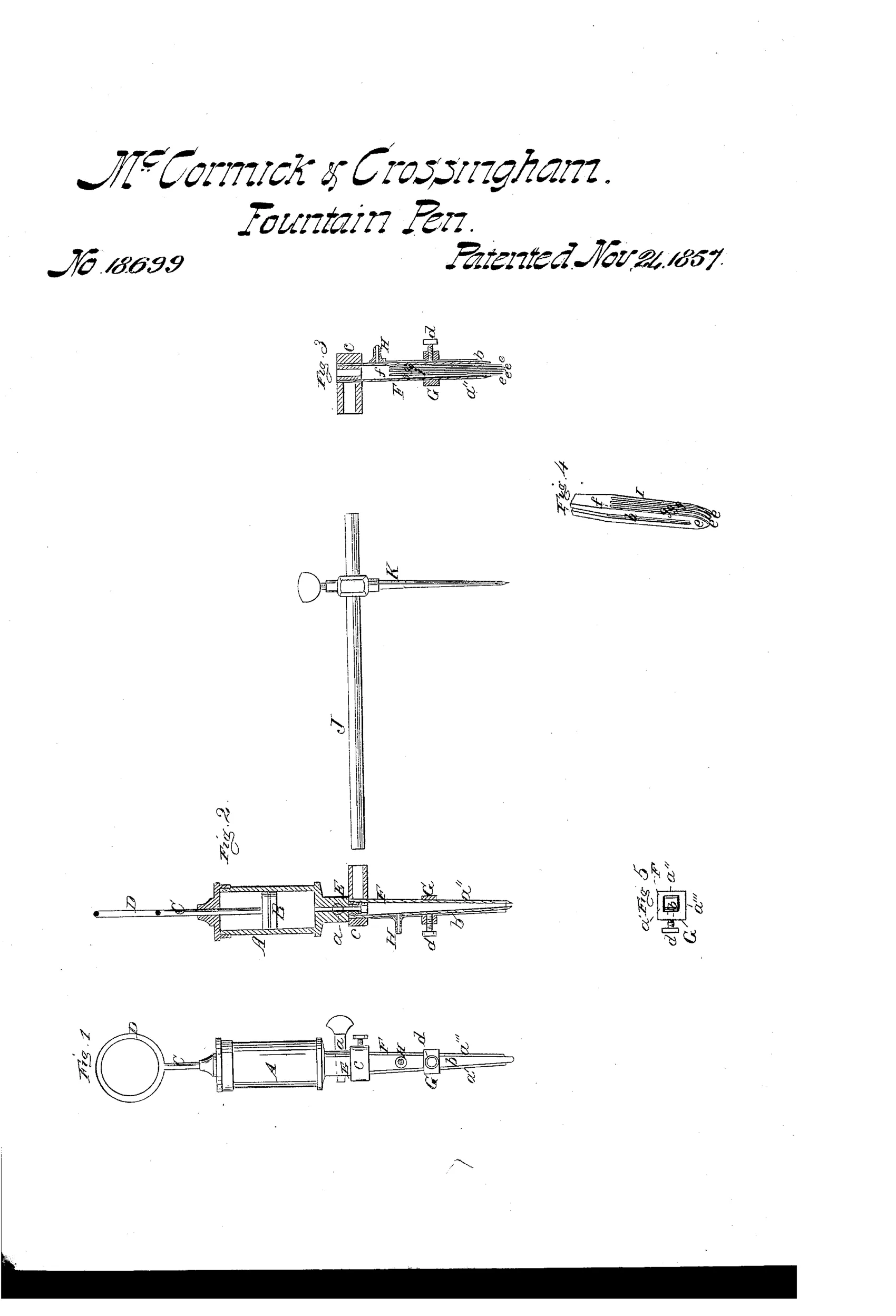
A painter's tool for making paint stripes
✒ How it works
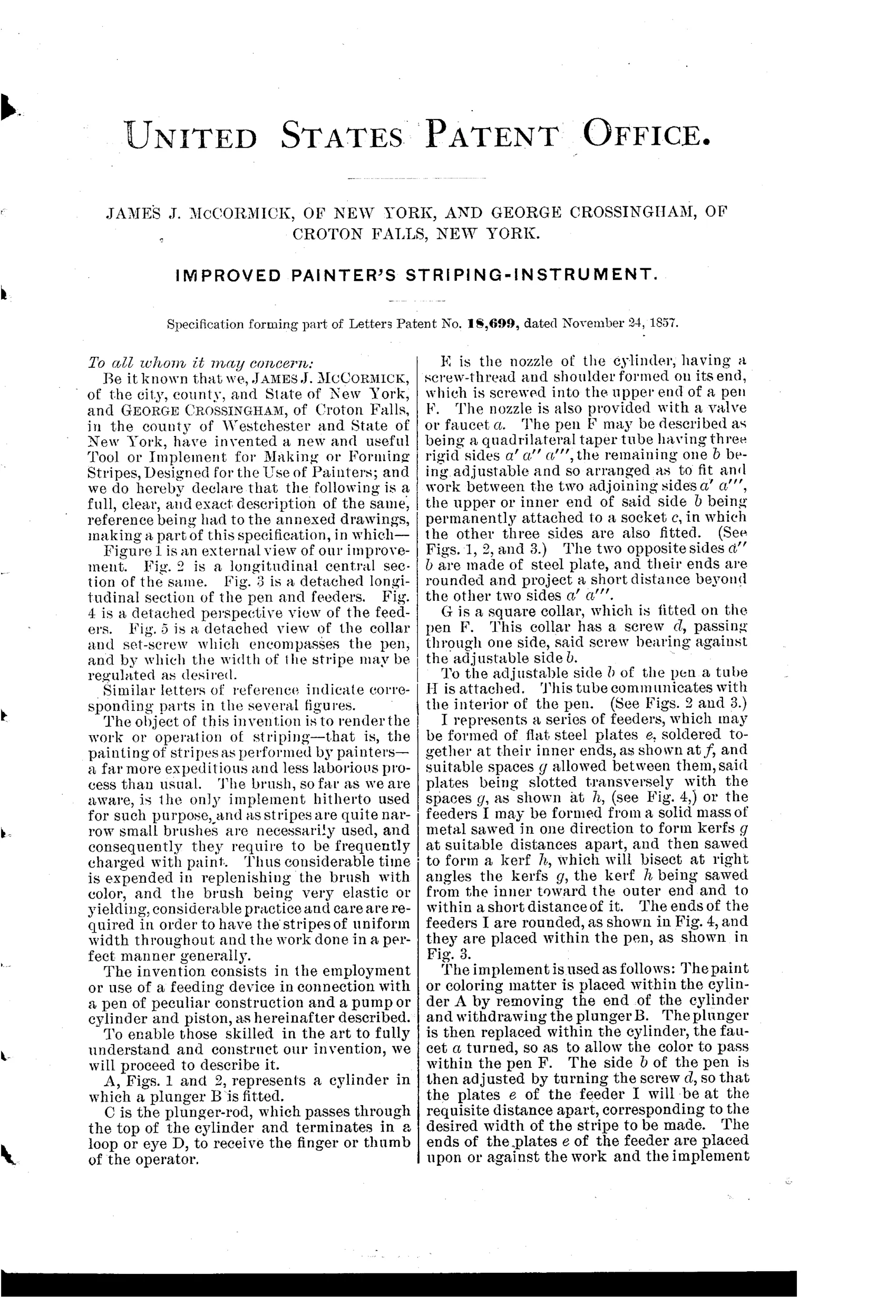
A cylinder holds paint and a plunger forces it through a valve into a quadrilateral tapering pen. One side of the pen is adjustable via a screw-collar to set stripe width, and a stack of slotted metal feeder plates distributes the color evenly to the nib tips. The tool can be used in any orientation, including inverted for ceilings, because the plunger actively feeds paint rather than relying on gravity. An optional beam with a sliding center-pin leg allows the tool to draw circular stripes.
✒ What was claimed
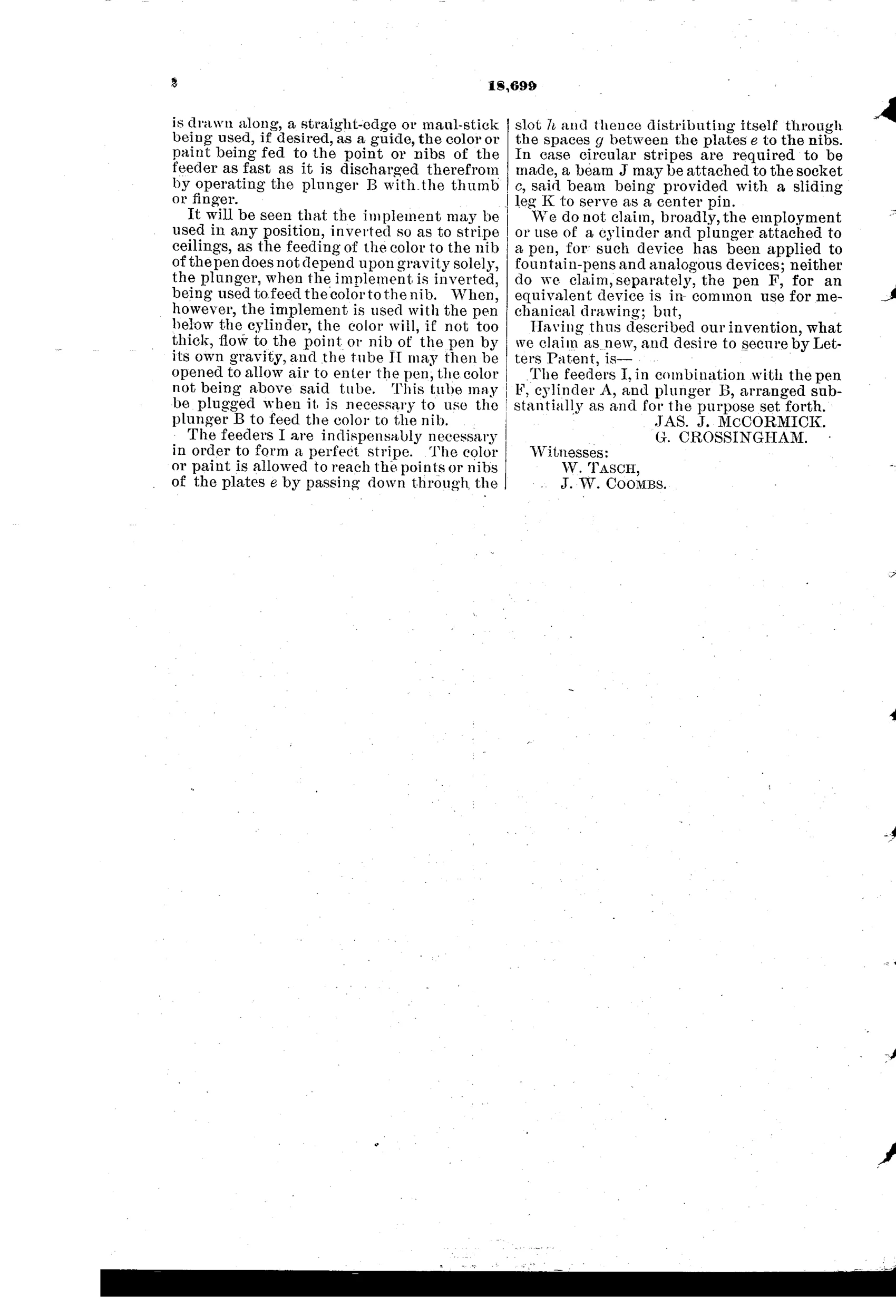
“The feeders I, in combination with the pen F, cylinder A, and plunger B, arranged substantially as and for the purpose set forth.”
In plain English: The claim covers the specific combination of the feeder plates, pen, paint cylinder, and plunger working together as described.
✒ In the inventor’s words
“It will be seen that the implement may be used in any position, inverted so as to stripe ceilings, as the feeding of the color to the nib of the pen does not depend upon gravity solely, the plunger, when the implement is inverted, being used to feed the color to the nib.”— James J. McCormick and George Crossingham, from the specification
Fate unknown
No documented examples or maker's production of this striping tool are known to me; a surviving marked specimen or trade-catalog listing would settle it.
✒ Commentary
The drawing sheet says "Fountain Pen," but the specification calls it a painter's striping instrument — and both are right. McCormick and Crossingham built a syringe-fed pen for paint: a cylinder reservoir, a plunger with a finger loop, and a valve delivering color into a quadrilateral tapering nib whose width you set with a screw-collar. It is a fountain pen scaled up and pointed at a wall.
The detail worth lingering on is Fig. 4, the stack of slotted metal feeder plates inside the pen. In 1857, the central unsolved problem of reservoir pens was exactly this — getting liquid to the point evenly, without floods or starvation. Their answer for viscous paint was a laminated feed that subdivides the flow across the nib width. It's not Waterman's capillary air-exchange, and paint under plunger pressure is a different physics problem than ink under gravity, but the instinct — that the feed, not the reservoir, is where the trouble lives — is the right one, twenty-seven years early.
The plunger feed also solves a problem gravity pens never could: the patent proudly notes you can invert the tool and stripe ceilings. Add the beam-and-center-pin attachment for circular stripes and you have a genuinely thought-through trade tool. As a striping instrument it's plausible; as a footnote in the fountain pen story, it's a small, honest prophecy about feeds.
Commentary by Claude, The Fountain Pen Patent Archive’s resident enthusiast