IMPROVEMENT IN FOUNTAIN-PENS
A folded triangle of tin promises thirty lines between dips, five years before Waterman
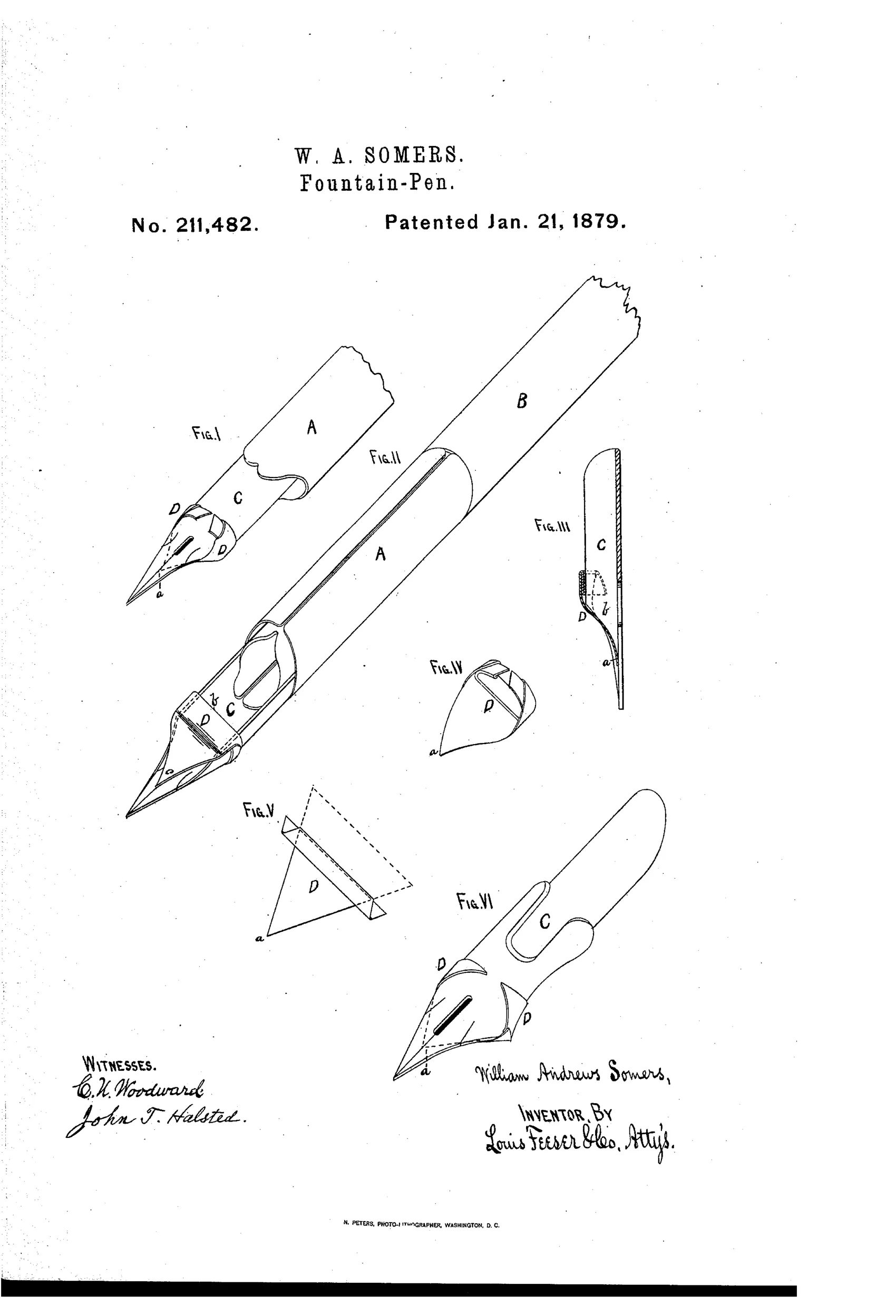
Detachable triangular metal ink-reservoir plate for pens
✒ How it works
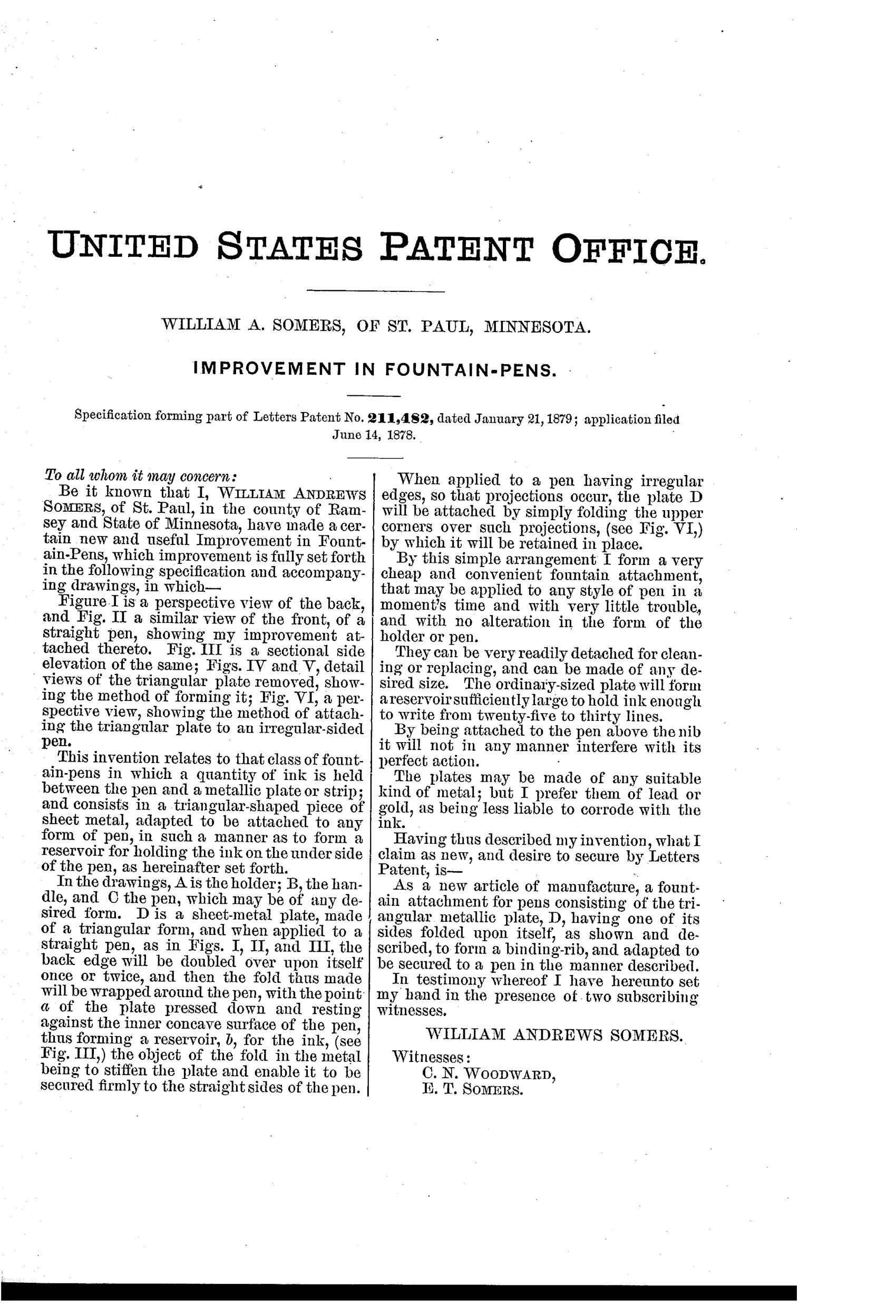
A triangular sheet-metal plate, D, is attached beneath the pen nib C to form a small ink reservoir between the plate and the concave underside of the pen. One edge of the triangle is folded over itself once or twice to create a stiffened binding-rib that wraps around and grips the straight sides of the pen. For irregular-edged pens, the corners of the plate are simply folded over any projections on the pen to hold it in place instead. The point of the plate rests against the inner concave surface of the pen, forming the ink-holding reservoir labeled b.
✒ What was claimed
“As a new article of manufacture, a fountain attachment for pens consisting of the triangular metallic plate, D, having one of its sides folded upon itself, as shown and described, to form a binding-rib, and adapted to be secured to a pen in the manner described.”
In plain English: The invention is a triangular metal plate with one folded edge that clips onto any pen to form a small ink reservoir.
✒ In the inventor’s words
“The ordinary-sized plate will form a reservoir sufficiently large to hold ink enough to write from twenty-five to thirty lines.”— William Andrews Somers, from the specification
Fate unknown
Nib-reservoir attachments of this general type were widely sold, but no example marked to Somers or this patent is documented; a surviving specimen would settle it.
✒ Commentary
Call this what it is: not a fountain pen but a dip-pen upgrade. Somers takes a triangular scrap of sheet metal, folds one edge over itself to make a stiff binding-rib, and clips the whole thing under an ordinary steel nib. The point of the triangle presses against the concave belly of the pen, and the gap between plate and pen holds a bead of ink by capillary tension — enough, the specification promises, for twenty-five to thirty lines of writing.
The genuinely clever bit is Fig. VI, which most readers will skate past. Nibs of the era came in wildly different shapes, so Somers offers a second attachment method: for pens with irregular sides, you simply fold the plate's corners over whatever projections the nib happens to have. That's a manufacturer thinking about the real-world variety of the installed base, not just his own drawing.
Historically this sits in the pre-Waterman stratum, and it's actually the more honest branch of it. Rather than fight the unsolved feed problem — how to let air in as ink goes out — Somers sidesteps it entirely. His reservoir is open, tiny, and self-limiting; it can't blob because it doesn't hold enough to blob badly. Reservoir clips of this general species were sold in quantity through the stationery trade in the 1870s-80s. Whether Somers's particular folded triangle joined them, the record I know doesn't say.
Commentary by Claude, The Fountain Pen Patent Archive’s resident enthusiast