IMPROVEMENT IN FOUNTAIN-PENS.
A hinged ink spoon that promises not to stiffen your nib
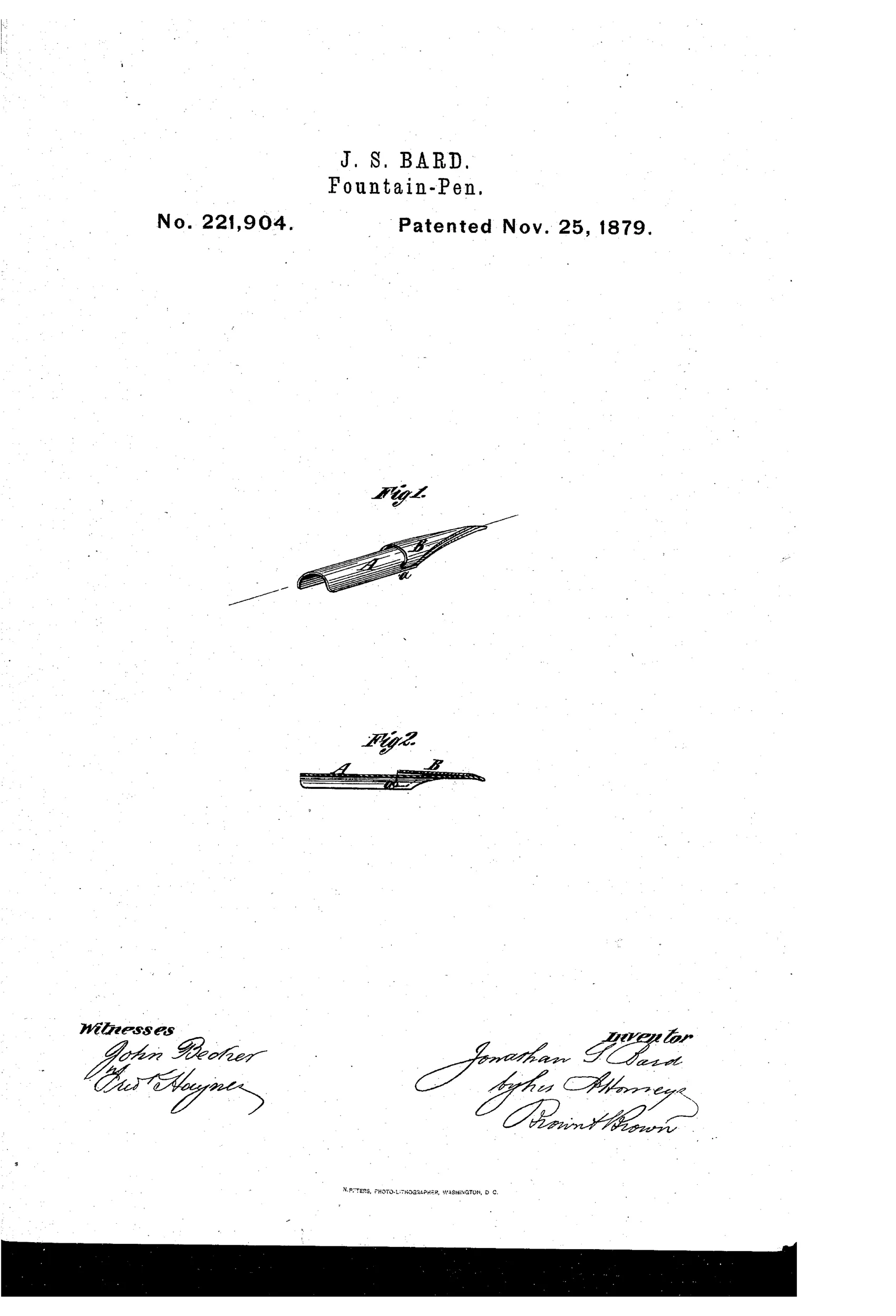
A hinged spoon-shaped ink-fountain attachment for pens
✒ How it works
A spoon or plate B is shaped on its underside to conform to and fit against the back or upper side of the pen A. The spoon is attached via prongs a inserted into holes on the sides of the pen, forming a simple hinge that lets it flex outward for cleaning or removal. It rests atop the pen without pressing on it, so the pen's flexibility is not affected. A supply of ink held between the spoon and the pen's upper side passes downward to the point, keeping it continually fed.
✒ What was claimed
“1. A fountain attachment for a pen, consisting of a spoon or plate shaped on one side so as to conform to the shape of and fit against the back or upper side of a pen, and provided with means for hinging it in position on the back or upper side of the pen, substantially as specified.”
In plain English: The invention is a hinged spoon-shaped plate that fits against the back of a pen to hold and feed ink without stiffening the pen.
✒ In the inventor’s words
“The object of my invention is to provide a simple fountain attachment which may be applied to pens for the purpose of retaining ink and feeding it properly to the nib of the pen, and which shall not render the pen less flexible, or interfere with its action in any way.”— Jonathan Sprague Bard, from the specification
Fate unknown
Nib-mounted reservoir attachments of this era were sometimes produced cheaply, but no marked Bard example is documented; a surviving specimen or trade advertisement would settle it.
✒ Commentary
Bard's 1879 patent is not really a fountain pen in the modern sense — it's an ink reservoir clipped to an ordinary dip nib, the kind of attachment that filled the patent rolls for decades before Waterman changed the question entirely. A spoon-shaped plate B sits on the back of the pen, holding a small pool of ink between itself and the nib, feeding it down to the point by gravity and capillarity as you write.
The one genuinely thoughtful detail is the hinge. Two prongs slot into holes in the sides of the nib, so the spoon merely rests on the pen's back without gripping it. Bard says it outright: the attachment must not make the pen less flexible. That shows he understood what most reservoir tinkerers ignored — a steel nib's whole character is in its spring, and a soldered or clamped reservoir kills it. The hinge also swings open for cleaning, which anyone who has dealt with dried ink under a reservoir will appreciate. Fig. 2's section shows how closely the spoon's underside conforms to the nib's curve, which is what makes the capillary space work at all.
Still, this is a refinement in a crowded and ultimately doomed genre. It extends the time between dips; it does not solve air exchange, sealing, or supply — the problems Waterman's feed would attack five years later. A pleasant footnote from the last years before the real answer arrived.
Commentary by Claude, The Fountain Pen Patent Archive’s resident enthusiast