METALLIC PEN
An 1842 nib with hinges and springs, engineered to impersonate a goose quill
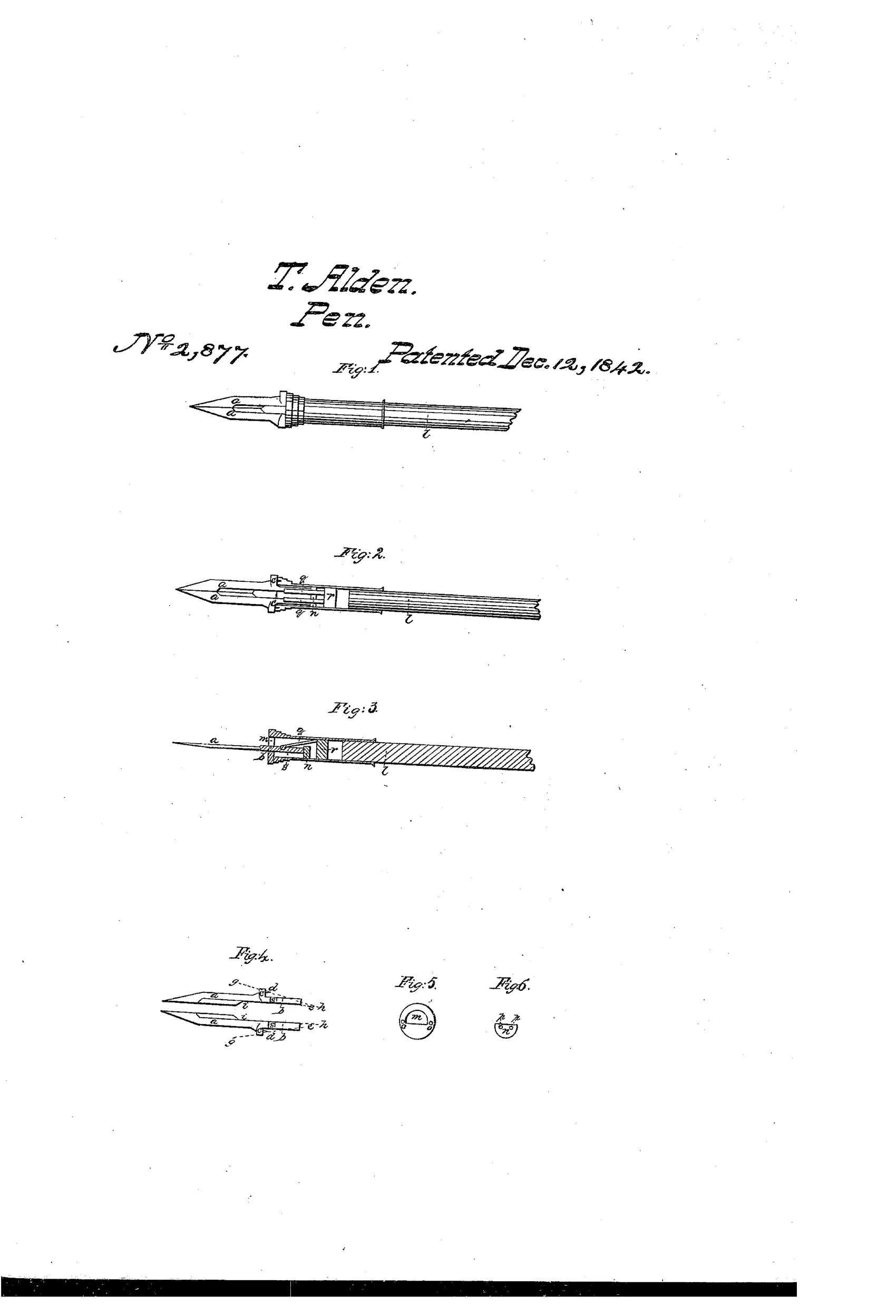
Two-bladed hinged metallic writing pen with springs
✒ How it works
The pen consists of two steel blades or nibs, each with a shank ending in metallic pivots that fit into corresponding holes in the socket and a rear bearing stud. These pivots act as hinges, allowing the blades to separate as the pen point is pressed downward during writing, mimicking the flexible action of a quill. A pair of springs, attached to a plug behind the bearing stud, press down on the shanks of the blades to keep them closed until writing pressure forces them apart. When pressure on the paper is relieved, the springs return the blades together.
✒ What was claimed
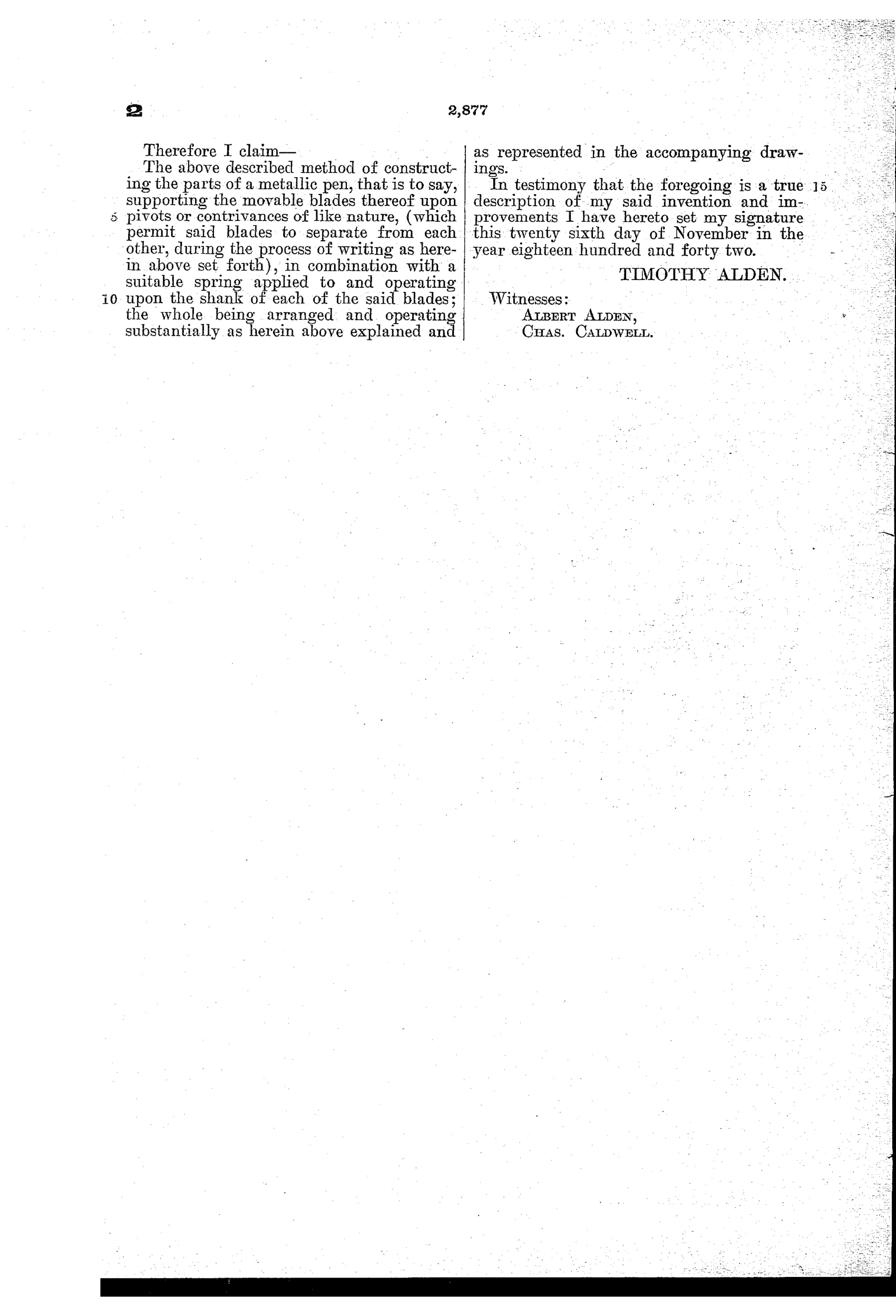
“The above described method of constructing the parts of a metallic pen, that is to say, supporting the movable blades thereof upon pivots or contrivances of like nature, (which permit said blades to separate from each other, during the process of writing as herein above set forth), in combination with a suitable spring applied to and operating upon the shank of each of the said blades; the whole being arranged and operating substantially as herein above explained and as represented in the accompanying drawings.”
In plain English: The invention claims mounting the pen's two blades on pivots so they can spread apart while writing, combined with springs pressing on each blade's shank to bring them back together.
✒ In the inventor’s words
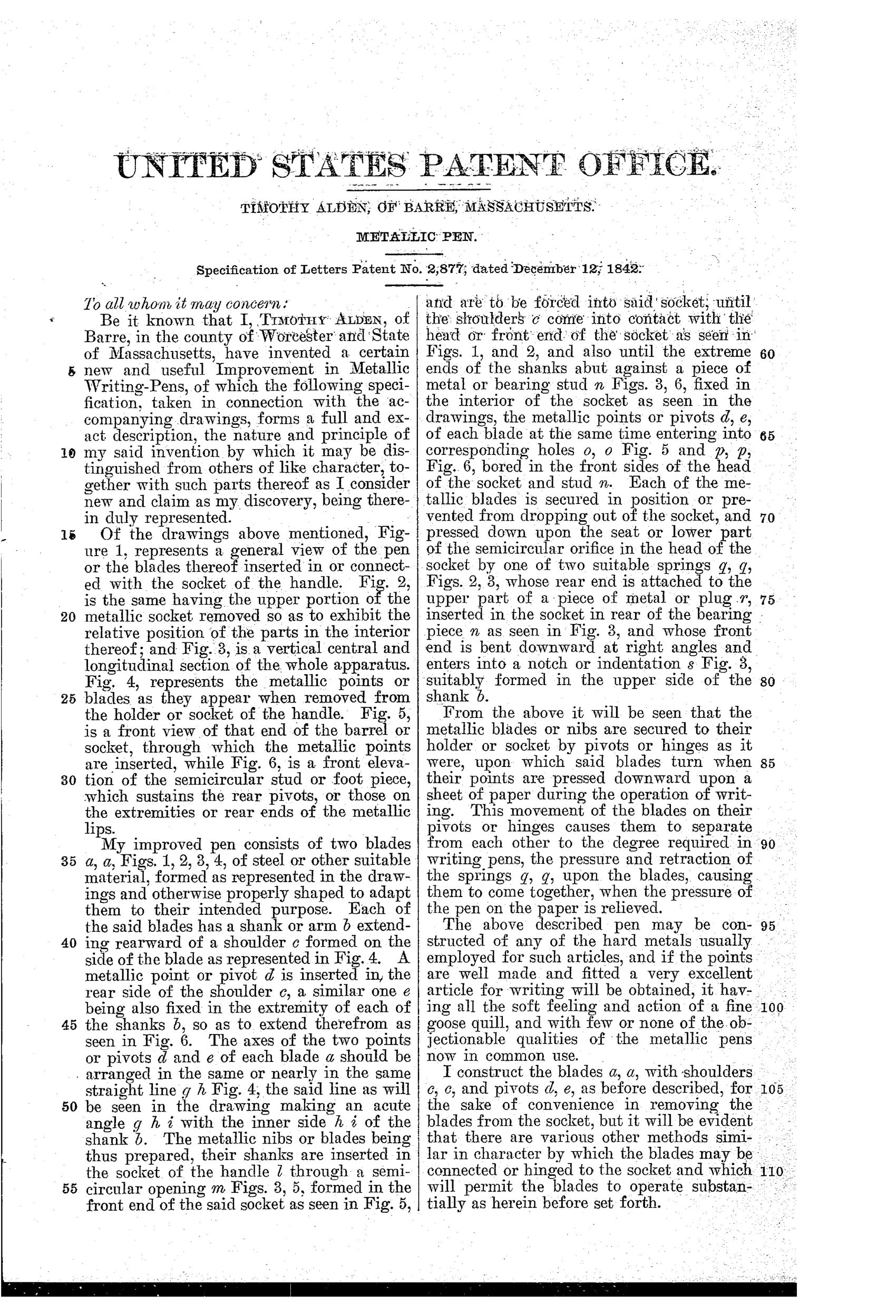
“it having all the soft feeling and action of a fine goose quill, and with few or none of the objectionable qualities of the metallic pens now in common use.”— Timothy Alden, from the specification
Paper patent — likely never produced
The multi-part pivoted construction would have cost many times a stamped steel pen, and no manufactured example or maker's record is known to me.
✒ Commentary
This is one of the oldest entries in the collection, and it isn't really a fountain pen at all — it's a dip pen trying to solve the problem steel pens had in 1842: they were stiff, scratchy, and nothing like the quills everyone had learned to write with. A conventional steel nib gets its flex from the metal itself, split down the middle. Alden refuses that compromise. He makes the two tines entirely separate blades, each with its own shank ending in pivots that seat into a socket and a rear bearing stud, so the tines swing apart on actual hinges when you press down. A pair of springs behind the stud pushes the shanks back together when pressure lifts.
Look at Fig. 4 and you'll see the whole idea: two independent blade-and-shank assemblies, mirror images, each a small machined part. Fig. 3's section shows how much hardware lives inside that barrel — plug, springs, stud, socket — all to replicate what a slit in a piece of steel does for free. His own words give the game away: he wants "all the soft feeling and action of a fine goose quill."
As mechanism it should work; as economics it's doomed. Steel pens won precisely because they were stamped out by the gross for pennies. A hand-fitted pivoting nib couldn't compete, and history took the simple path. Still, it's a charming, sincere piece of engineering from the moment before mass production settled the question.
Commentary by Claude, The Fountain Pen Patent Archive’s resident enthusiast