IMPROVEMENT IN RULING-GUIDES FOR FOUNTAIN-PENS.
A dip-and-hold spoon feed with a ruler bumper, twenty-three years before Waterman
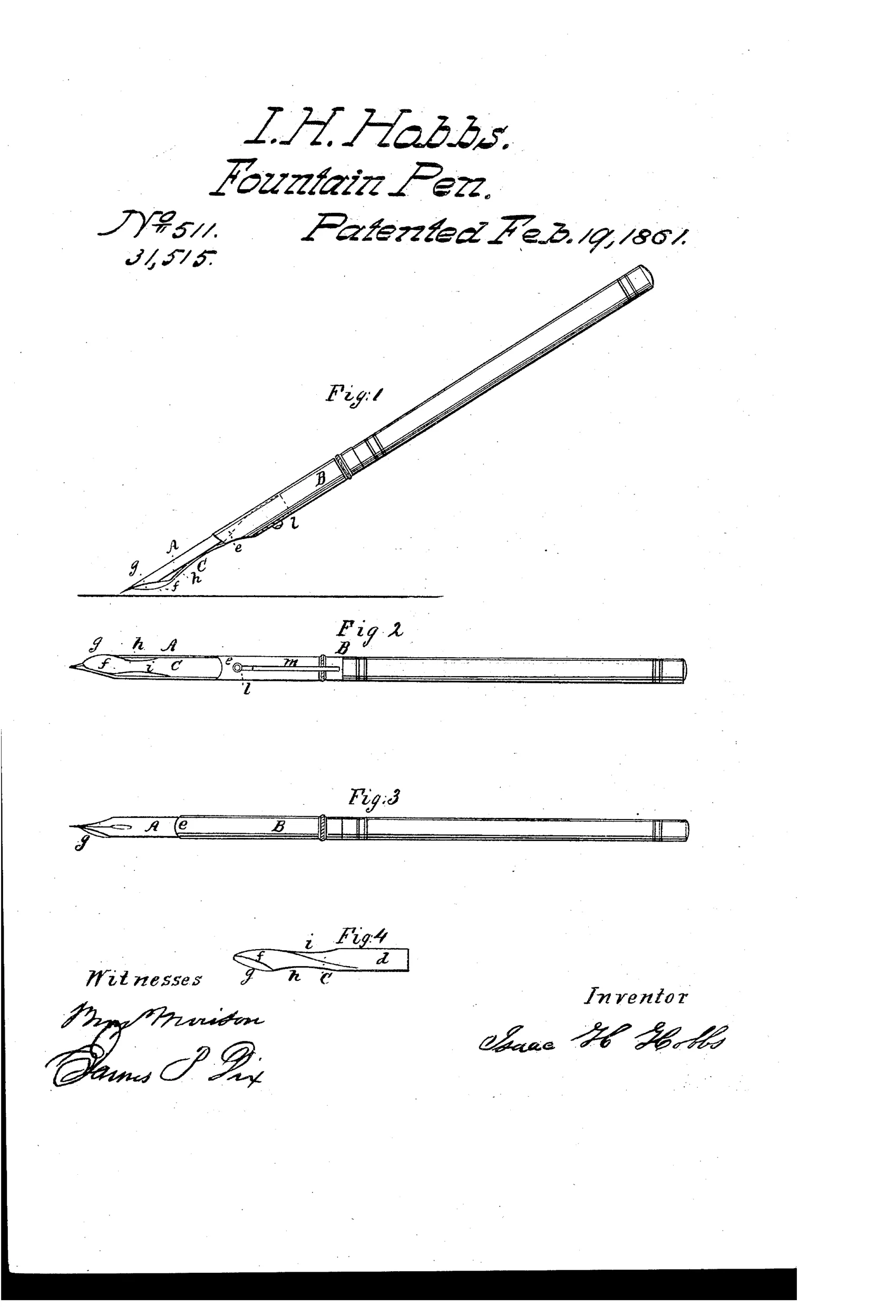
A fountain-pen with a ruling ink-guide.
✒ How it works
The pen A is held in a tubular holder B, with an adjustable metal, bone, or glass tongue C fitted inside it. The tongue's inner end d is cylindrical to fit the holder's tube e, and its outer end f is spoon-shaped and bent to leave a fountain-chamber between it and the underside of the pen. One edge of this spoon-shaped end is convex, forming a lateral guide g that rides along the kerf of the pen and projects sideways to keep ink away from a ruler edge. A small stud l passes through a slot in the holder tube so the tongue C can be pushed out or retracted for cleaning or replacing pens, while open spaces h and i on either side allow ink to enter the fountain chamber.
✒ What was claimed
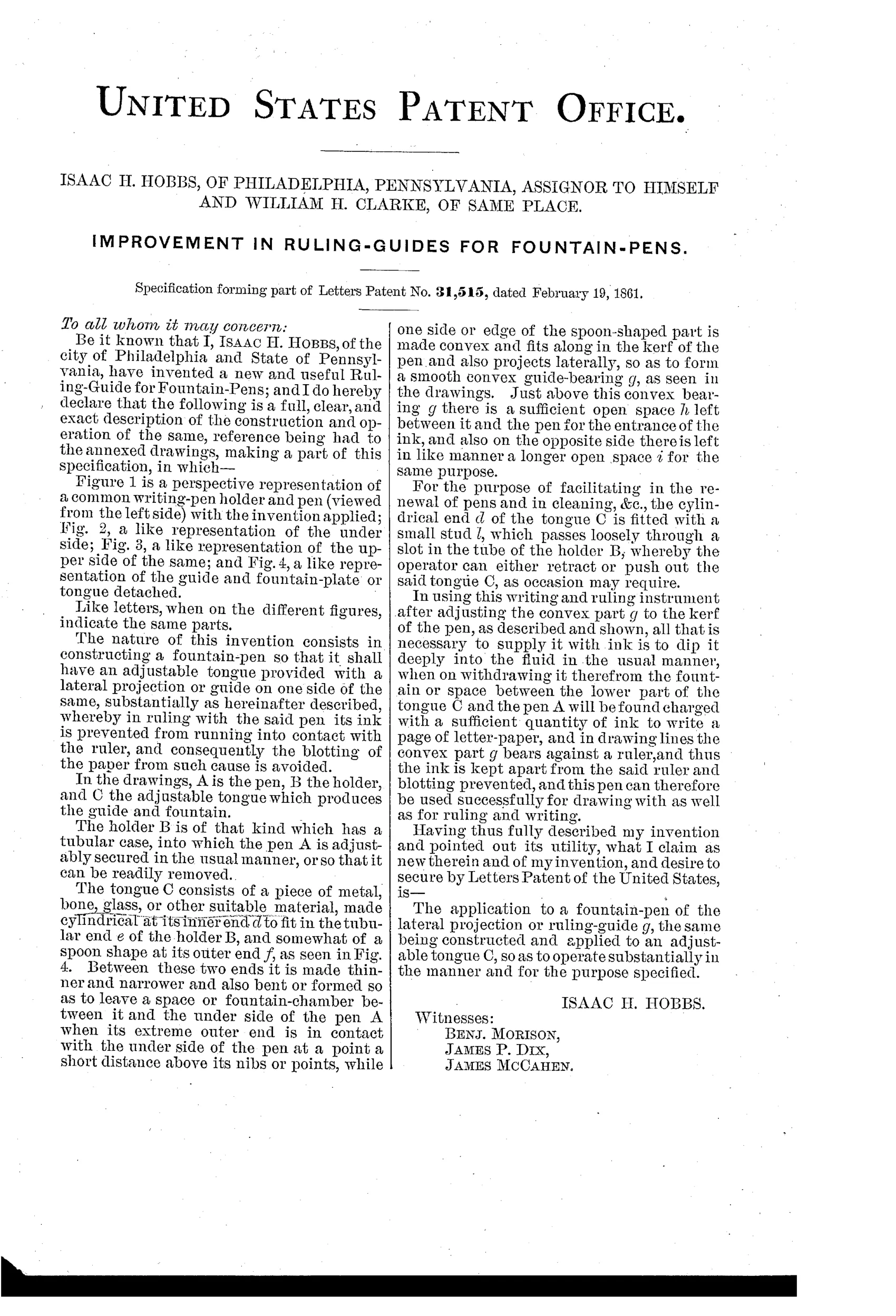
“The application to a fountain-pen of the lateral projection or ruling-guide g, the same being constructed and applied to an adjustable tongue C, so as to operate substantially in the manner and for the purpose specified.”
In plain English: The claim covers adding a sideways ink-guide projection to an adjustable tongue inside a fountain pen, so the guide rides along a ruler edge and keeps ink from smudging while ruling lines.
✒ In the inventor’s words
“In using this writing and ruling instrument after adjusting the convex part g to the kerf of the pen, as described and shown, all that is necessary to supply it with ink is to dip it deeply into the fluid in the usual manner, when on withdrawing it therefrom the fountain or space between the lower part of the tongue C and the pen A will be found charged with a sufficient quantity of ink to write a page of letter-paper.”— Isaac H. Hobbs, from the specification
Fate unknown
The part is cheap and simple enough to have been made, but no marked Hobbs & Clarke example is documented; a surviving holder would settle it.
✒ Commentary
Hobbs is really solving two problems at once here, and the second one is the more interesting. The first is the old dream: a spoon-shaped tongue C bent under the nib to trap a charge of ink — dip deep, withdraw, and capillary attraction holds enough between spoon and pen "to write a page of letter-paper." That's a reservoir attachment, not a true fountain pen, and dozens of similar under-nib spoons appeared through the mid-1800s. What lifts this one is the convex projection g on the spoon's edge, a lateral guide meant to ride against a straightedge so you can rule ink lines without the wet nib touching the ruler and wicking a smear along its edge. Anyone who has ruled with a dip pen knows exactly the disaster he's preventing.
The adjustability is quietly practical too. The tongue slides in the holder tube on a stud-and-slot, so you can push it out to swap or clean the steel pen — a real concern when nibs corroded fast and were treated as consumables. Fig. 4's detached view shows how simple the whole part is: one stamped and bent piece.
As pen history it sits firmly in the pre-Waterman stratum — an ink-retainer for a dip nib, not a fed reservoir. But as a draftsman's or bookkeeper's tool the ruling guide is genuinely thoughtful, and the claim is honest: it covers the guide, not the crowded spoon-feed idea.
Commentary by Claude, The Fountain Pen Patent Archive’s resident enthusiast