PEN.
A dip pen built like a ruling pen: two folded steel blades, both reversible
Two-bladed sheet-metal spring writing pen
✒ How it works
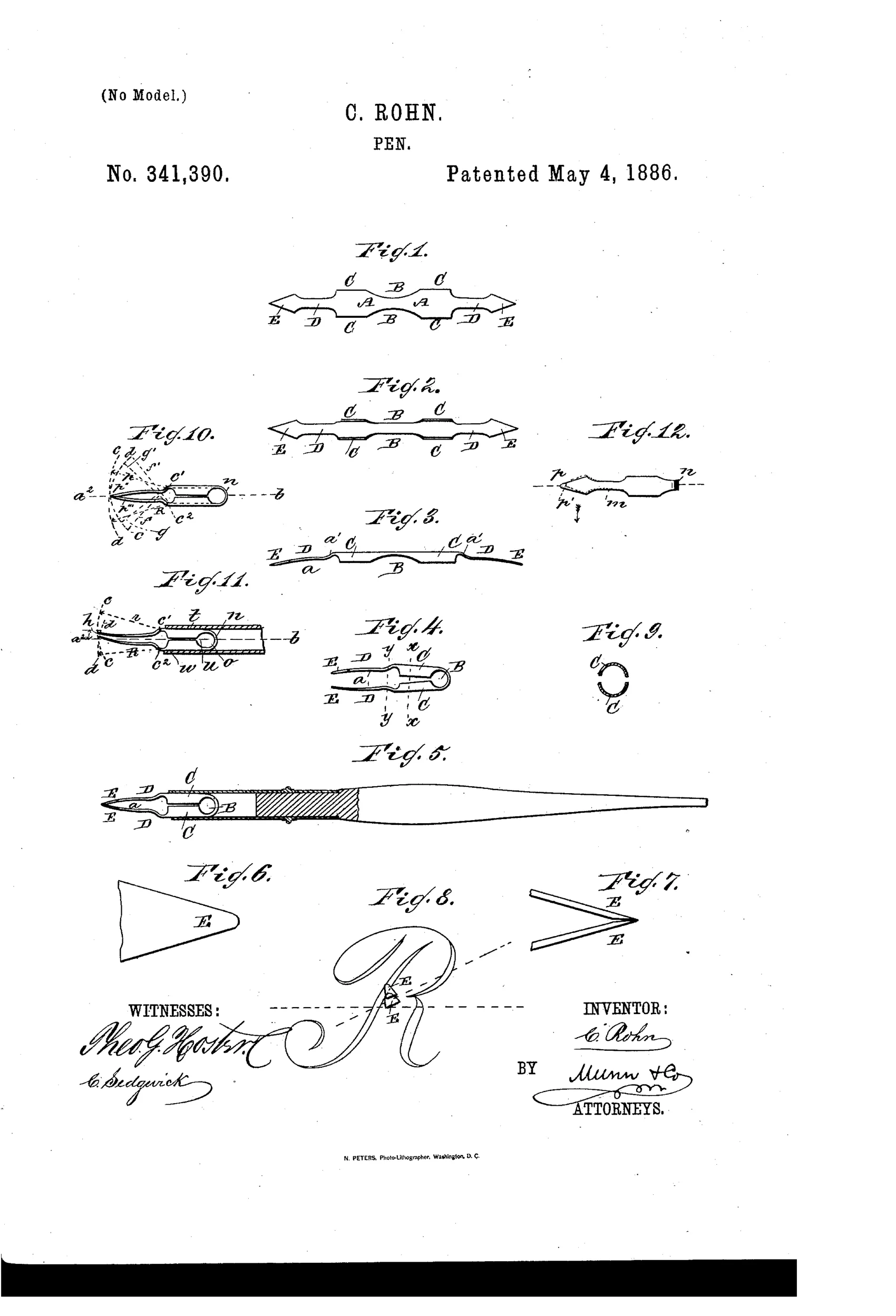
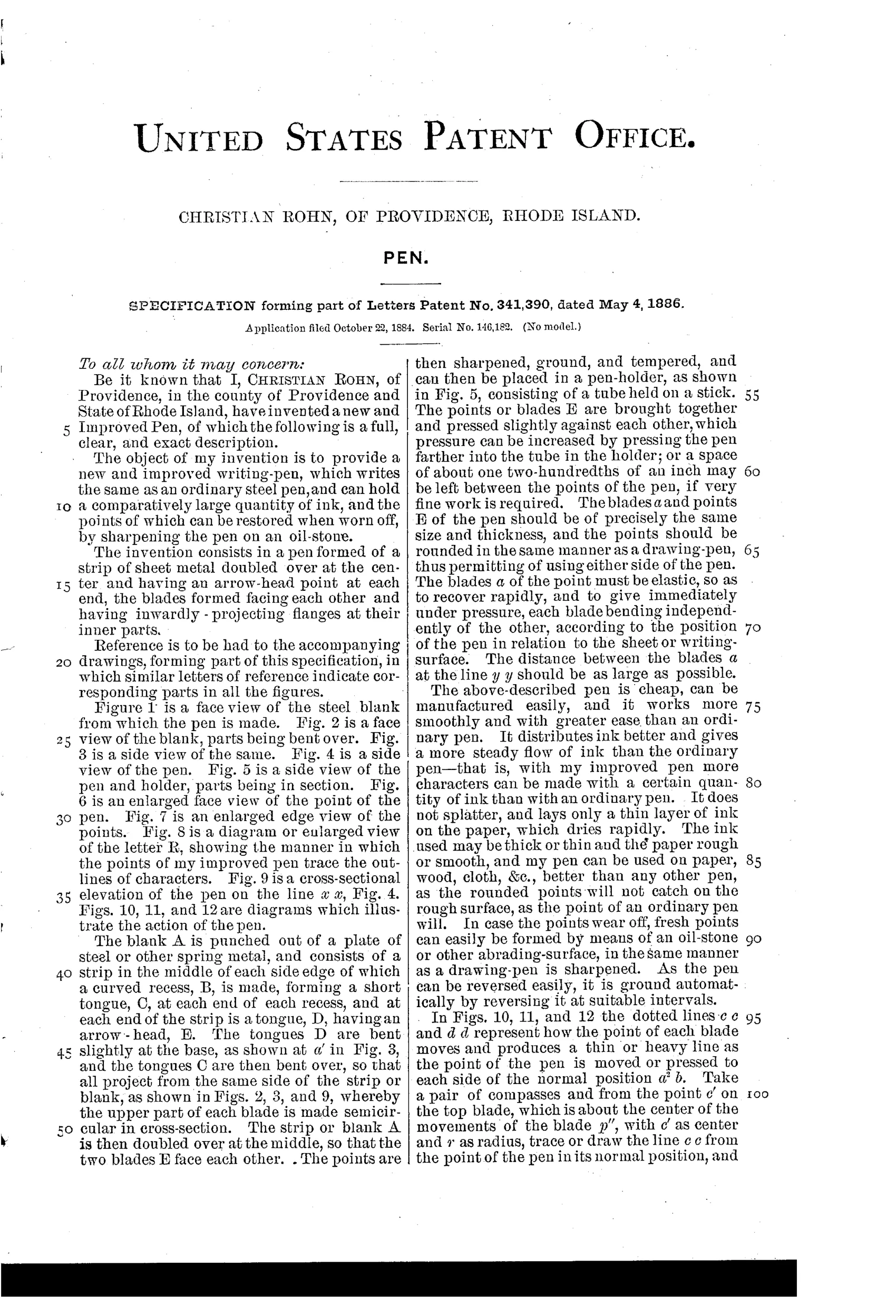
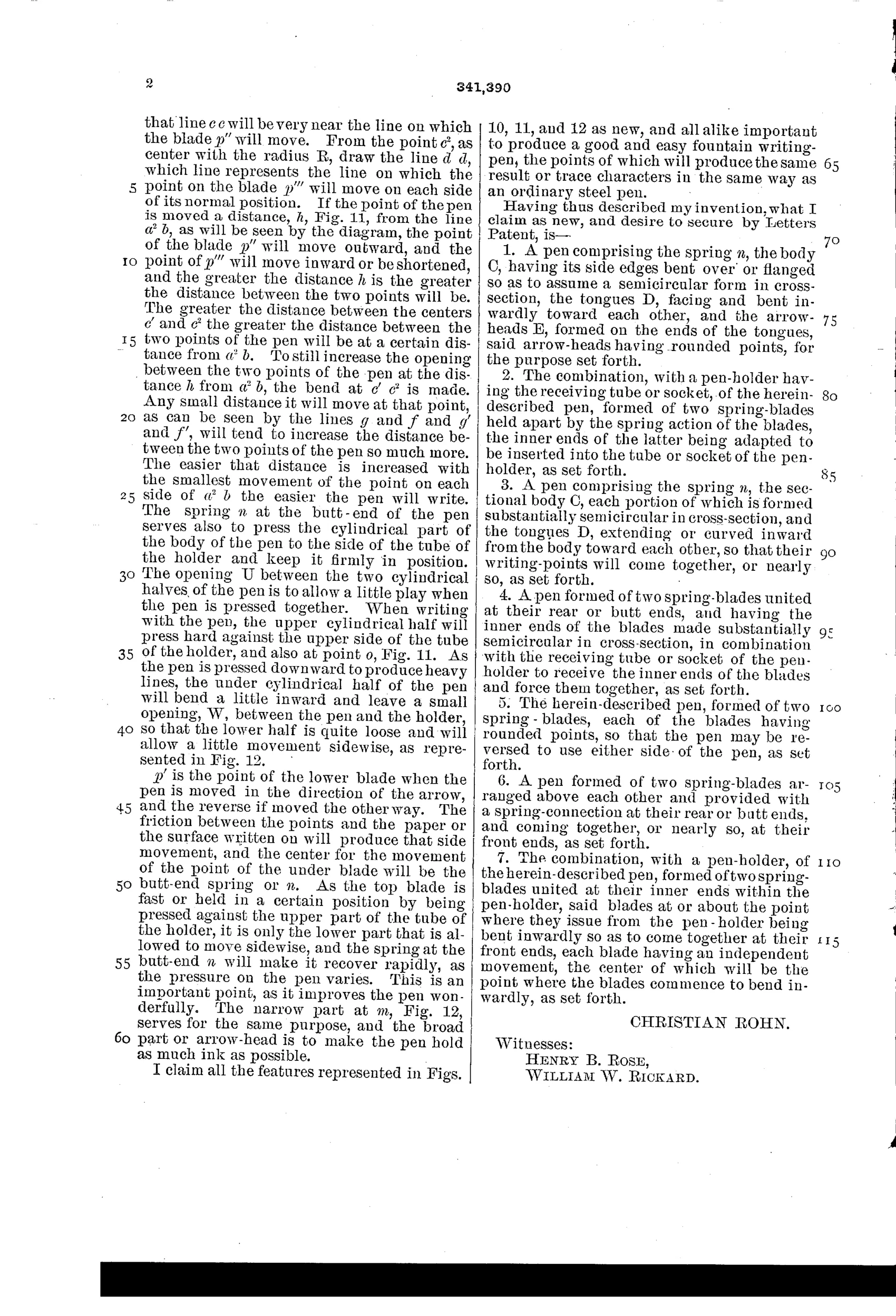
The pen is stamped from a single strip of spring steel, doubled over at the center so two blades face each other. Each blade's side edges are flanged to form a semicircular cross-section, with inwardly curved tongues bringing the arrow-head points together. The points are elastic and bend independently under pressure, spreading apart to vary line width like a drawing pen. A spring at the butt end presses the cylindrical body against the holder's tube, allowing sideways play so the pen recovers rapidly and can be reversed to use either point.
✒ What was claimed
“A pen comprising the spring n, the body C, having its side edges bent over or flanged so as to assume a semicircular form in cross-section, the tongues D, facing and bent inwardly toward each other, and the arrow-heads E, formed on the ends of the tongues, said arrow-heads having rounded points, for the purpose set forth.”
In plain English: The pen is made from a spring-steel body with flanged semicircular sides, inward-bent tongues, and rounded arrow-head points that meet to write.
✒ In the inventor’s words
“It does not splatter, and lays only a thin layer of ink on the paper, which dries rapidly.”— Christian Rohn, from the specification
Fate unknown
The staged-blank drawings show real manufacturing thought, but no marked Rohn pen or maker's tie-in is documented; a surviving stamped example would settle it.
✒ Commentary
This isn't a fountain pen at all — no reservoir, no feed. Rohn is attacking a different problem: the ordinary slit steel dip nib. His answer is to stamp a single strip of spring steel, fold it double at the middle, flange the edges into a semicircular tube, and let two inward-curved tongues bring a pair of rounded arrow-head points together. In effect he's crossed a nib with a draftsman's ruling pen: instead of two tines split from one sheet, you get two independent blades that spread under pressure to widen the line.
The drawing sheet is a small pleasure in itself. Figures 1 through 4 walk you through the manufacture — flat blank, partly bent, fully formed — which is unusually candid about production intent. Figure 8, the flourished letter R traced with dashed sightlines to the points, is the sales pitch: line variation for Spencerian penmanship. And note the little spring n in Figure 12, which presses the body against the holder tube while allowing sideways play, so the point recovers snap after a shaded stroke. The pen is symmetrical end to end, so when one point wears out you flip it and use the other — a genuinely thrifty touch.
Where it sits in our story: nowhere on the main line. Waterman's feed patent was two years old when this issued, and the future belonged to reservoirs. Rohn's pen is a refinement of a technology already peaking — clever metalwork chasing a market steel-nib giants like Esterbrook already owned by the gross.
Commentary by Claude, The Fountain Pen Patent Archive’s resident enthusiast