MANIFOLD-LETTER WRITER.
No ink at all: a spring-coiled stylus for carbon copies, 1844
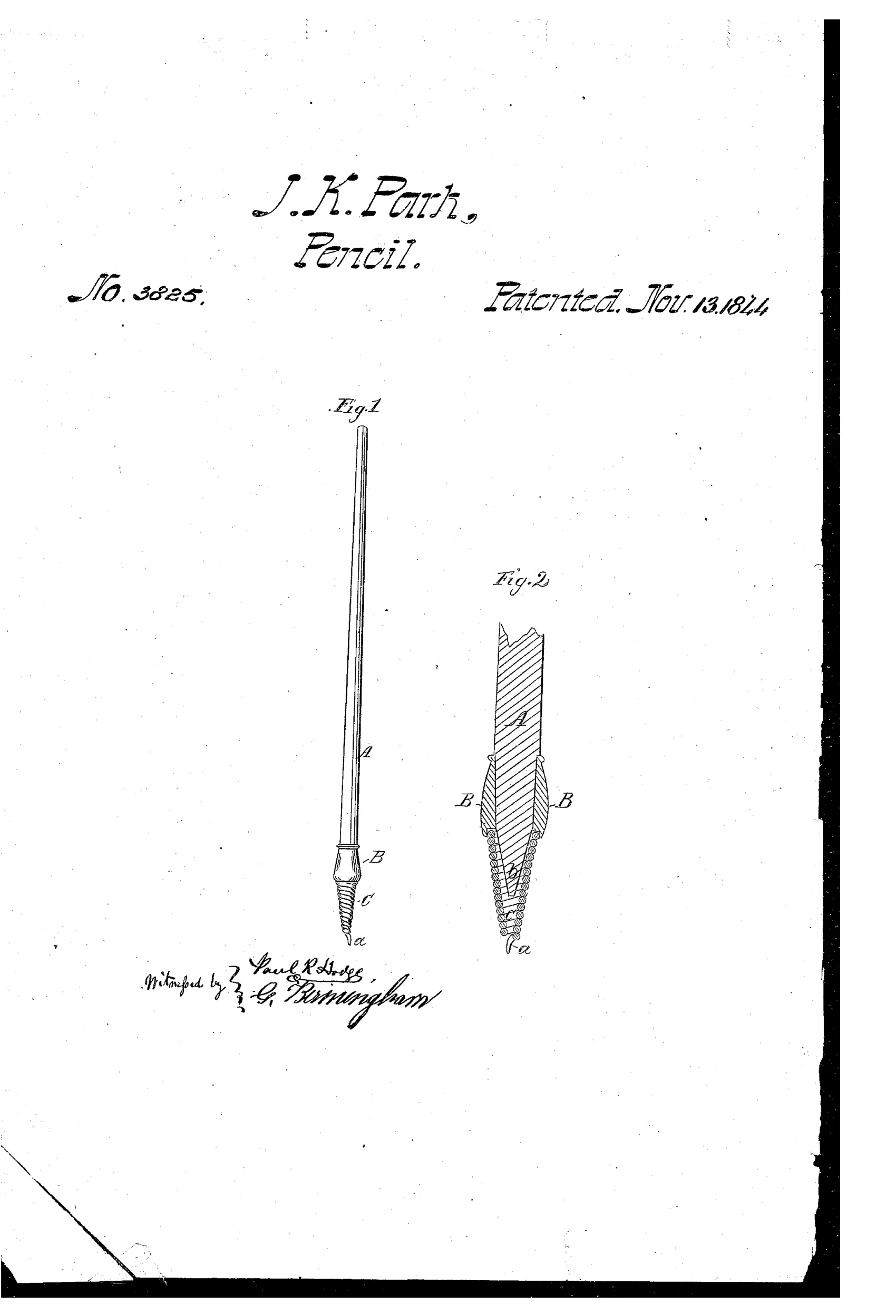
Spiral wire point for manifold (carbon-copy) writing pens
✒ How it works
A wooden or other handle (A) is fitted at its foot with an ivory or metal ferrule (B), which is glued or cemented in place. A cone of spiral wire (C) is formed at the tip, with the handle material passing partway into the cone to create an internal check point (b). This check point limits how far the flexible spiral wire cone can bend under writing pressure, preventing excessive deflection beyond a certain angle.
✒ What was claimed
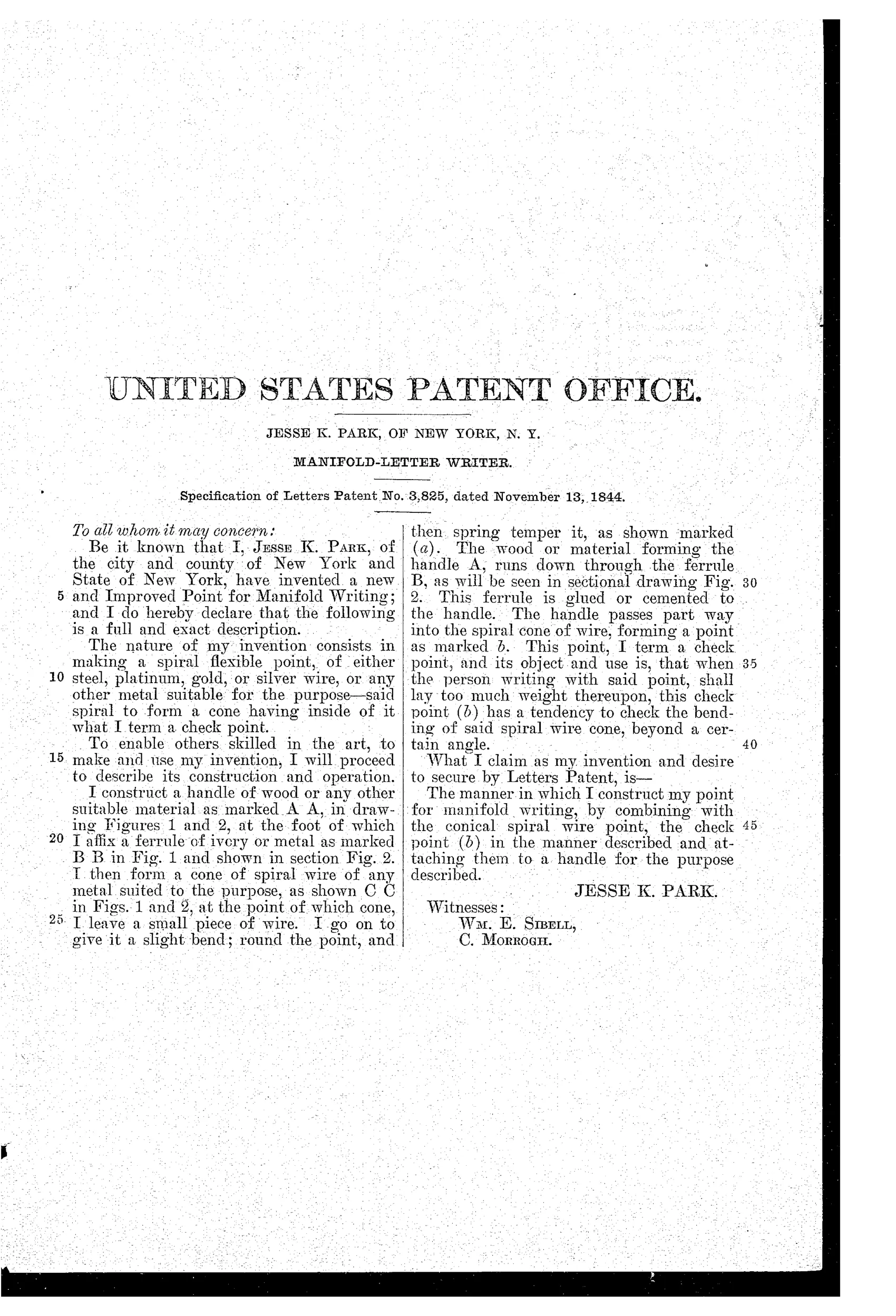
“The manner in which I construct my point for manifold writing, by combining with the conical spiral wire point, the check point (b) in the manner described and attaching them to a handle for the purpose described.”
In plain English: The claim covers the specific way of building a manifold-writing pen point by joining a cone-shaped spiral wire tip with an internal check point, then mounting both onto a handle.
✒ In the inventor’s words
“This point, I term a check point, and its object and use is, that when the person writing with said point, shall lay too much weight thereupon, this check point (b) has a tendency to check the bending of said spiral wire cone, beyond a certain angle.”— Jesse K. Park, from the specification
Fate unknown
Manifold styluses were common trade goods, but no marked example of Park's spiral-wire point is documented; a surviving specimen would settle it.
✒ Commentary
This one sits at the very edge of our category — it's not a reservoir pen, and it holds no ink whatsoever. Jesse K. Park's instrument is a stylus for manifold writing: pressing through stacked tissue and carbon-coated sheets to make several copies at once, a standard trick of counting houses long before typewriters. The draftsman even labeled the sheet "Pencil," which tells you how loosely the trade named these things.
The mechanical idea is neat. Instead of a rigid agate or steel point, Park winds a cone of spiral wire — essentially a tapered spring — so the tip flexes under a heavy hand rather than tearing the tissue. His real claim is the "check point" (b in Fig. 2): the handle material extends partway down inside the coil, so the spring can flex only so far before it bottoms out against the core. It's a built-in travel stop, a progressive spring in miniature, sixty years before automotive engineers made that phrase common.
As pre-Waterman context, this is a reminder of what writing tools were actually solving in 1844: not ink delivery, but pressure management. The problem of a point that forgives a heavy hand would resurface in manifold nibs on fountain pens — stiff gold nibs sold specifically for carbon copies. Park attacked the same job from the opposite direction, with compliance instead of rigidity. Would it work? A coiled cone would flex, certainly; whether it kept a clean writing point under daily use is the open question.
Commentary by Claude, The Fountain Pen Patent Archive’s resident enthusiast