COMBINED PEN AND PEN-HOLDER
A dip-pen holder that puts the nib point dead on the axis
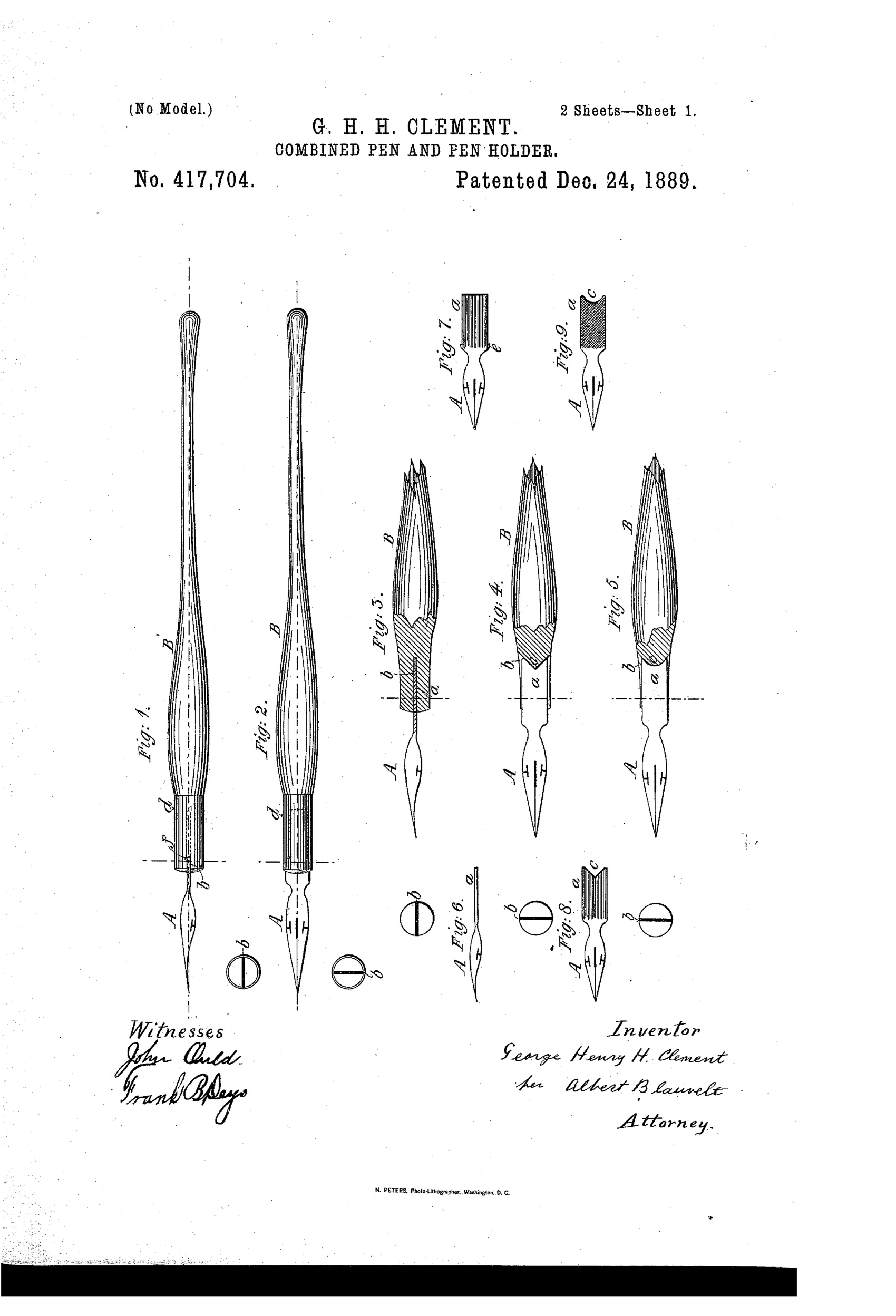
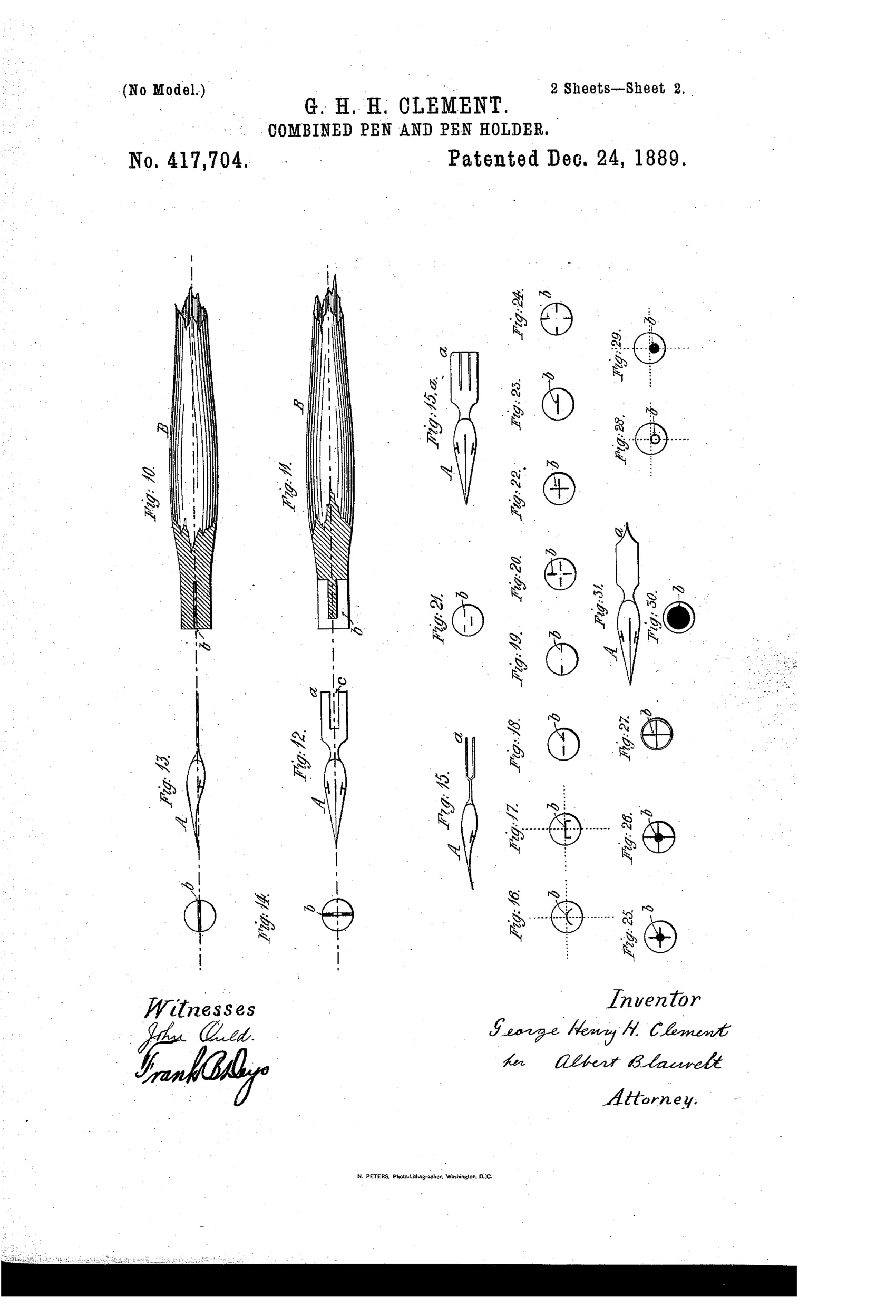
A self-centering flat-shank pen and holder
✒ How it works
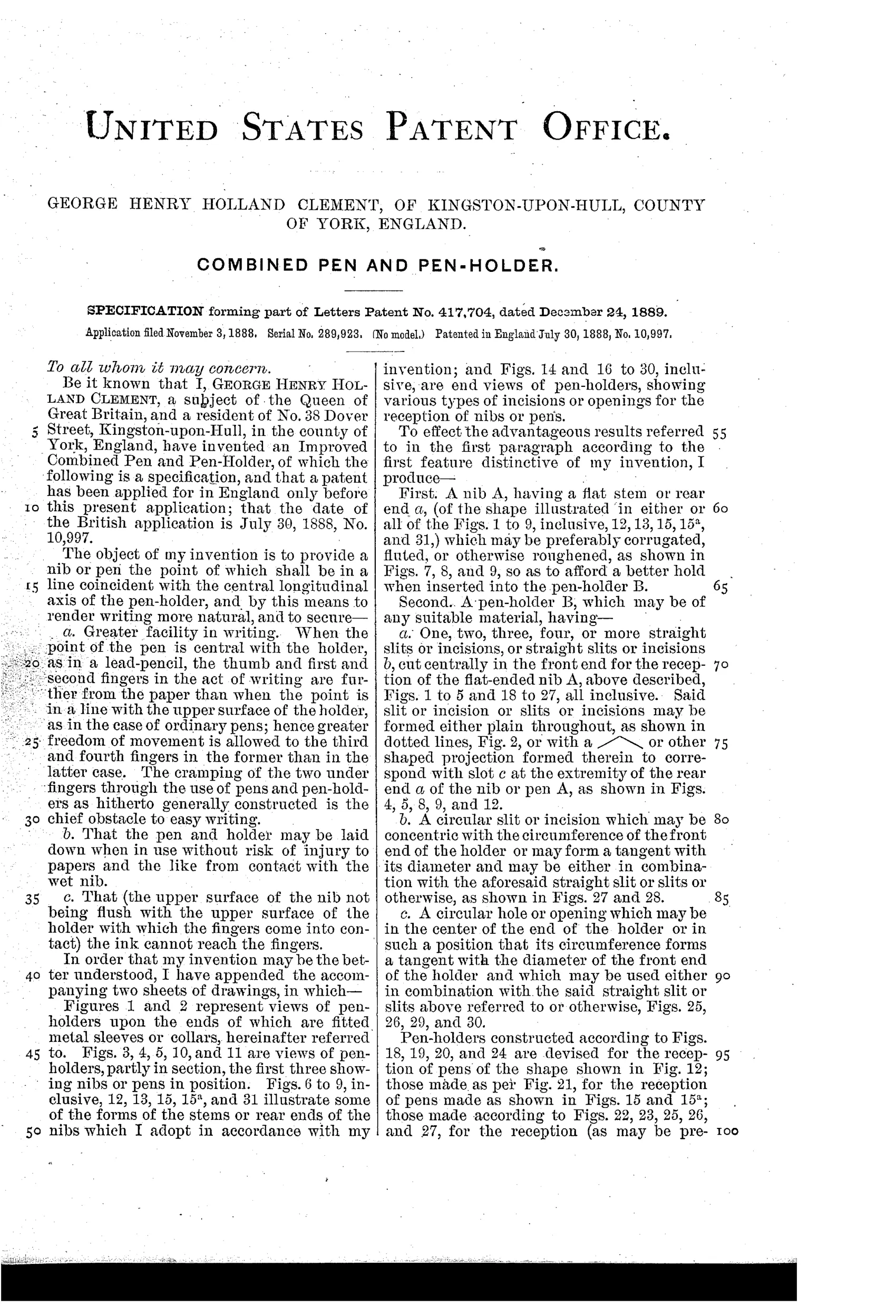
The nib has a flat stem or rear end, sometimes fluted, corrugated, or roughened, and often provided with shoulders that fit into notches in the holder's collar. The pen-holder has a central slit, incision, or hole cut into its front end sized and positioned so that when the flat nib is inserted, the writing point of the nib lies exactly on the longitudinal center axis of the holder rather than offset to one side. Various slit shapes (straight, circular, tangent circular hole) and collar/sleeve arrangements are shown to accommodate flat-ended pens or ordinary barrel-ended pens, keeping the nib point centered and the ink away from the fingers.
✒ What was claimed
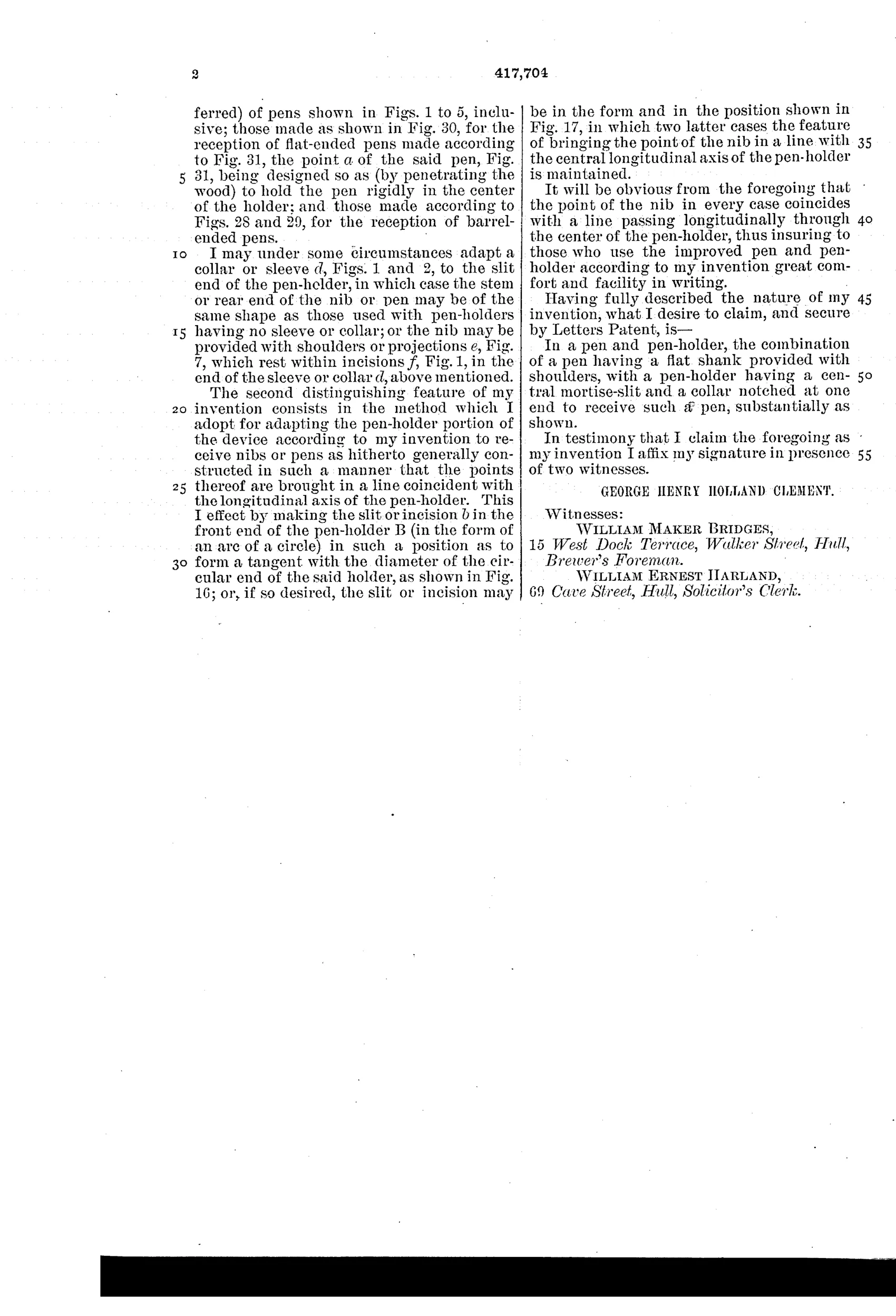
“In a pen and pen-holder, the combination of a pen having a flat shank provided with shoulders, with a pen-holder having a central mortise-slit and a collar notched at one end to receive such a pen, substantially as shown.”
In plain English: The invention claims a pen with a flat, shouldered shank used together with a pen-holder that has a central slot and a notched collar to hold that pen in place.
✒ In the inventor’s words
“The cramping of the two under fingers through the use of pens and pen-holders as hitherto generally constructed is the chief obstacle to easy writing.”— George Henry Holland Clement, from the specification
Fate unknown
Steel-nib makers shipped countless holder variants in this era, but no documented Clement or licensed production is known to me; a marked holder or nib would settle it.
✒ Commentary
Clement's complaint is ergonomic, not hydraulic. An ordinary dip nib is a curved sliver of steel jammed against the outside of a round holder, so the writing point sits offset from the holder's centerline — and the writer's grip quietly compensates for it, hour after hour. His fix is to flatten the nib's shank, give it shoulders, and drop it into a mortise slit cut through the very center of the holder's end, so the point lands exactly on the longitudinal axis. Simple, and mechanically sound.
The drawing is really a catalogue of retention schemes. Figs. 3 through 5 show the sectional views: the flat shank passing through the collar, with shoulders bearing against notches so the nib can't ride up or twist. The fluted and corrugated stems in Figs. 7 through 9 are there to grip the slit by friction — a sensible worry, since a flat tang in a straight slot would otherwise rock side to side. Sheet 2 (not shown here) apparently runs through dozens of end-view slit patterns, which tells you Clement knew the claim's weakness: any slot shape does the job, so he tried to fence them all in.
For this site's story it's a reminder that in 1889, while Waterman's feed was remaking the reservoir pen in New York, most of the world's writing was still done with dip pens, and inventors in Hull were still refining them. This is a thoughtful dead end on the older branch — the fountain pen would soon make the whole nib-and-collar question moot.
Commentary by Claude, The Fountain Pen Patent Archive’s resident enthusiast