RESERVOIR ATTACHMENT FOR PENS.
A stamped-aluminum clip that turns any dip pen into a poor man's fountain pen
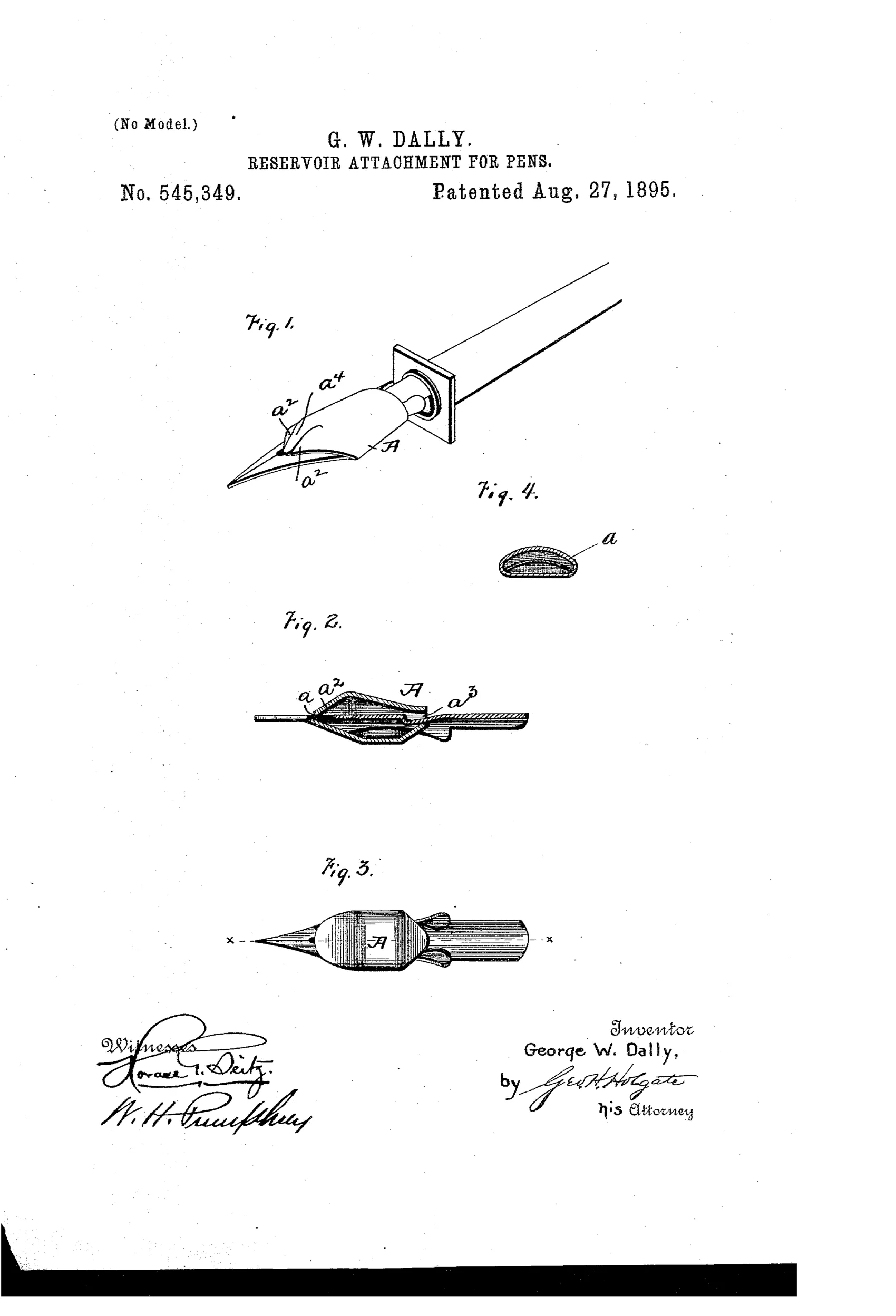
Clip-on ink reservoir attachment for dip pens.
✒ How it works
A stamped sheet-aluminum casing with converging open ends clasps over an ordinary pen-point, gripping the nib by its bent top and bottom walls. The lower end of the casing is doubly slit on its upper side to form a tongue that is bent slightly upward to encourage ink flow to the pen-point. The user dips the pen and attached reservoir fully into ink so it enters through the upper opening and fills the chamber, allowing continuous writing without redipping. As the nib spreads while writing, it presses against the reservoir walls, helping keep the device seated on the pen.
✒ What was claimed
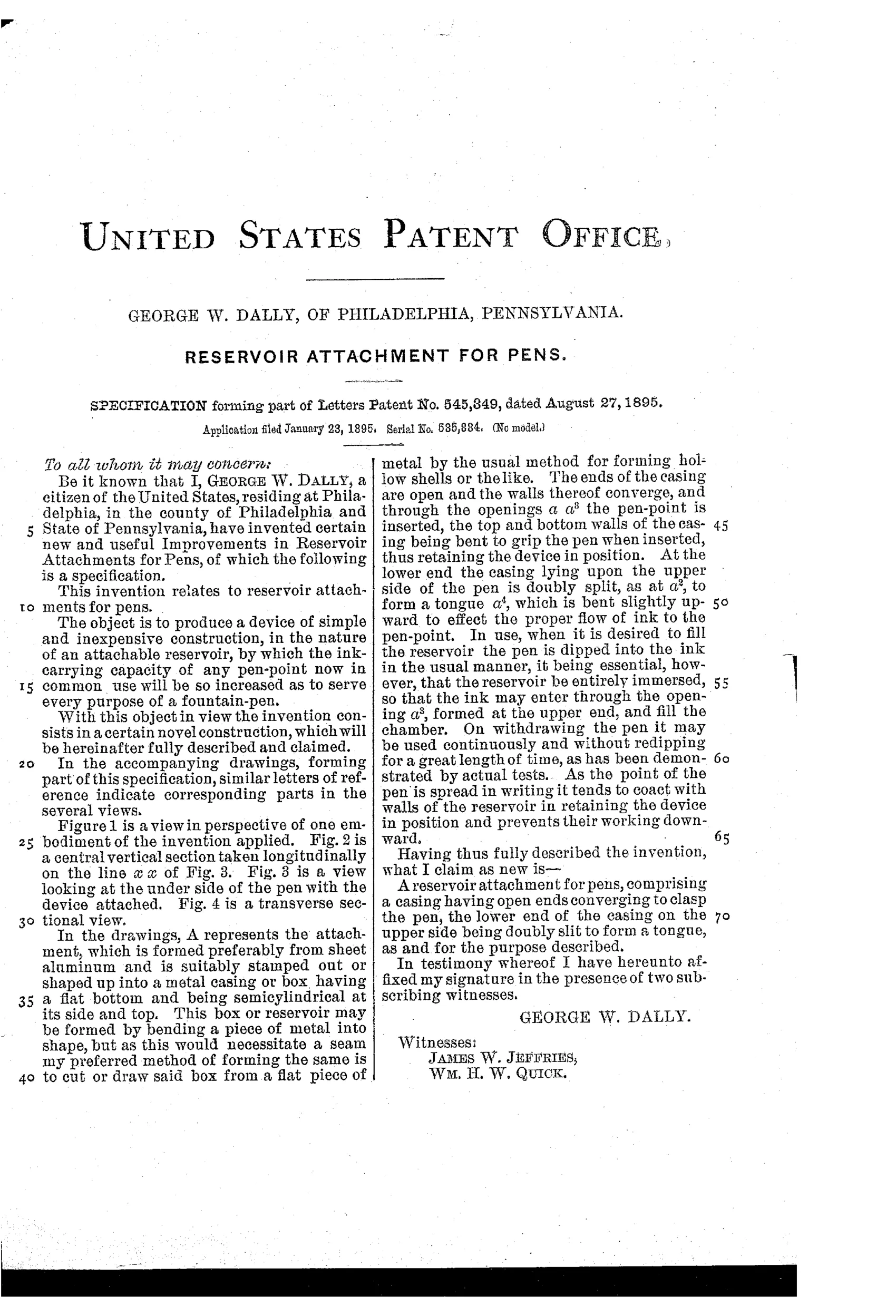
“A reservoir attachment for pens, comprising a casing having open ends converging to clasp the pen, the lower end of the casing on the upper side being doubly slit to form a tongue, as and for the purpose described.”
In plain English: The invention is a clip-on ink reservoir with tapered open ends that grip a pen, and a slit tongue at the bottom that directs ink flow to the nib.
✒ In the inventor’s words
“On withdrawing the pen it may be used continuously and without redipping for a great length of time, as has been demonstrated by actual tests.”— George W. Dally, from the specification
Fate unknown
Reservoir clips of this general type were commercially common, but no marked example of Dally's aluminum design is documented; a surviving specimen or trade advertisement would settle it.
✒ Commentary
By 1895 Waterman had already shown the world how to build a proper fountain pen, but a fountain pen cost real money and an ordinary steel nib cost a penny. Dally's answer sits in the long tradition of reservoir attachments — clip-on gadgets that hold a bead of ink above the nib so a clerk could write a paragraph instead of a sentence between dips. The genre goes back decades before this patent; his contribution is in the details of manufacture and grip.
The casing is a single piece of sheet aluminum — a fashionable material in 1895, newly cheap after the Hall process — stamped so both open ends converge and clasp the nib. Fig. 4 is the tell: that flattened-dome cross section is what makes the whole thing springy enough to hold on. The cleverest touch is functional jiu-jitsu: as the tines spread under writing pressure, they press outward against the casing walls, so the harder you write, the tighter the reservoir grips. The doubly-slit tongue at the lower end, bent slightly upward, is a crude capillary feed — a whisker of the same thinking Waterman formalized in 1884.
It would work, more or less, as such clips demonstrably did; the era sold plenty of them under names like the 'penfiller.' Whether Dally's particular stamping ever reached a stationer's counter is another question. It's a workmanlike entry in a crowded accessory market, notable mainly for the aluminum and that pressure-grip insight.
Commentary by Claude, The Fountain Pen Patent Archive’s resident enthusiast