SIGN-WRITER'S APPARATUS.
A pressure-valve pen that swells from hairline to shaded stroke on demand
Hand-held tool for painting sign lettering
✒ How it works
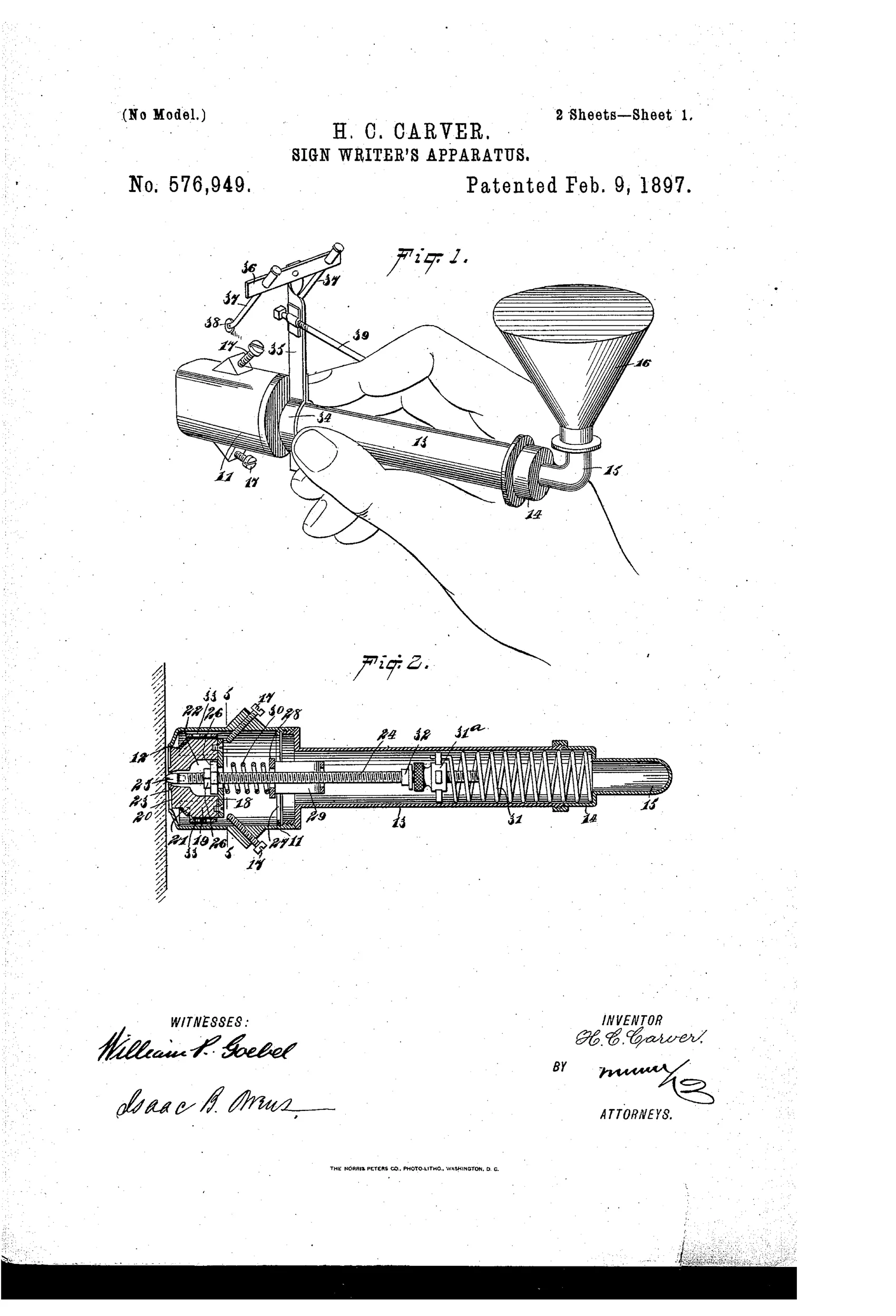
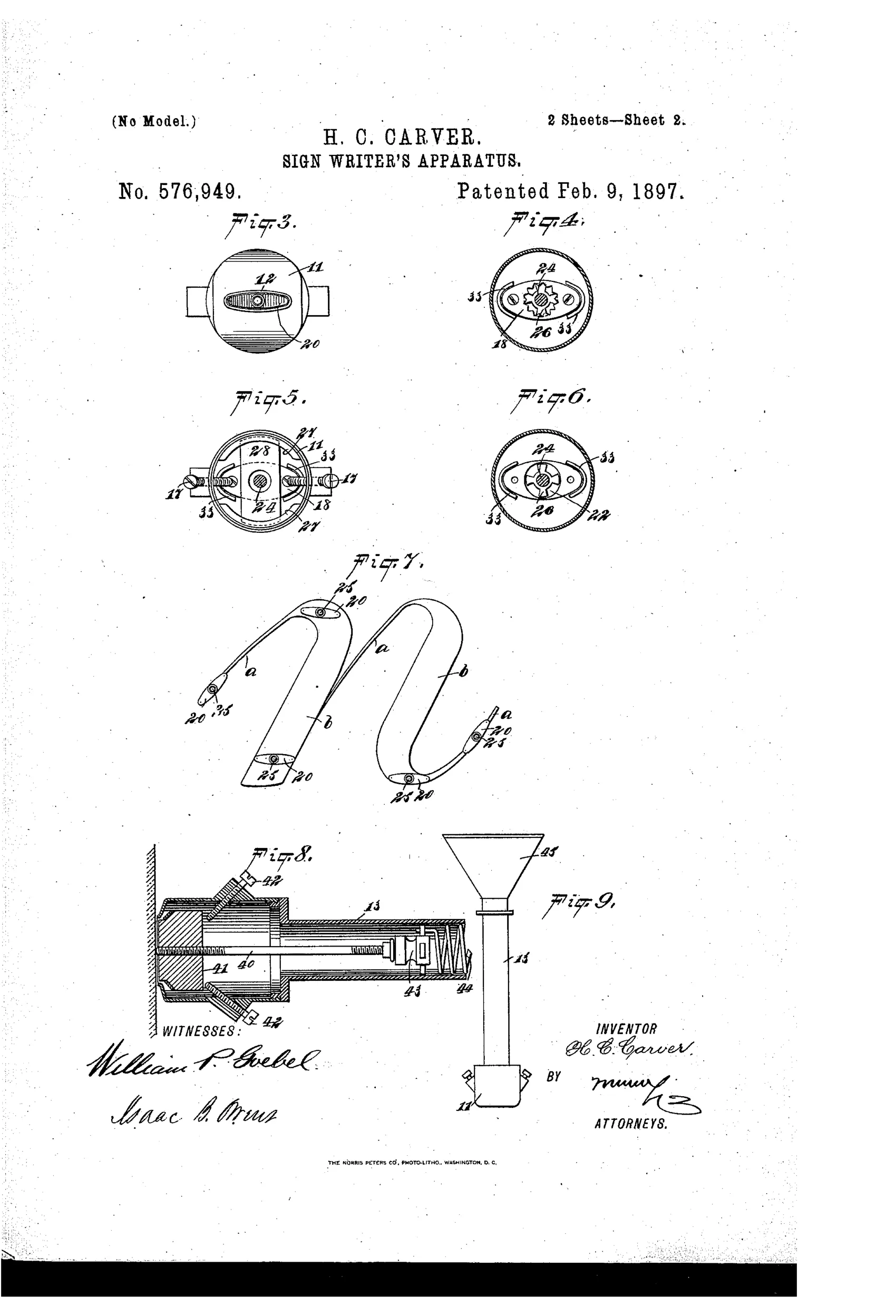
A cylindrical body with a flanged oval mouth holds a spring-pressed valve block through which a threaded rod carries a fine writing point. Liquid paint gravity-feeds from an inverted, sealed reservoir through an elbow and handle-tube into the body, flowing around the point to ink the surface. Light pressure keeps only the point in contact with the surface to draw thin script lines, while greater pressure on the handle pushes the block inward against two nested springs, opening the flanged mouth so paint flows around its edge to form a broad, blendable shaded line. Curved guide-plates inside the body constrain the block's travel, and set-screws limit how far it can retract.
✒ What was claimed
“1. The combination of a body portion having a flanged mouth, a block capable of closing said mouth, and a point carried by the block and capable of projecting through the mouth and of movement with the block into the body portion, substantially as described.”
In plain English: The invention combines a body with a flanged opening, a movable block that seals that opening, and a point on the block that pokes through the opening and can be pushed back into the body along with the block.
✒ In the inventor’s words
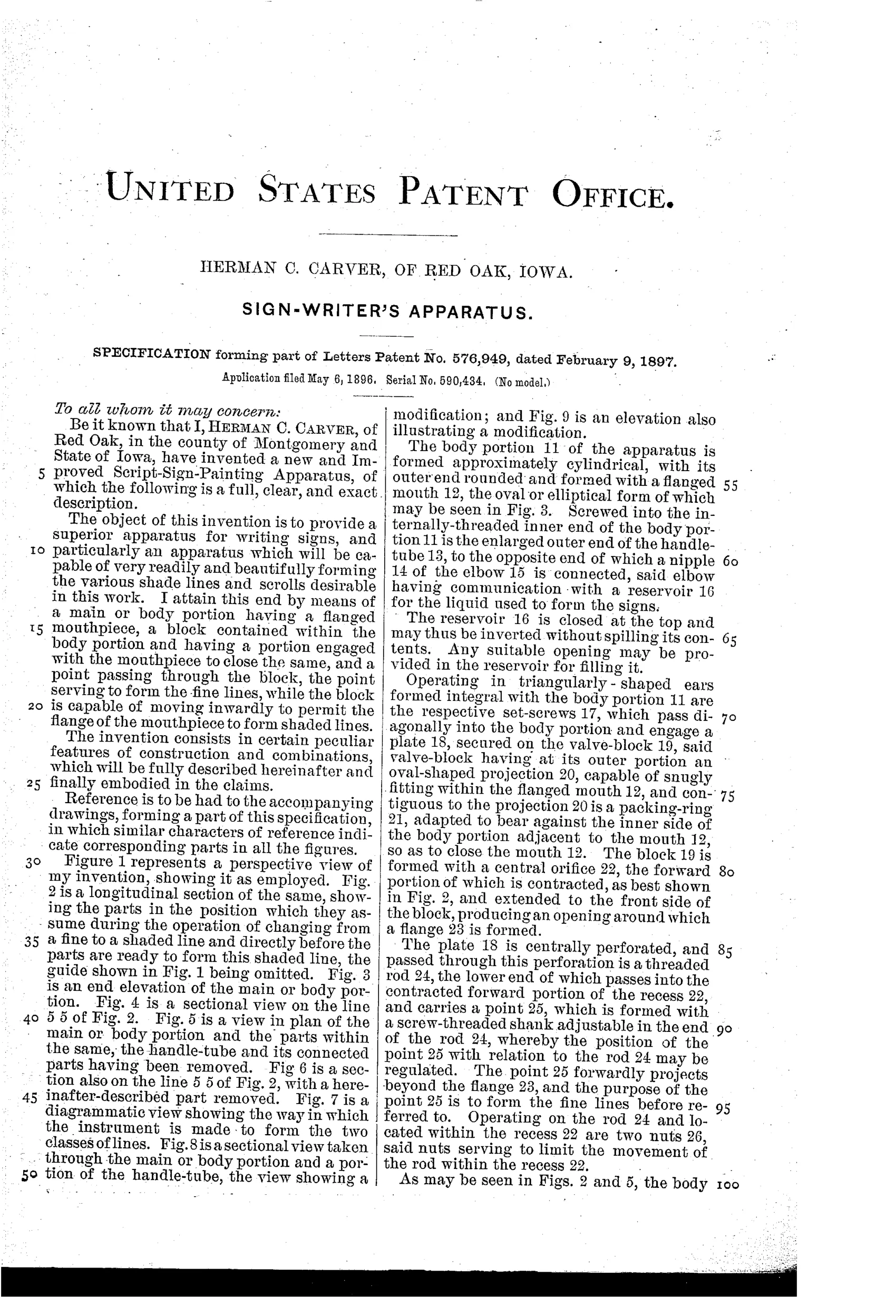
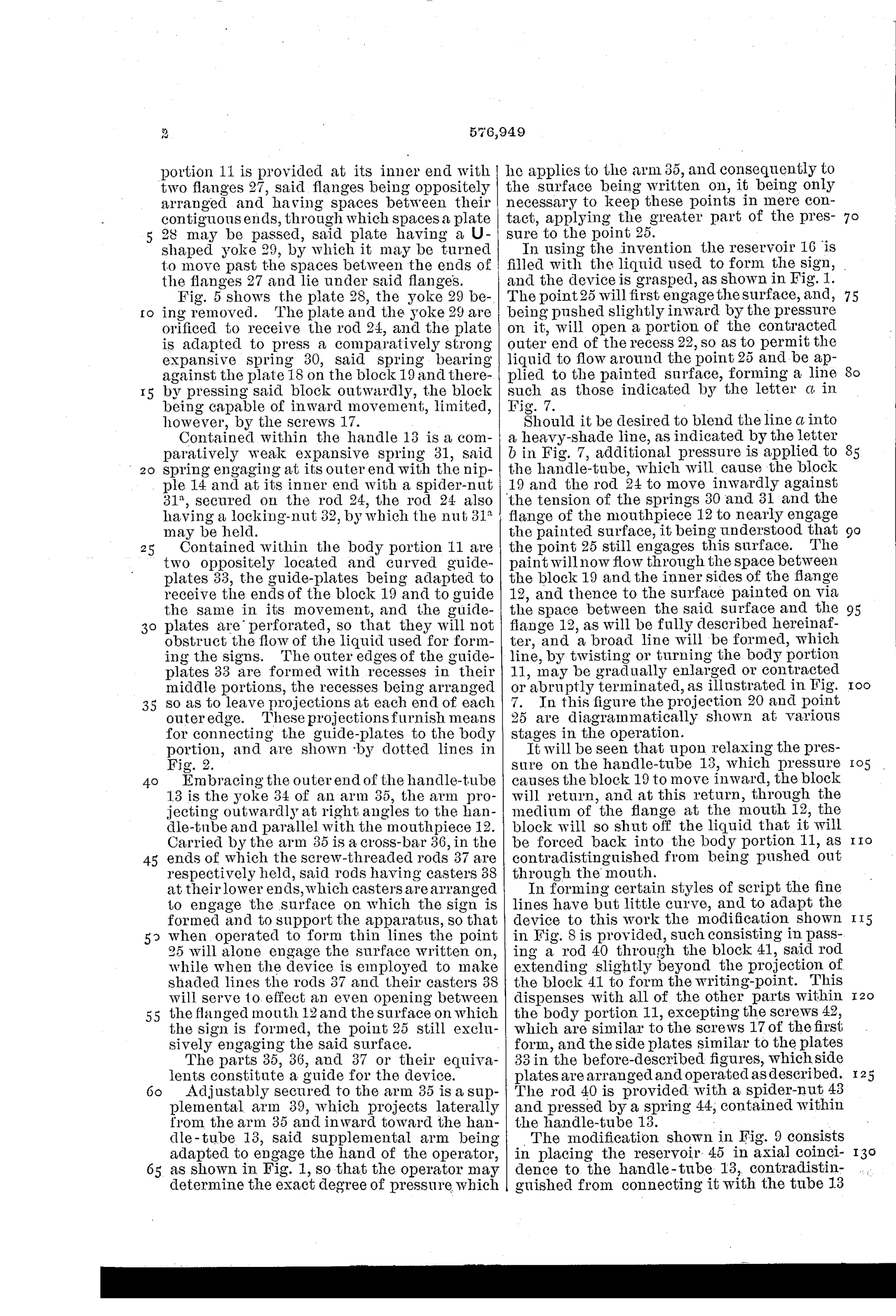
“The liquid used to form the signs may be paint or other thickened liquid, such as whiting combined with a proportion of gum-water, such mixture being useful for producing temporary signs.”— Herman C. Carver, from the specification
Fate unknown
No maker or marked example of this apparatus is documented; a surviving specimen or trade-catalog listing would settle it.
✒ Commentary
This is a fountain pen's country cousin: a sign-writer's tool from Red Oak, Iowa, that solves the line-variation problem not with a flexible nib but with a spring-loaded valve. Inside the barrel sits a block that normally seals the flanged oval mouth, with only a fine point poking through — press lightly and you get thin script. Bear down and the block retreats against two nested springs, unseating from the mouth so paint floods around its edge and lays a broad, blendable band. It's a mechanical translation of what a lettering brush does by feel.
The drawing's oddest feature is the supply: an inverted funnel reservoir riding on an elbow above the hand, gravity-feeding paint down through the handle-tube. This is exactly the arrangement Waterman's capillary feed had made obsolete for ink — but paint and whiting-gum mixtures are too thick for capillary channels, so Carver's crude head of pressure is actually the right call for his medium. Note also the little caster arm at top left of Fig. 1, a rolling outrigger to steady the tool against the signboard.
As pen history it's a dead end — nobody was going to write letters with this — but as a document of what 'variable line' meant to a working sign painter in 1896, it's a genuinely thoughtful piece of mechanism. Whether that valve seated cleanly after a day in drying paint is another question.
Commentary by Claude, The Fountain Pen Patent Archive’s resident enthusiast