METALLIC PEN.
An 1849 gold nib slit nearly its whole length, then hammered shut with spring tension
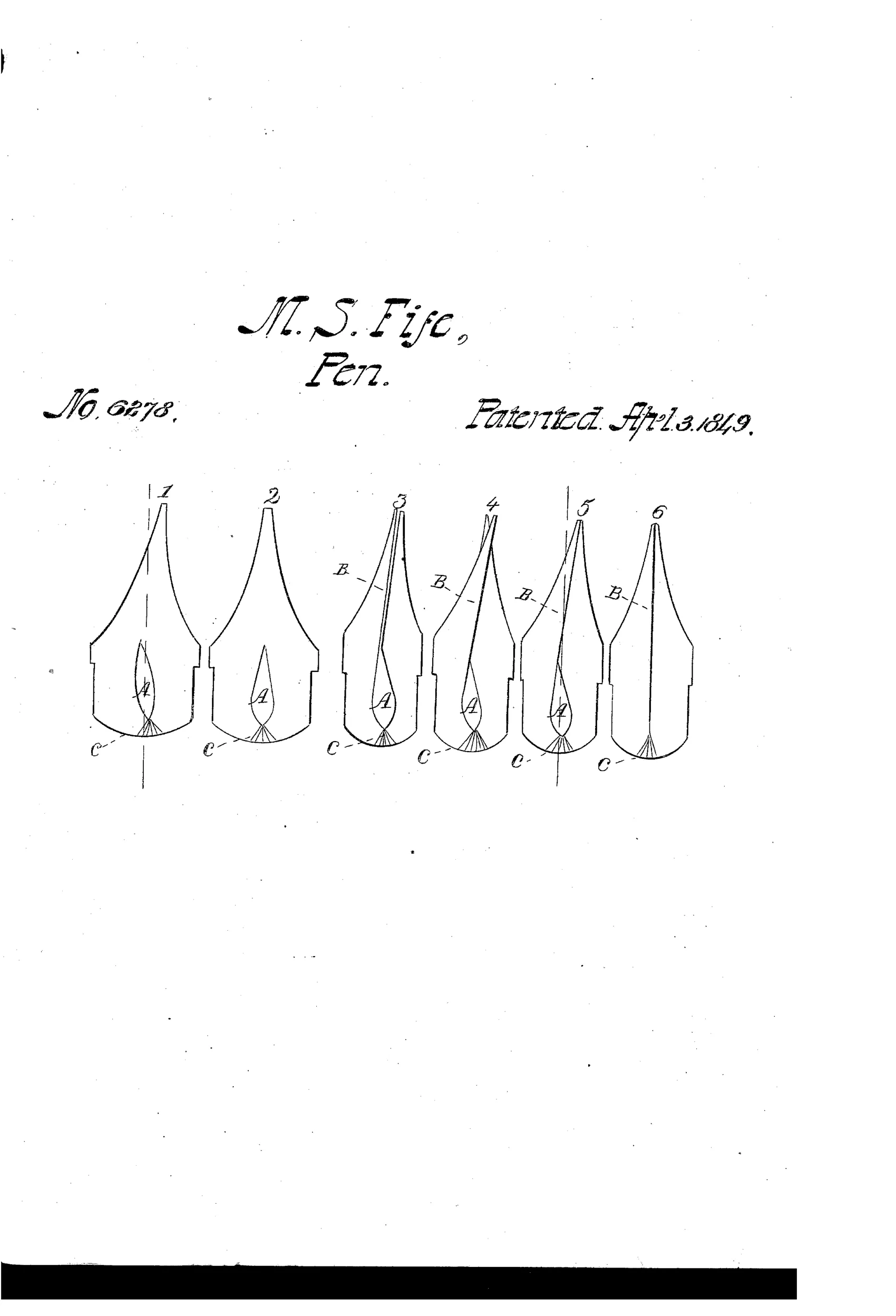
A slit gold pen nib design
✒ How it works
The nib blank is cut from a strip of gold or other metal alloy, then a slot is cut either off-center for an oblique pen or centered for a straight pen. The nib is curved and then slit nearly through its entire length, with the edges ground straight and smooth so they form a perfect joint. A hammer and internal anvil are used to close the slit by crossing and re-aligning the points, after which the points are ground to shape and the pen is polished and mounted in a holder.
✒ What was claimed
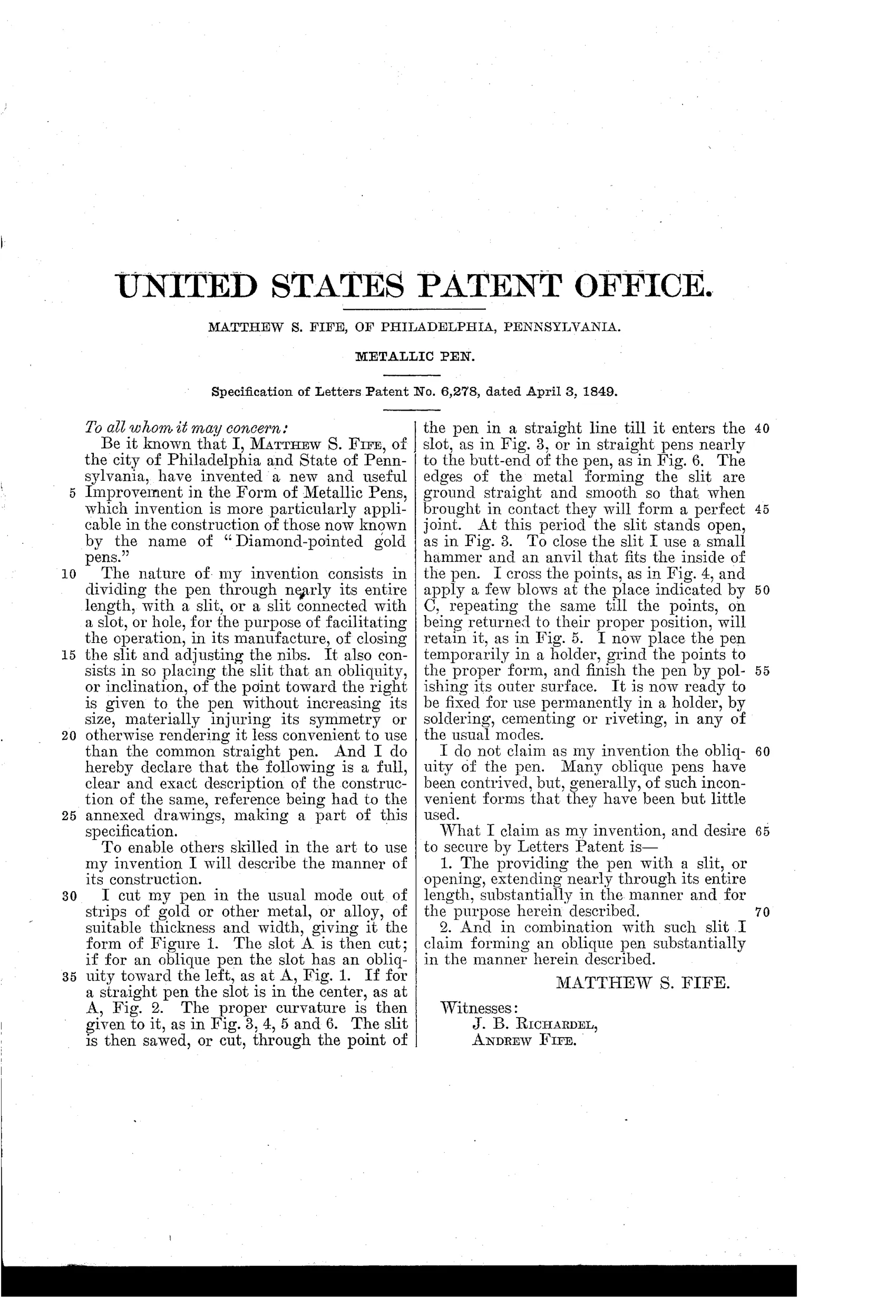
“1. The providing the pen with a slit, or opening, extending nearly through its entire length, substantially in the manner and for the purpose herein described.”
In plain English: A pen nib with a slit or opening running almost the full length of the nib, made in the manner described.
✒ In the inventor’s words
“I do not claim as my invention the obliquity of the pen. Many oblique pens have been contrived, but, generally, of such inconvenient forms that they have been but little used.”— Matthew S. Fife, from the specification
Fate unknown
Philadelphia gold-pen makers of this era did sell such nibs, but no Fife-marked example is documented to me; a surviving imprinted nib would settle it.
✒ Commentary
This is thirty-five years before Waterman, and it isn't a fountain pen at all — it's a dip nib, back when 'metallic pen' meant a gold point competing with the quill. Fife's idea is about the slit, the single most important feature of any nib then or now. Instead of a short slit at the tip, he cuts one running nearly the full length of the nib, grinds the facing edges dead straight, then deliberately crosses the two points over each other and hammers them back into alignment over an internal anvil.
The drawing sheet tells the whole story left to right: Figures 1 and 2 are flat blanks with the slot A punched off-center (for an oblique pen) or centered; Figure 3 shows the curved nib with the points sprung apart at B; Figure 4 shows them crossed, ready for the hammer at C; Figures 5 and 6 show the finished, closed nib. That crossing-and-hammering step is the clever part — it pre-loads the tines against each other, so the slit stays shut at rest but the long slit gives an unusually soft, flexible action under pressure. Modern flex-nib grinders chase exactly this trade-off.
Fife is also refreshingly honest in the text, disclaiming the oblique form itself and noting most oblique pens were 'of such inconvenient forms that they have been but little used.' Philadelphia was a genuine center of gold-pen making in the 1840s, and this reads like a working craftsman's process patent, not a dreamer's.
Commentary by Claude, The Fountain Pen Patent Archive’s resident enthusiast