METALLIC PEN.
Electric spot-hardening gives a steel dip nib a poor man's iridium point
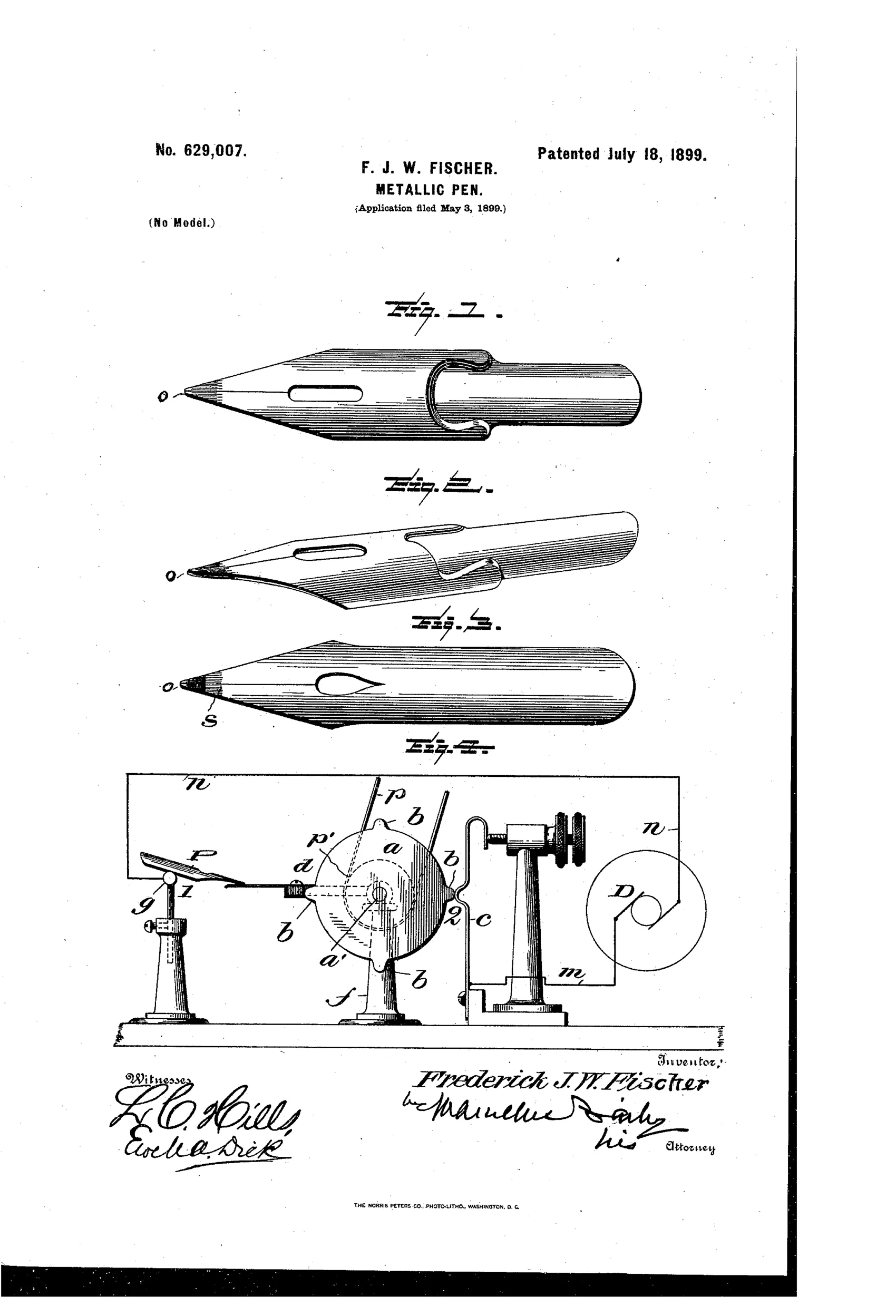
Steel pen with electrically hardened glass-hard writing tip
✒ How it works
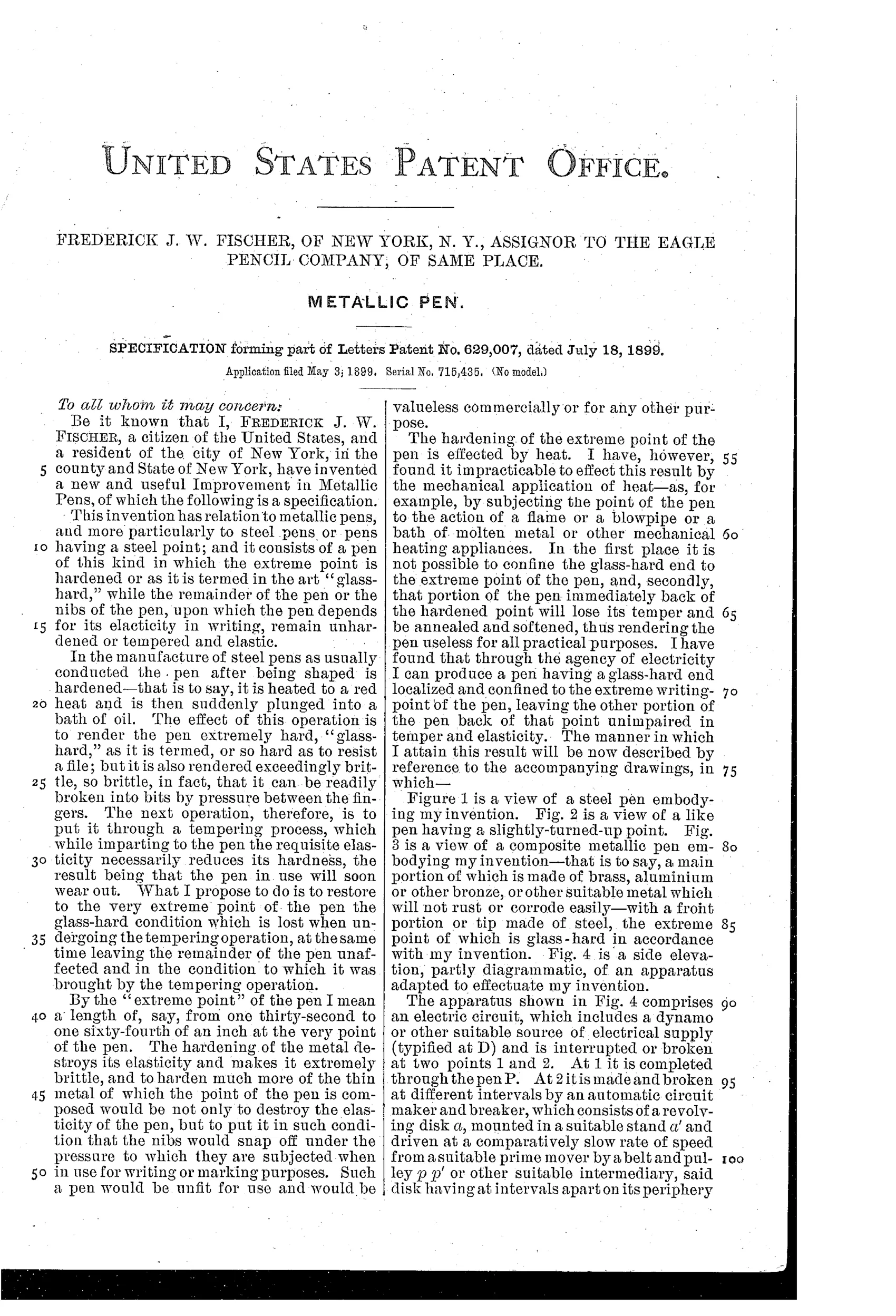
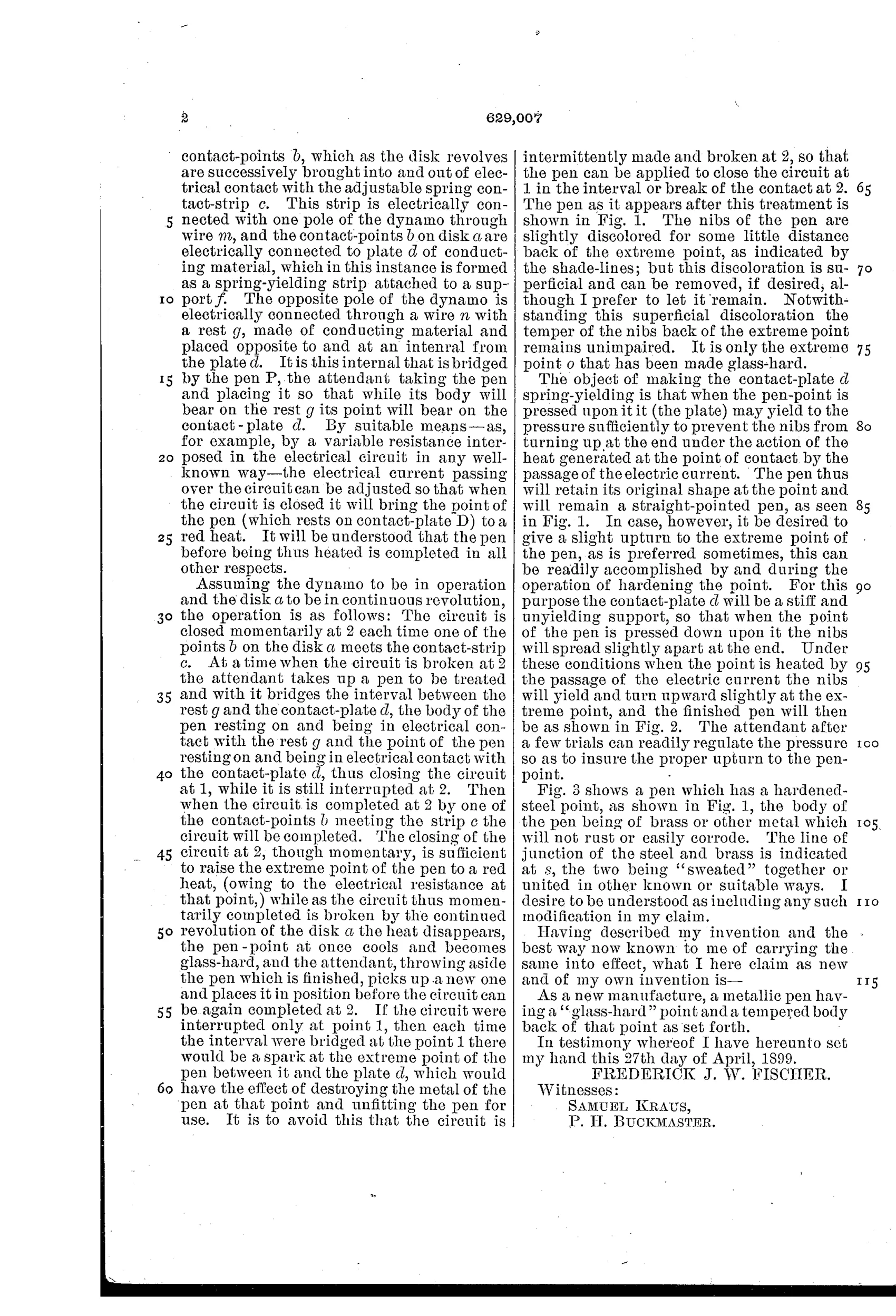
The pen is first shaped and hardened, then tempered to restore elasticity to the body while softening the tip. An electrical circuit is used to reheat only the extreme point of the pen to red heat via contact with a spring-yielding conducting plate, then allowed to cool suddenly, making just that tip 'glass-hard' again. A revolving disk with contact points intermittently completes the circuit so the heating is brief and localized, preventing the rest of the nib from losing its temper. This leaves the nibs elastic for writing while only the very point, about 1/32 to 1/64 inch, is hardened for durability.
✒ What was claimed
“As a new manufacture, a metallic pen having a "glass-hard" point and a tempered body back of that point as set forth.”
In plain English: A metal pen whose extreme tip is hardened glass-hard while the rest of the nib body remains tempered and flexible.
✒ In the inventor’s words
“I have found that through the agency of electricity I can produce a pen having a glass-hard end localized and confined to the extreme writing-point of the pen, leaving the other portion of the pen back of that point unimpaired in temper and elasticity.”— Frederick J. W. Fischer, from the specification
Fate unknown
Eagle Pencil was a real high-volume manufacturer, but I know of no documented pen marketed on this hardening process; period Eagle advertising or a marked specimen would settle it.
✒ Commentary
The problem Fischer is attacking is the oldest one in steel pens: a hard nib wears well but writes like a nail, while a springy nib writes beautifully and grinds its point away. Gold pens solved this with an iridium blob welded to the tip — expensive. Fischer's answer is to make the steel itself do both jobs: temper the whole nib for elasticity, then use an electric current to re-heat just the last 1/32 of an inch to red heat and quench it, leaving a 'glass-hard' point on a flexible body.
The apparatus in Fig. 4 is the clever part. The pen point touches a spring-yielding contact plate, and a revolving disk with contact studs makes and breaks the circuit, so the heating comes in brief pulses. That intermittence is doing real metallurgical work — it keeps the heat from creeping back up the nib and drawing the temper out of the body. Localized heat treatment by resistance heating in 1899 is genuinely ahead of its time; industry rediscovered the idea at scale decades later.
Note the assignee: Eagle Pencil Company, a volume maker of cheap writing goods. This is a factory-process patent, not an inventor's daydream — the claim to 'a new manufacture' covers the pen itself, and Fig. 3's brass-bodied, steel-tipped composite nib shows they were thinking about cost from the start. Whether the process survived contact with production economics is another question.
Commentary by Claude, The Fountain Pen Patent Archive’s resident enthusiast