MODE OF MAKING METALLIC PENS OR INSTRUMENTS FOR WRITING.
Joseph Gillott claims a channel feeder forty-six years before Waterman
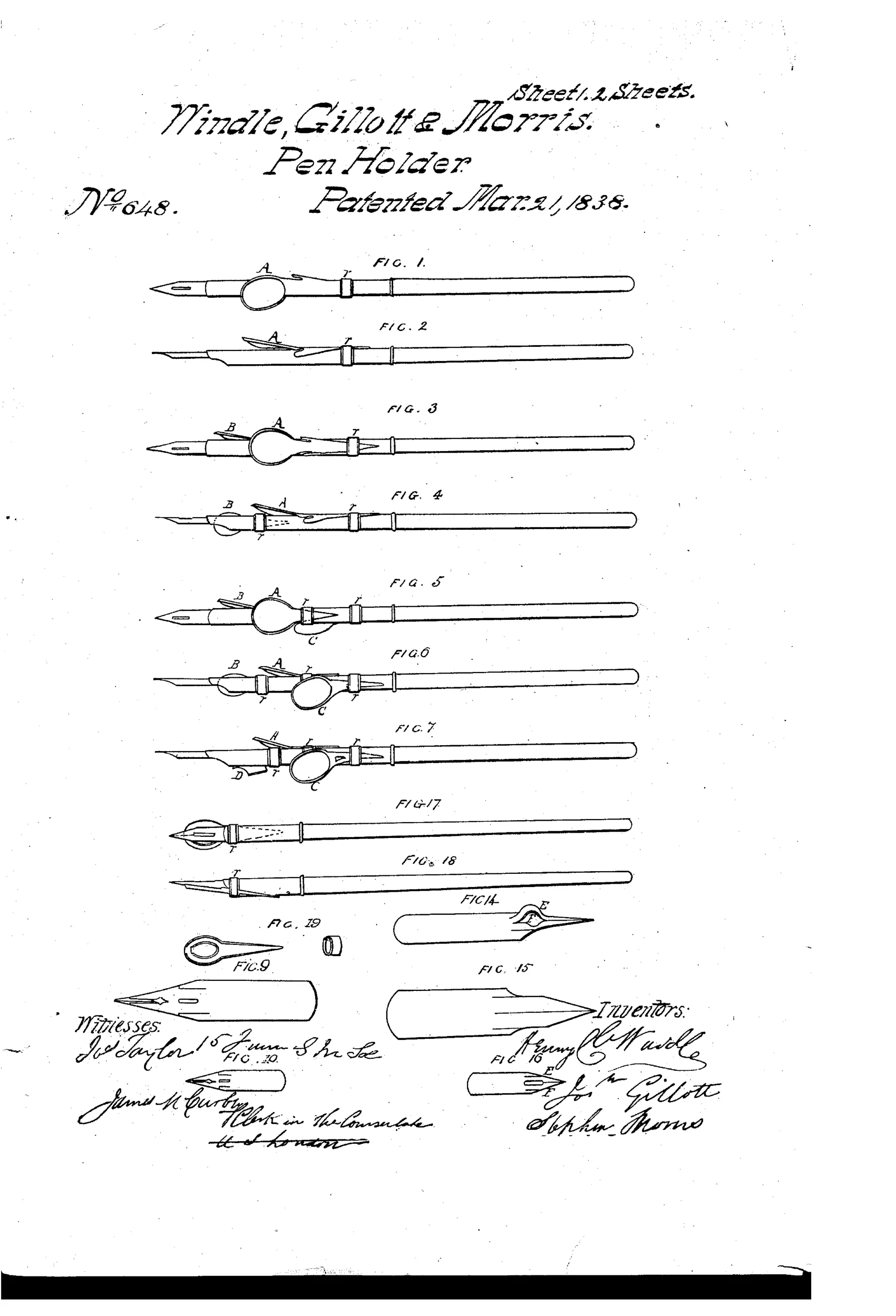
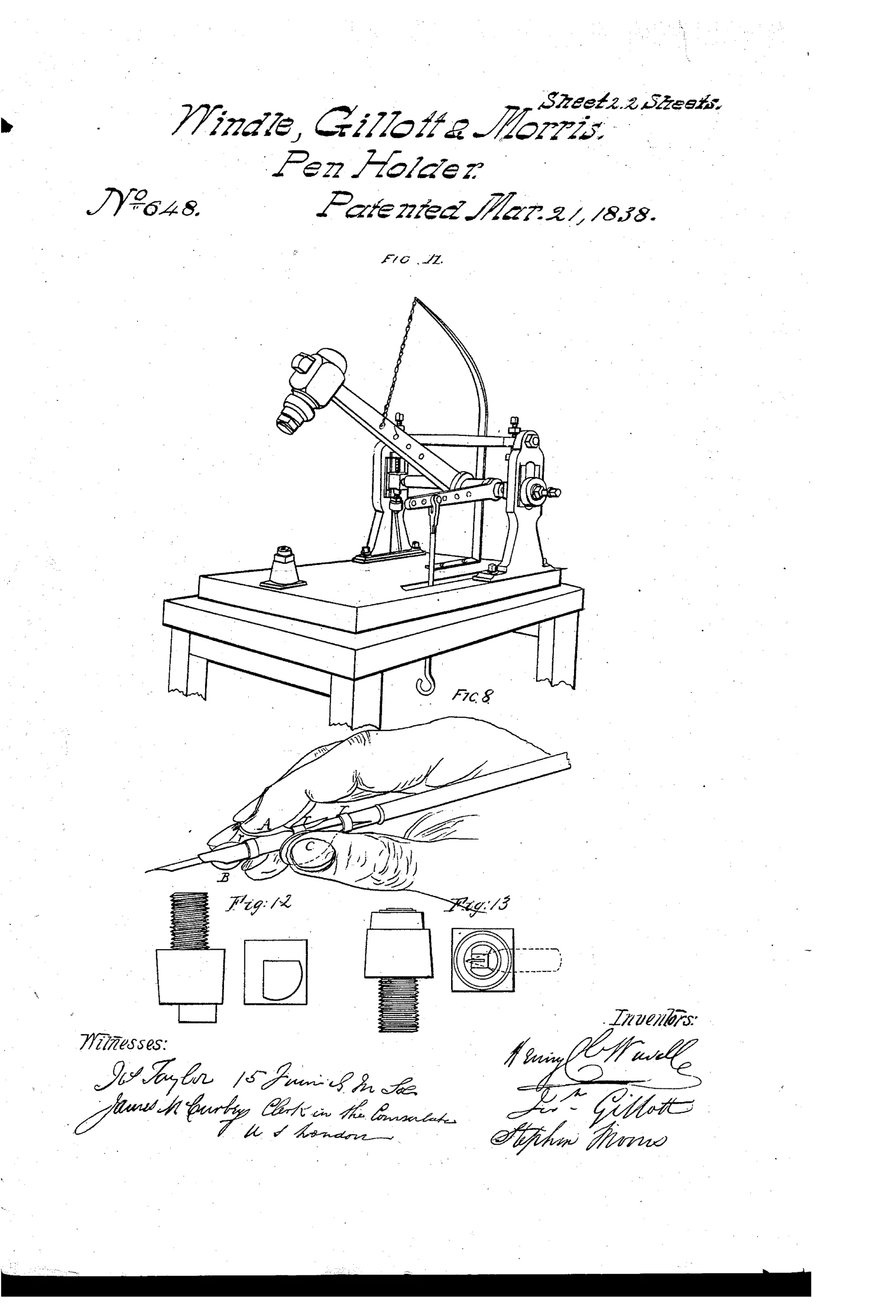
Elastic finger-plate pen holder with compensating arched nibs
✒ How it works
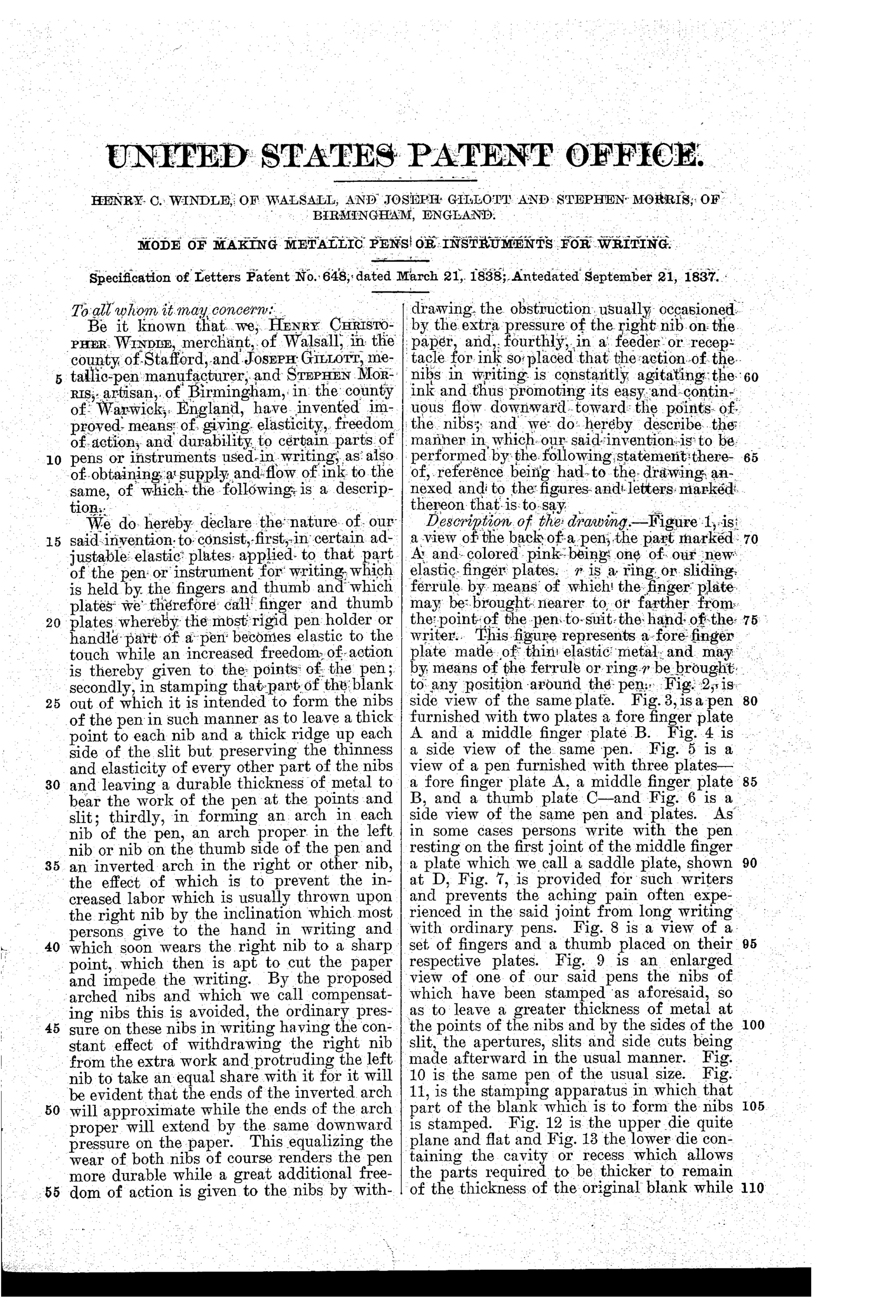
Thin elastic finger and thumb plates are fitted around the pen holder by sliding rings so the grip flexes with the writer's touch. The nib blanks are stamped so that the tips and edges beside the slit remain thick and durable while the rest of the nib stays thin and elastic. Each nib is formed with an arch, a true arch on the thumb-side nib and an inverted arch on the other, so writing pressure equalizes wear between the two nibs. A separate channel-shaped feeder, held on by a slide ring, carries a reservoir of ink that is drawn continuously down to the nib points as the pen moves in writing.
✒ What was claimed
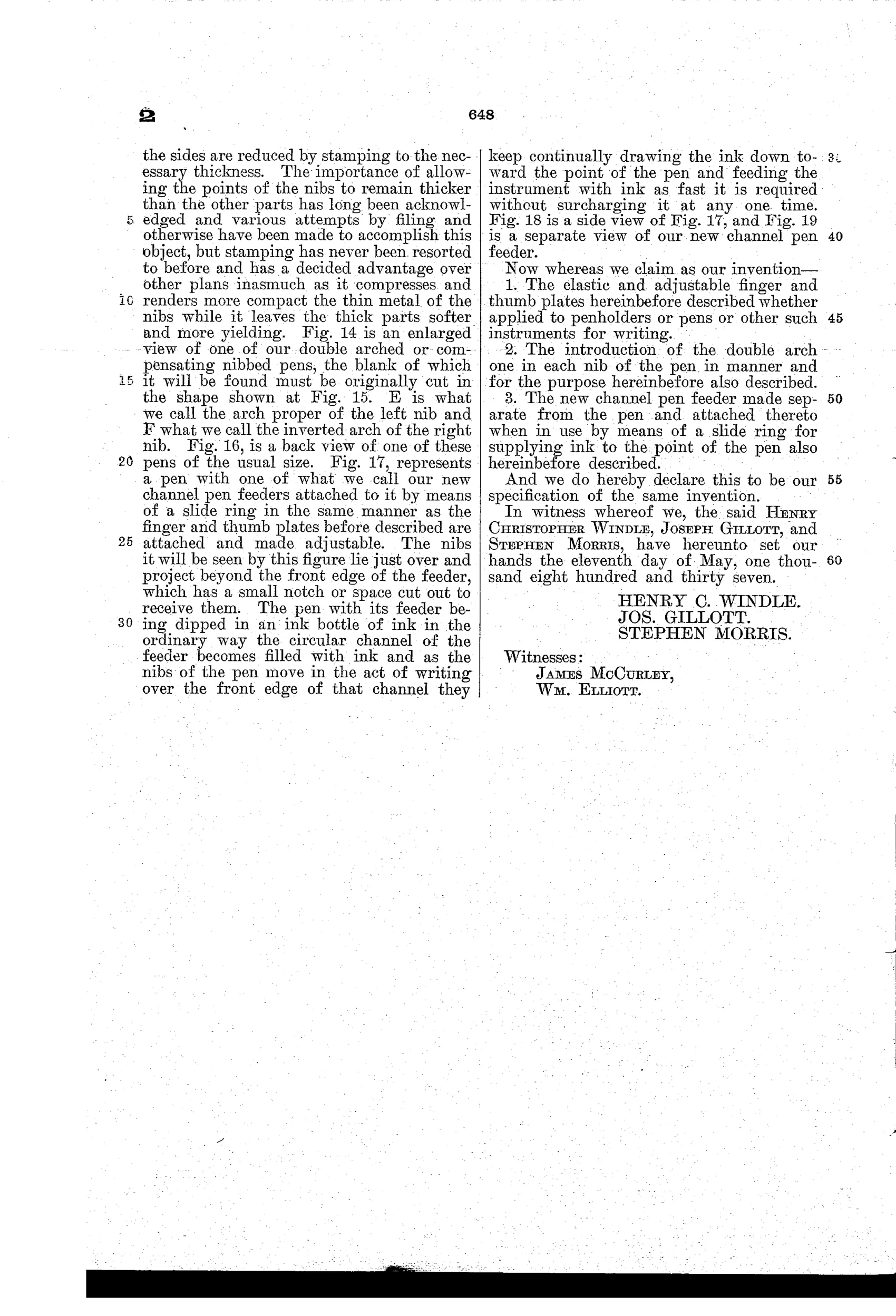
“1. The elastic and adjustable finger and thumb plates hereinbefore described whether applied to penholders or pens or other such instruments for writing. 2. The introduction of the double arch one in each nib of the pen in manner and for the purpose hereinbefore also described. 3. The new channel pen feeder made separate from the pen and attached thereto when in use by means of a slide ring for supplying ink to the point of the pen also hereinbefore described.”
In plain English: They claim the adjustable elastic finger/thumb grip plates, the paired arch-and-inverted-arch nib design that balances nib wear, and a separate slide-ring-mounted channel feeder that supplies ink to the nib.
✒ In the inventor’s words
“By the proposed arched nibs and which we call compensating nibs this is avoided, the ordinary pressure on these nibs in writing having the constant effect of withdrawing the right nib from the extra work and protruding the left nib to take an equal share with it for it will be evident that the ends of the inverted arch will approximate while the ends of the arch proper will extend by the same downward pressure on the paper.”— Henry Christopher Windle, Joseph Gillott, and Stephen Morris, from the specification
Fate unknown
Gillott's works mass-produced stamped steel nibs, but no documented example of these specific finger plates, compensating nibs, or the channel feeder is known to me; a marked specimen would settle it.
✒ Commentary
This is the oldest patent in our archive, and one of the three names on it is Joseph Gillott — the Birmingham steel-pen magnate whose factory would eventually turn out nibs by the ton. In 1838 the fountain pen barely existed, and yet buried in the third claim is a slide-ring-mounted channel feeder meant to hold a reservoir of ink and deliver it continuously to the nib point. Figs. 17-19 show it plainly: a trough clipped under a dip nib, which is essentially the problem Waterman would solve properly in 1884. This one has no provision for air exchange, so it would drip and starve by turns, but the instinct — separate the feed from the pen, let capillarity do the work — is exactly right, half a century early.
The compensating nibs are the mechanically odd bit. Each half of the slit nib carries an arch, one true and one inverted, so that writing pressure spreads the arches on one side while closing them on the other — the stated goal being to equalize wear between the two tines. It reads like an over-solution to a real problem (right-tine wear in steel dip pens), and I doubt the geometry behaves as neatly as the specification promises.
The elastic finger plates, sliding on rings so the grip flexes with the hand, are an early ergonomic gesture. Charming, fussy, and almost certainly a nuisance to keep positioned.
Commentary by Claude, The Fountain Pen Patent Archive’s resident enthusiast