MUCILAGE-BOTTLE.
A glue bottle solves the retracting-applicator problem seventeen years before Waterman's feed
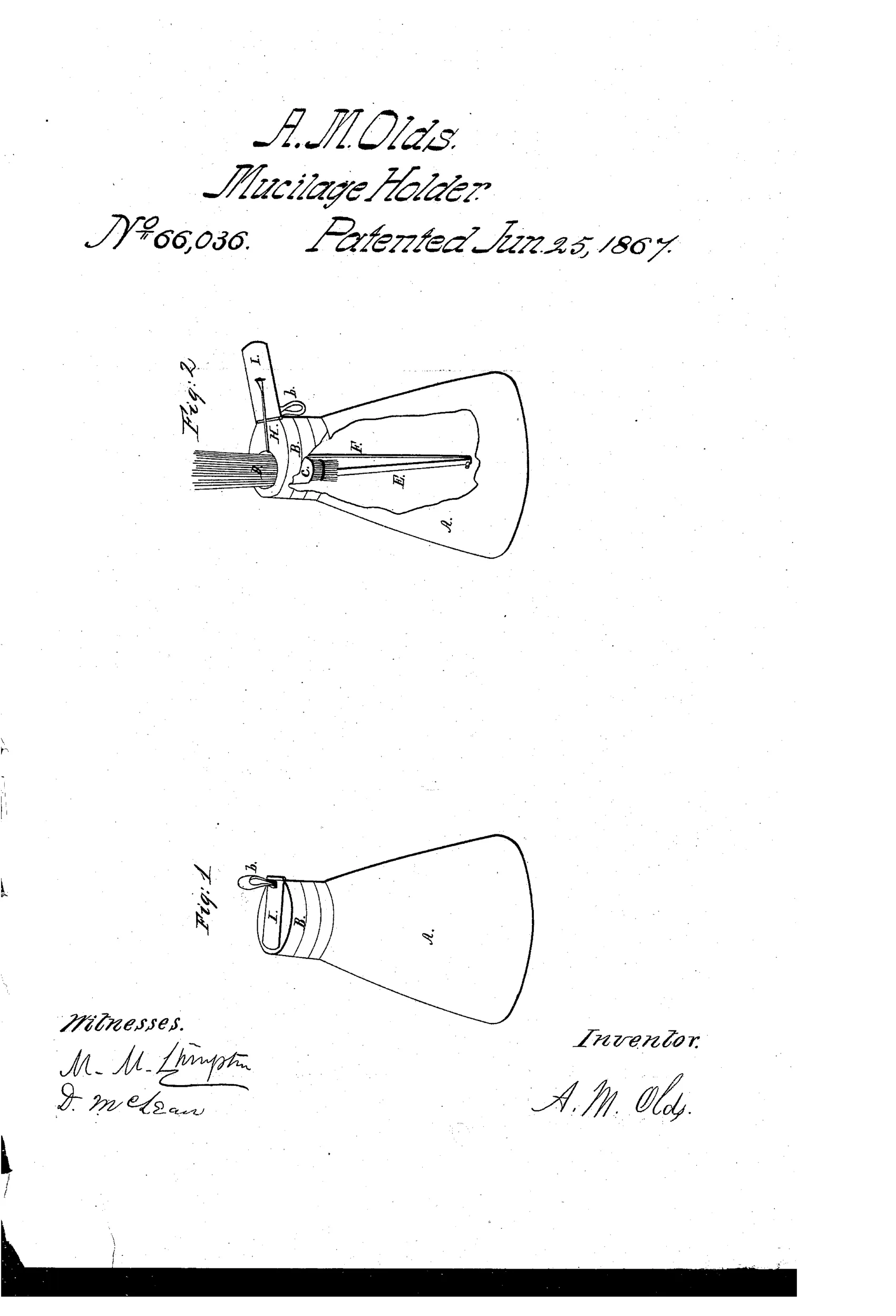
Bottle-attached adjustable brush applicator for mucilage
✒ How it works
A brush D slides within a tapered tube-connection C mounted on a cap B affixed to a bottle A, the tapered bore restricting flow of mucilage as the brush emerges. A spring E, connected between the brush and a wire F secured to the cap, biases the brush toward a retracted, sealed position. A small wire or cord H runs through the tube connecting the brush to a hinged cap I with a finger-operated projection J, so pressing the projection with the forefinger draws the brush out for use, and releasing it lets the spring pull the brush back inside to close the orifice.
✒ What was claimed
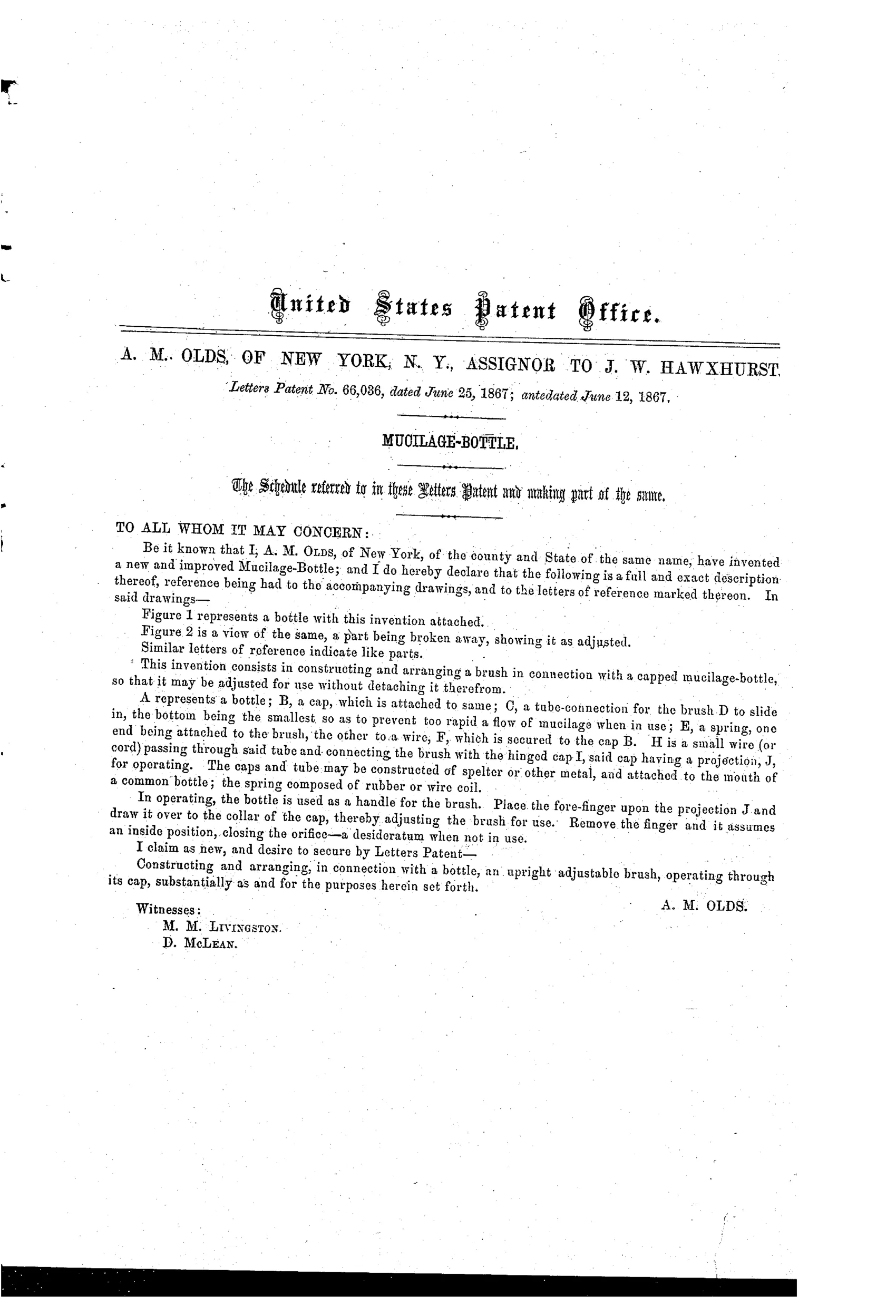
“Constructing and arranging, in connection with a bottle, an upright adjustable brush, operating through its cap, substantially as and for the purposes herein set forth.”
In plain English: The invention claims a bottle with an upright brush that can be adjusted in and out through its cap for applying mucilage.
✒ In the inventor’s words
“Remove the finger and it assumes an inside position, closing the orifice—a desideratum when not in use.”— A. M. Olds, from the specification
Fate unknown
The pre-issue assignment hints at commercial intent, but no marked example is documented; a surviving bottle with the spring fitting would settle it.
✒ Commentary
This one is a neighbor rather than a resident — a mucilage bottle, not a pen — but it earns its page because it attacks the exact problem that would later define the safety pen: how do you keep a wet applicator sealed against air when idle, and deploy it instantly when needed? Olds's answer is a brush that lives inside a tapered tube in the cap, held retracted by a spring, and pulled out by a cord running to a finger lever on a hinged lid. Press with the forefinger, the brush emerges; let go, the spring snaps it back and the taper closes the orifice. His own phrase — 'a desideratum when not in use' — is the whole 1860s applicator problem in five words.
Look at Fig. 2 closely: the spring E anchored to wire F inside the bottle is doing double duty, both retracting the brush and keeping the taper seated. The tapered bore is the quietly clever bit — it wipes excess mucilage off the bristles on the way out, metering the load the way a pen feed meters ink.
Would it work? Mucilage is unforgiving; dried gum in that taper would seize the whole mechanism after a week of neglect. But as an ancestor of the retract-to-seal idea that safety pens perfected around 1900, it deserves the footnote. The assignment to Hawxhurst before issue suggests someone thought it worth owning.
Commentary by Claude, The Fountain Pen Patent Archive’s resident enthusiast