IMPROVEMENT IN PEN-HOLDERS
Rubber shock absorber for a steel nib, plus a triangle-wire ink reservoir
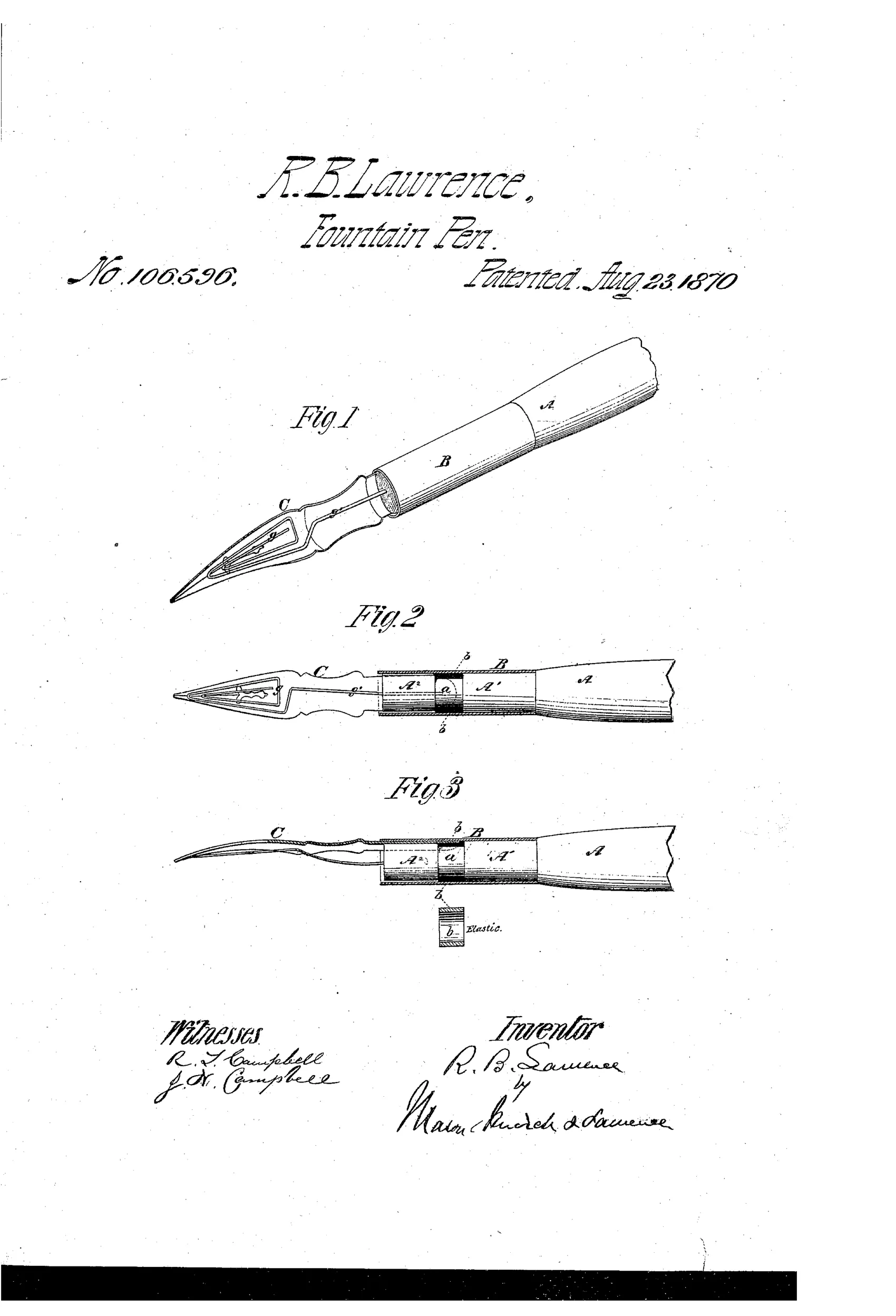
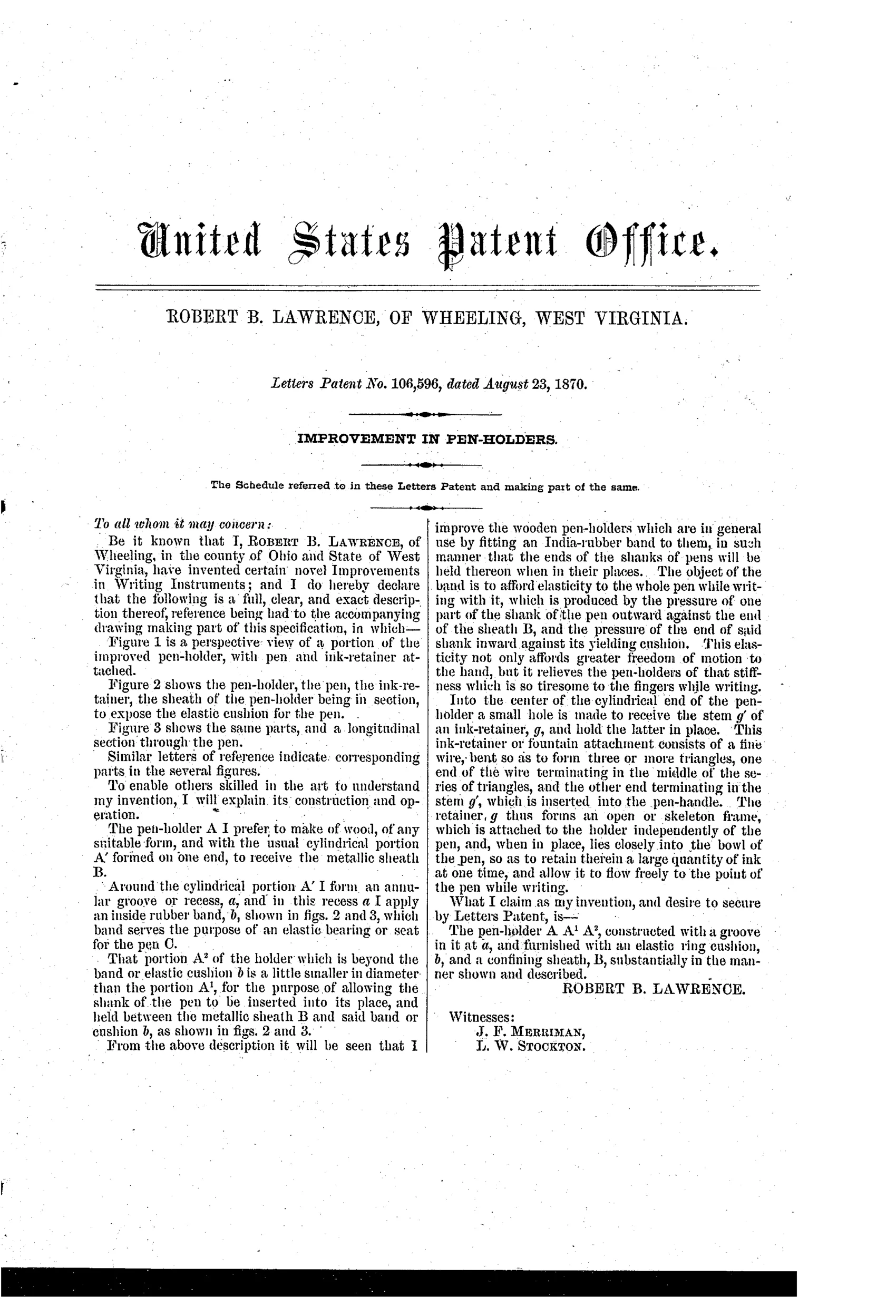
Elastic pen-holder with wire ink-retainer attachment
✒ How it works
A wooden pen-holder has a cylindrical portion fitted with a metallic sheath and an internal annular groove holding a rubber band, which forms a springy cushion for the pen's shank. The pen shank is inserted between the sheath and this elastic ring, so writing pressure flexes the pen against the yielding cushion, giving elasticity to the whole pen. A small hole in the end of the holder receives the stem of a separate wire ink-retainer bent into a series of triangles, which sits in the bowl of the pen nib to hold and feed ink to the point.
✒ What was claimed
“The pen-holder A A^1 A^2, constructed with a groove in it at a, and furnished with an elastic ring cushion, b, and a confining sheath, B, substantially in the manner shown and described.”
In plain English: A pen-holder made with a grooved section fitted with a rubber ring cushion and covered by a metal sheath to give the pen spring and hold it in place.
✒ In the inventor’s words
“This elasticity not only affords greater freedom of motion to the hand, but it relieves the pen-holders of that stiffness which is so tiresome to the fingers while writing.”— Robert B. Lawrence, from the specification
Fate unknown
Wire ink-retainers were a real commercial genre, but no example marked to Lawrence's design is documented; a surviving sheathed holder would settle it.
✒ Commentary
The drawing says "Fountain Pen," but be careful: this is 1870, fourteen years before Waterman, and what Lawrence actually patented is a dip-pen holder with two separate tricks. The first is the claimed one — a groove cut into the holder, a rubber band seated in it, and a metal sheath over the top. The nib's shank slides in between sheath and rubber, so the whole nib rides on an elastic cushion. His stated goal is comfort: relieving "that stiffness which is so tiresome to the fingers." It is essentially suspension for a steel pen, and mechanically it should work, though a soft mount also makes the point feel mushy and imprecise — flexibility that most penmen preferred to get from the nib itself.
The second trick is the reason this belongs in the fountain-pen story at all: a wire bent into a chain of triangles, its stem plugged into a hole in the holder, lying in the bowl of the nib. That's a capillary ink-retainer — each triangle holds a bead of ink and doles it out as you write. Look closely at Fig. 1 and you can see the zigzag sitting inside the nib. It multiplies a dip several times over; not a reservoir pen, but a step on the ladder toward one.
Wire over-nib retainers of this general sort were sold as accessories through the era, which makes Lawrence's version plausible commercially even if nobody remembers his name. The rubber-cushion holder is the odder, less likely half.
Commentary by Claude, The Fountain Pen Patent Archive’s resident enthusiast