IMPROVED FOUNTAIN-PEN
Piston filler and vibrating spring feed, thirty years before Waterman
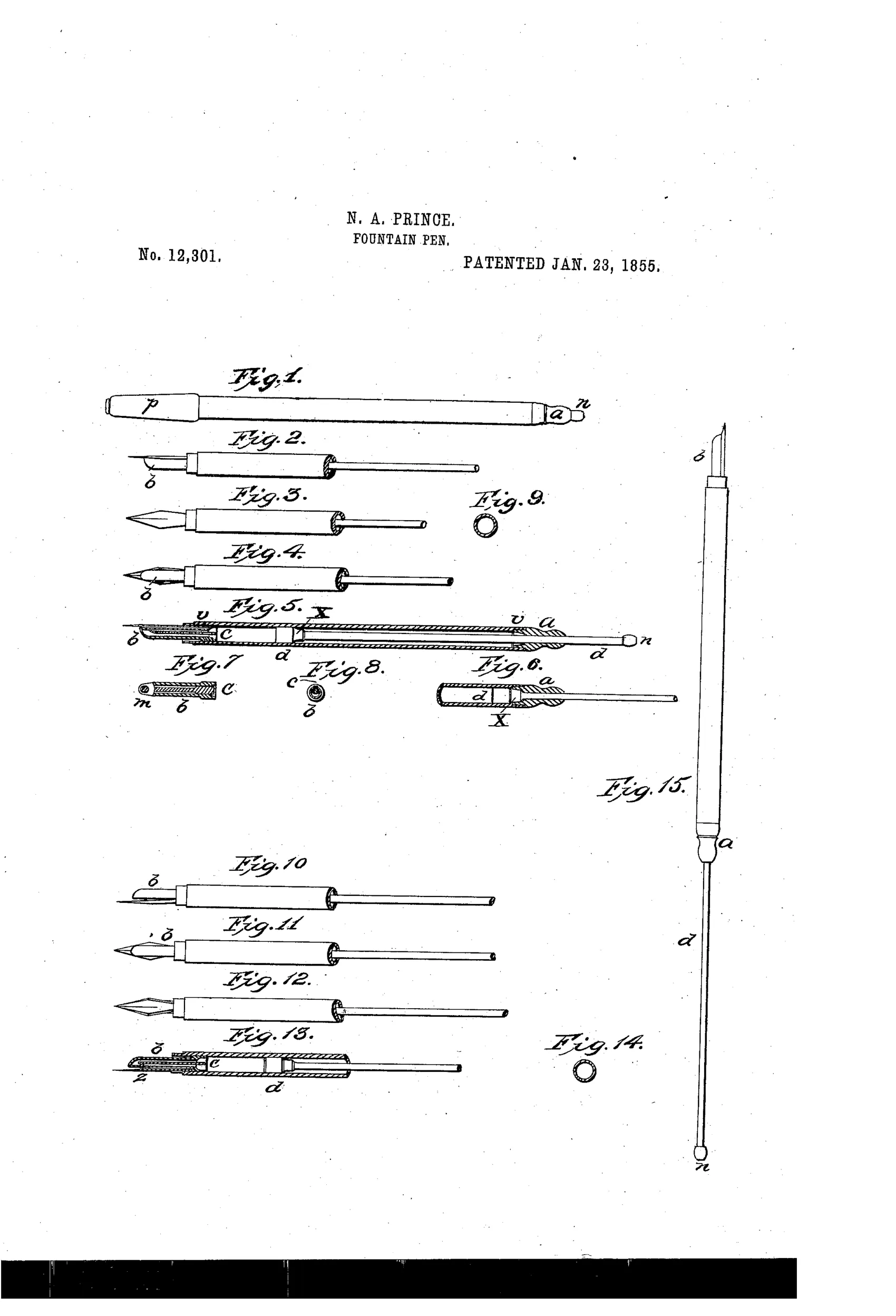
Early rubber fountain pen with feed spring
✒ How it works
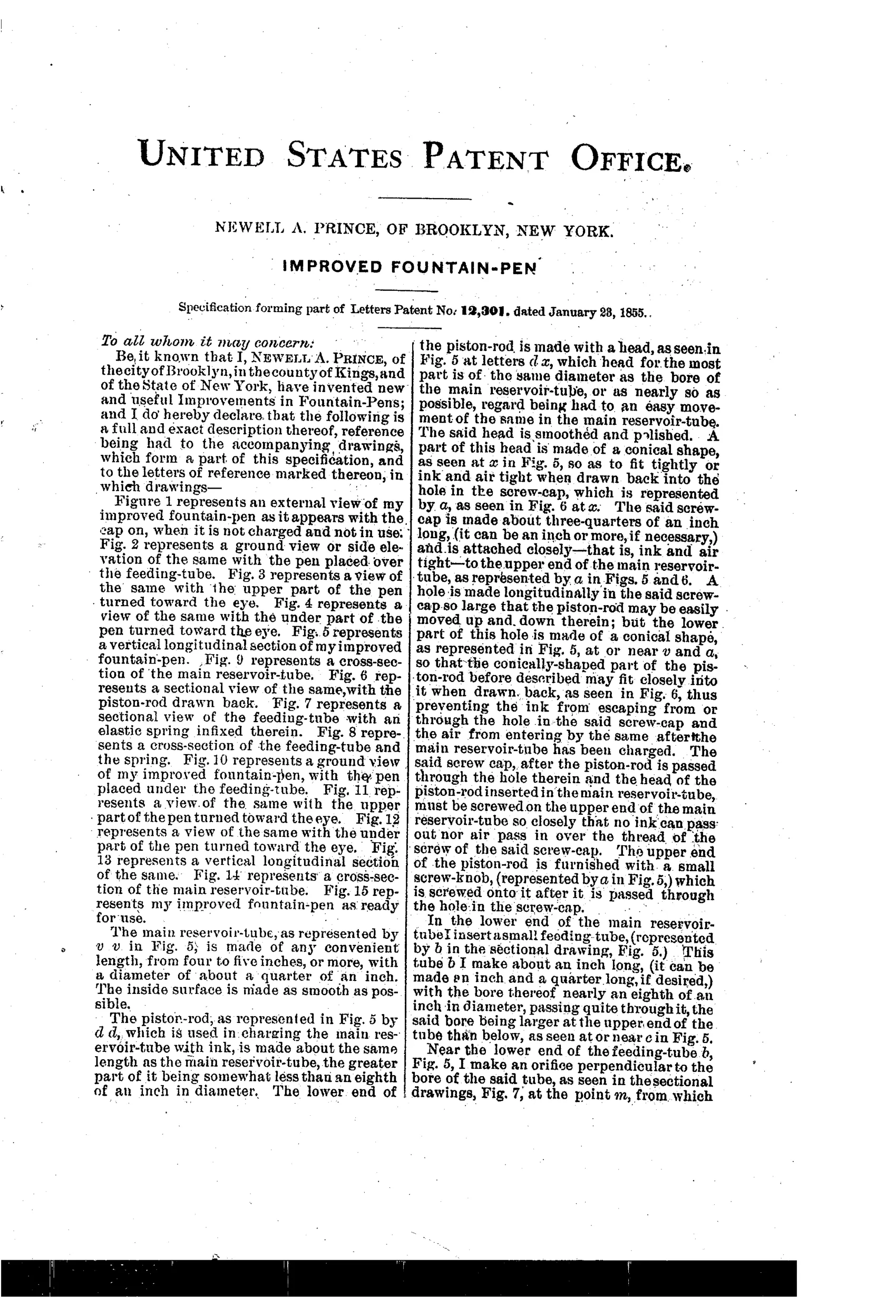
Ink is stored in a main reservoir-tube charged by a piston-rod that draws ink in through a feeding-tube, with a conical head sealing the screw-cap ink and air tight. A thin, flat, elastic spring is infixed in the feeding-tube, positioned above or below the pen point, and vibrates as the pen moves during writing to aid ink flow to the nib. An under-recess formed where the feeding-tube meets the main reservoir-tube acts as a reflow receptacle for ink when the pen point is turned upward, preventing ink from soiling the fingers. All tubes, screws, cap, and spring are made of Goodyear's patented hard rubber.
✒ What was claimed
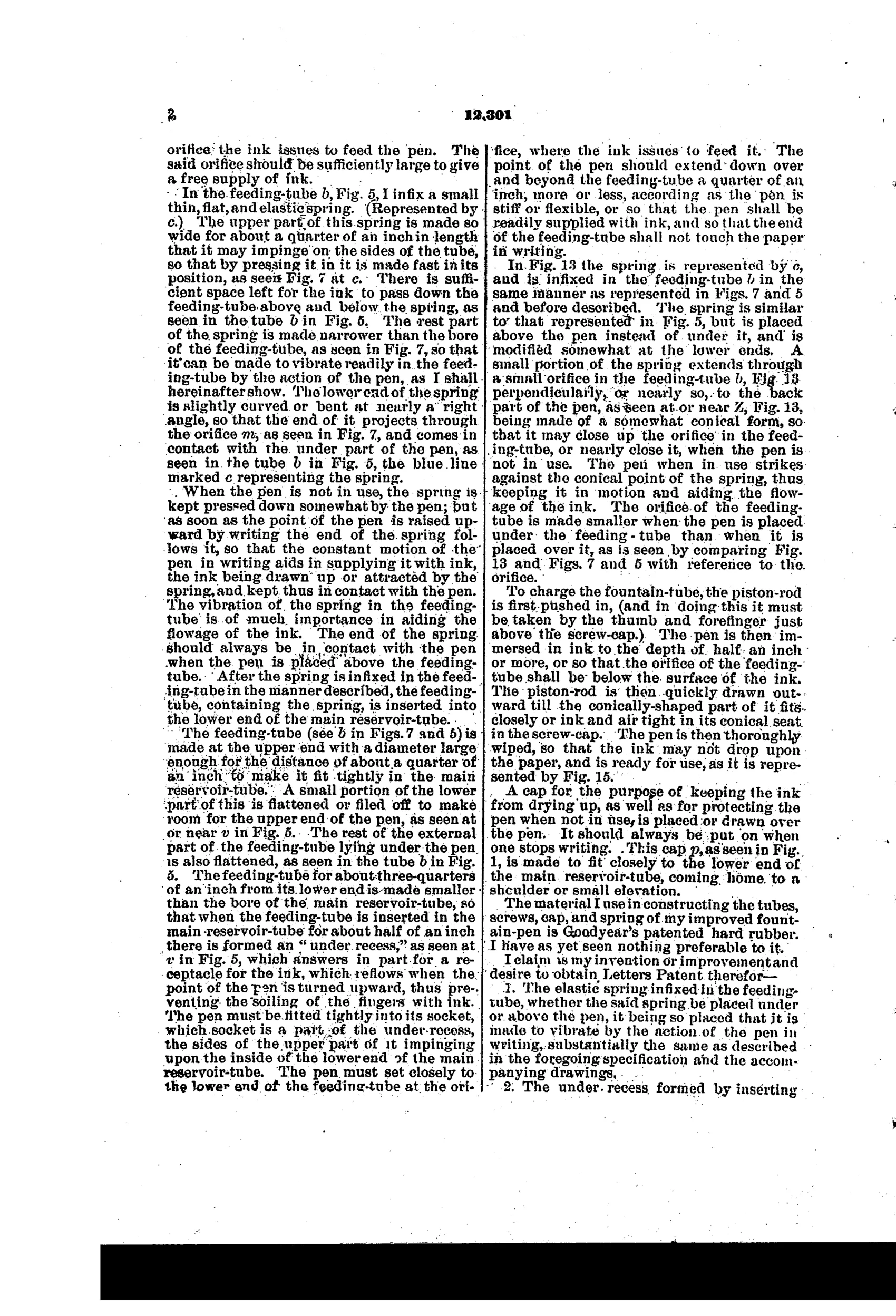
“1. The elastic spring infixed in the feeding-tube, whether the said spring be placed under or above the pen, it being so placed that it is made to vibrate by the action of the pen in writing, substantially the same as described in the foregoing specification and the accompanying drawings.”
In plain English: A thin elastic spring inside the feeding-tube, placed above or below the pen, that vibrates as the pen writes to help ink flow.
✒ In the inventor’s words
“The material I use in constructing the tubes, screws, cap, and spring of my improved fountain-pen is Goodyear's patented hard rubber. I have as yet seen nothing preferable to it.”— Newell A. Prince, from the specification
Manufactured and sold
Prince's fountain pens were manufactured and sold in New York in the 1850s–60s, and surviving marked examples are documented among early-pen collectors.
✒ Commentary
This is deep pre-Waterman territory — 1855, when a reservoir pen was still a gambler's proposition — and Prince packs a surprising amount of the future into it. There's a piston-rod filler (the pen charges itself by drawing ink up through the feeding-tube, no eyedropper needed), a conical head that seals the works when the cap is screwed down, and the whole thing executed in Goodyear's hard rubber, which Prince endorses with charming plainness: he has 'as yet seen nothing preferable to it.' He was right; the industry ran on hard rubber for the next seventy years.
The claimed novelty is the odd part: a thin flat spring set in the feeding-tube, above or below the nib, meant to vibrate with the motion of writing and shake ink toward the point. This is feed-by-agitation — a mechanical answer to a problem that Waterman would eventually solve with quiet capillary channels and controlled air exchange. It probably helped in the way tapping a stubborn pen helps, which is to say erratically. Note also the under-recess where feed meets barrel, a little sump to catch backflow when the pen tips up — a genuinely thoughtful anti-blot detail.
The drawing rewards a close look: Figs. 7 and 8 show the spring seated in the feed in section, and Fig. 15 shows the assembled pen with the long piston rod trailing behind — elegant in profile, if unwieldy in a pocket.
Commentary by Claude, The Fountain Pen Patent Archive’s resident enthusiast