METALLIC PEN
One stamped tab, folded over: a page per dip and nib control
Metallic dip pen with built-in ink reservoir
✒ How it works
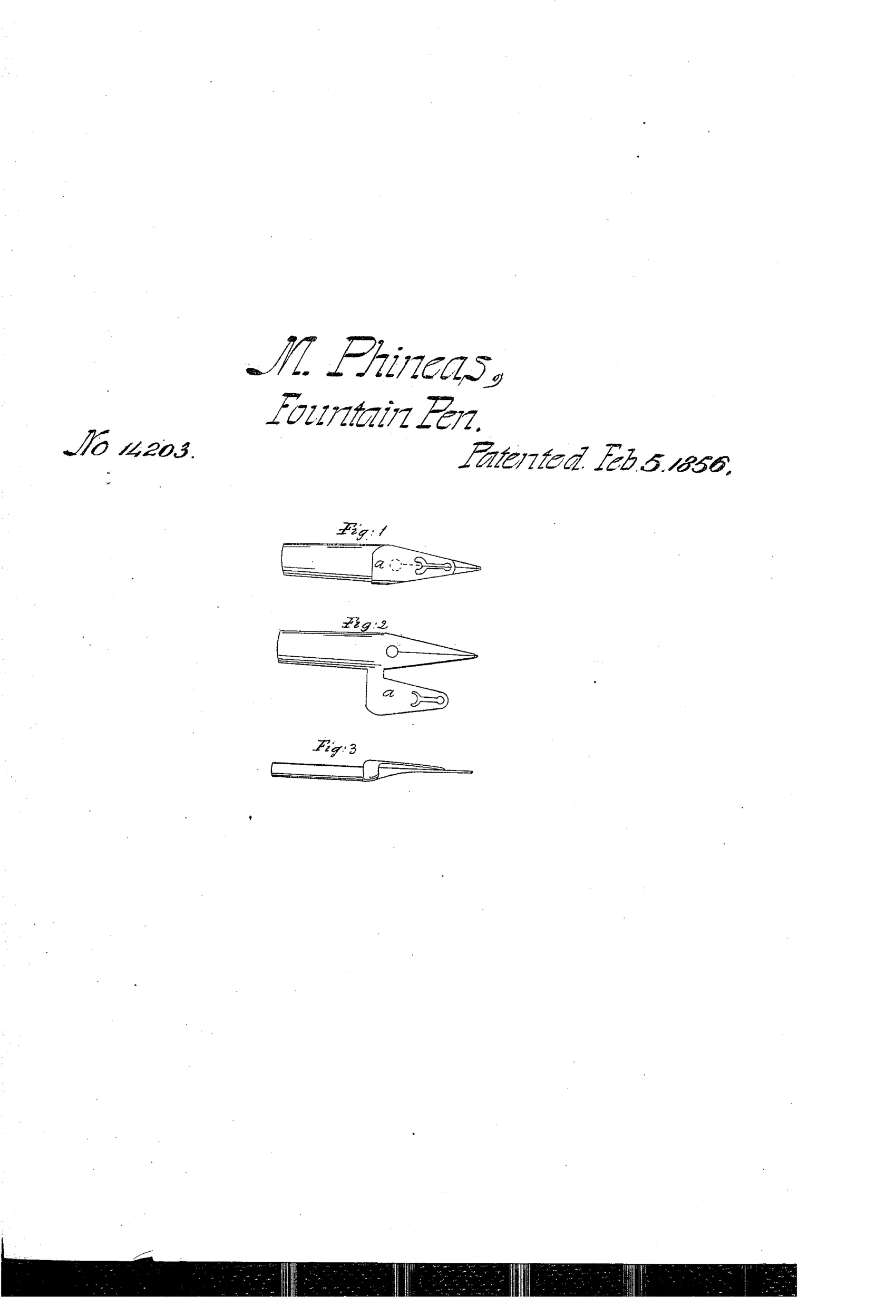
An addition, labeled a, is cut as a projecting extension of the pen blank's metal plate. This tab is bent over the top of the pen near the point, leaving a small gap between it and the pen body at its broadest part. This gap forms a reservoir that holds enough ink for about a page of writing from a single dip. The tab also presses on the nibs with a yielding spring pressure, which keeps them evenly aligned and only slightly separated during writing, allowing controlled ink flow instead of an uncontrolled release.
✒ What was claimed
“The spring A when placed upon the upper side of the pen, and so constructed and arranged as to serve the two-fold purpose herein described.”
In plain English: The claim covers a spring mounted on top of the pen that both holds a reservoir of ink and regulates the movement of the nibs.
✒ In the inventor’s words
“A reservoir of ink is thus formed upon the upper side of the pen which enables the writer to finish about one page of writing with one dip of ink.”— Myer Phineas, from the specification
Fate unknown
Reservoir dip nibs of this general type were widely made, but no Phineas-marked example is documented; a stamped specimen would settle it.
✒ More by Myer Phineas
- METALLIC PEN. (1853)
✒ Commentary
Fig. 2 is the key drawing here, and it's easy to skim past. It shows the pen blank before finishing, with the spring 'a' still lying flat — cut from the same sheet of metal as the pen itself, then folded over the top. That's the whole manufacturing story in one image: no soldered clip, no separate part to lose or misalign, just one extra profile in the stamping die and one bend in the forming sequence. For 1856, when steel pens were being punched out by the million in Birmingham and a growing New York trade, that economy matters more than the reservoir itself.
The two-fold claim is honest about what the tab does. The gap between the folded spring and the pen back holds ink by capillarity — Phineas says about a page per dip — and the tab's tip presses down on the slit nibs, keeping the tines aligned and metering the flow instead of letting the whole load flood out on the first stroke. That second function is the shrewder one. Anyone can hang a scoop of ink over a nib; damping the tines so the reservoir empties gradually is the part that separates a working pen from a blot machine.
In the category's long arc, this is a pre-Waterman reservoir attempt in miniature — the same problem (air in, ink out, under control) solved with a bent tab instead of capillary channels. Overfeeds sitting on top of the nib would return forty years later on true fountain pens. Phineas was working the right side of the pen, just three decades early.
Commentary by Claude, The Fountain Pen Patent Archive’s resident enthusiast