METALLIC PEN.
A steel dip nib with a vertebrated spine, thirty years before Waterman
Flexible ribbed-back metallic writing pen
✒ How it works
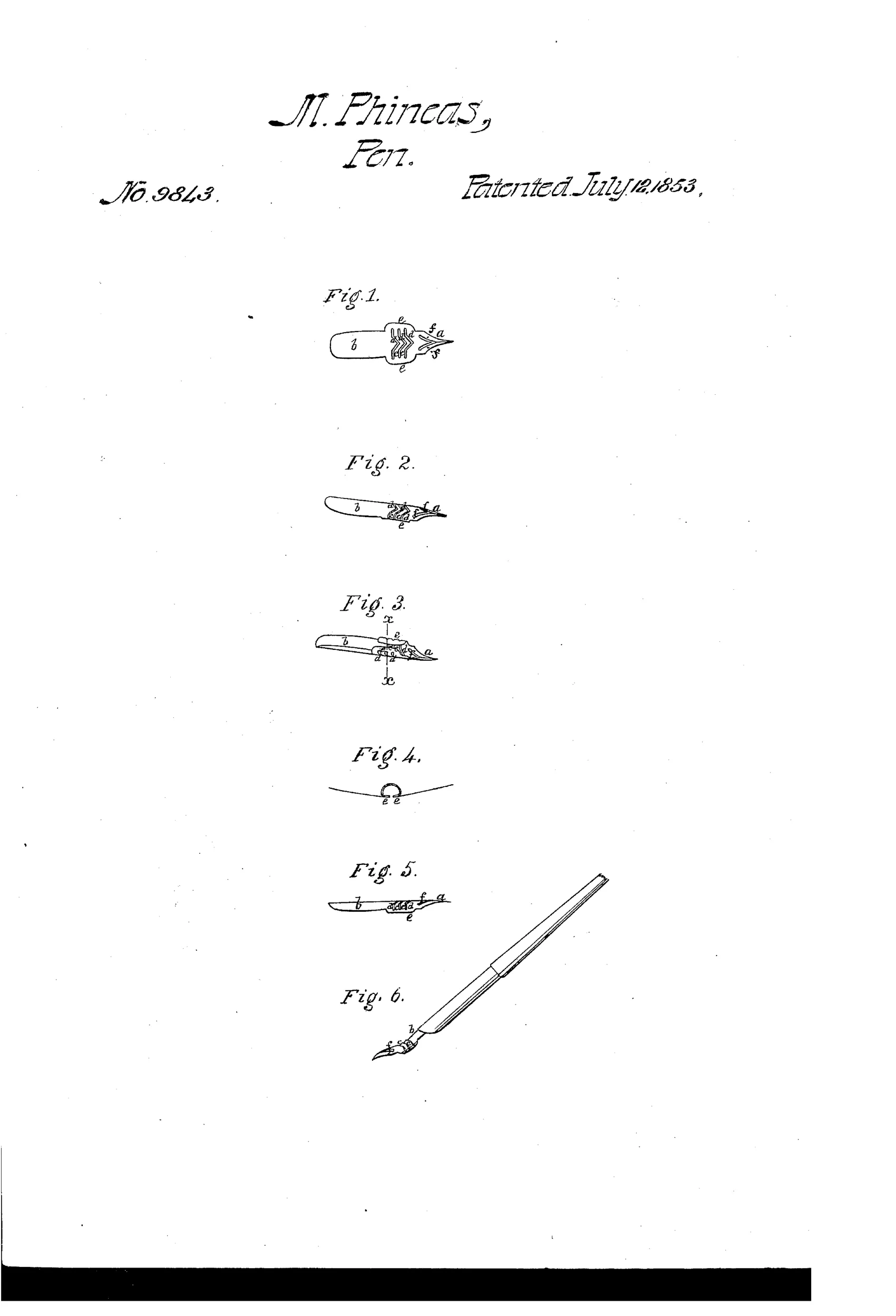
The pen's back, just behind the nib, is formed into a series of narrow transverse ribs separated by narrow slots. These ribs are connected on each side by a thin flat spring plate that yields readily to slight pressure, allowing the ribs to flex toward and away from each other. This construction gives the pen combined stiffness and flexibility similar to vertebral articulations, softening jarring pressure at the point while the nib itself remains stiff and hard. The pen blank is punched flat from sheet steel and then bent into its finished form.
✒ What was claimed
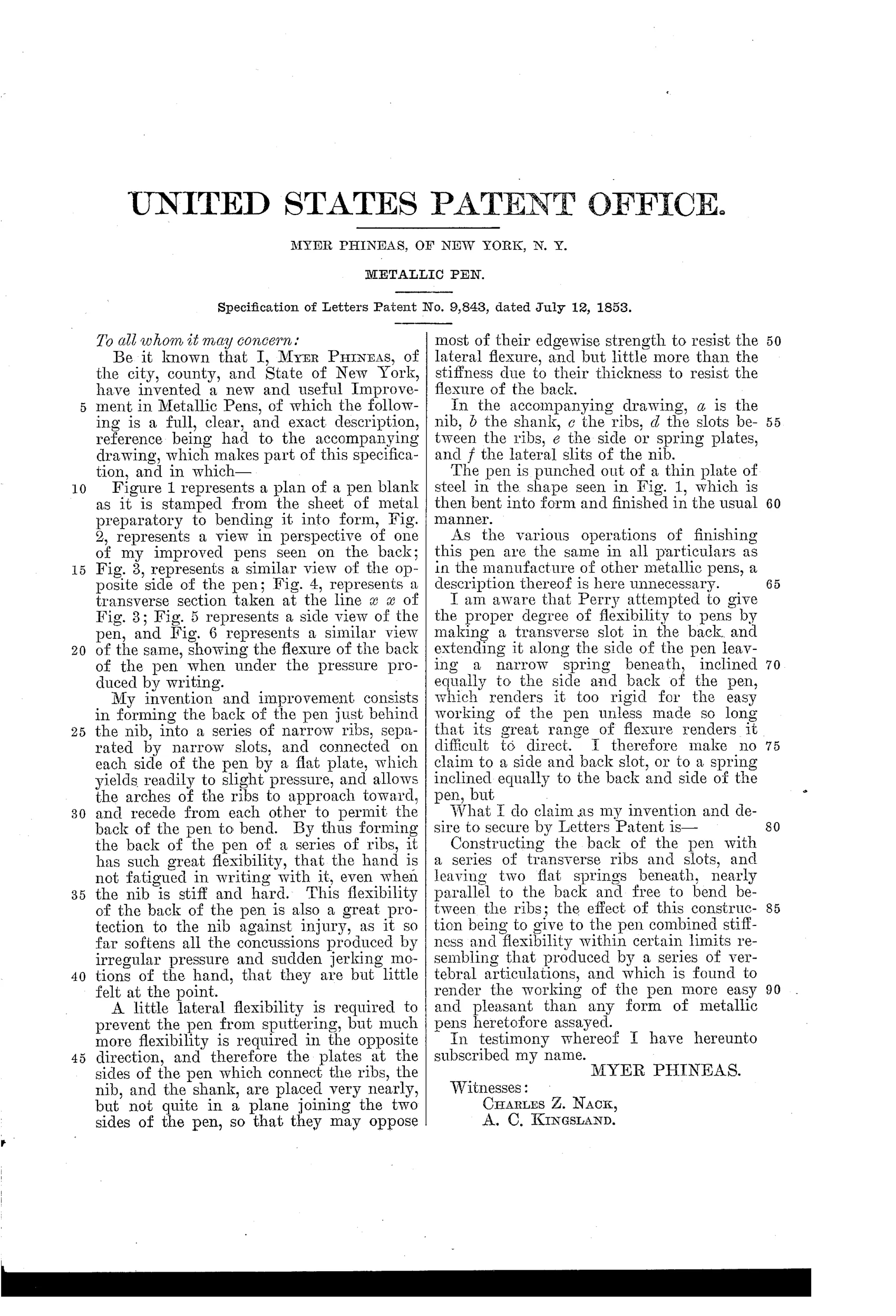
“Constructing the back of the pen with a series of transverse ribs and slots, and leaving two flat springs beneath, nearly parallel to the back and free to bend between the ribs; the effect of this construction being to give to the pen combined stiffness and flexibility within certain limits resembling that produced by a series of vertebral articulations, and which is found to render the working of the pen more easy and pleasant than any form of metallic pens heretofore assayed.”
In plain English: The pen's back is made of ribs and slots with two flat springs beneath that let it flex like a series of small joints, giving it both stiffness and flexibility for easier writing than earlier metallic pens.
✒ In the inventor’s words
“This flexibility of the back of the pen is also a great protection to the nib against injury, as it so far softens all the concussions produced by irregular pressure and sudden jerking motions of the hand, that they are but little felt at the point.”— Myer Phineas, from the specification
Paper patent — likely never produced
No ribbed-back Phineas pens are known in the well-documented steel-pen trade, and the fatigue-prone slotted construction argues against production, though a marked specimen would overturn this.
✒ More by Myer Phineas
- METALLIC PEN (1856)
✒ Commentary
This is a dip pen, not a fountain pen — 1853 puts it deep in the pre-Waterman stratum, when the reservoir problem was still unsolved and inventors instead attacked the other great complaint about steel pens: they were harsh. Quill writers moving to steel found the metal points scratchy and unyielding, and Phineas's answer is to make the back of the pen flex like a spine. He cuts the back into a series of transverse ribs separated by slots, then leaves two thin flat spring plates running along the underside to hold the ribs together while letting them work toward and apart.
His own analogy — vertebral articulations — is exactly right, and Fig. 6 is the drawing to study: the whole back of the pen bowing under writing pressure while the nib tip stays put. That's the clever part. Ordinary flexible nibs flex at the slit, which spreads the tines and changes the line; Phineas's flex lives behind the nib, so the point stays hard and consistent while the ribs absorb the jolts of a heavy or jerky hand. It's suspension, not tine flex.
The manufacturing story is sound too — Fig. 1 shows the whole thing punched flat from sheet steel, then bent up, which is exactly how the Birmingham pen trade mass-produced nibs. Whether the slotted back survived repeated flexing without work-hardening and cracking is the open question, and probably the one that decided its fate.
Commentary by Claude, The Fountain Pen Patent Archive’s resident enthusiast