IMPROVED FOUNTAIN-PEN
A shutoff valve for ink, twenty-eight years before Waterman solved airflow
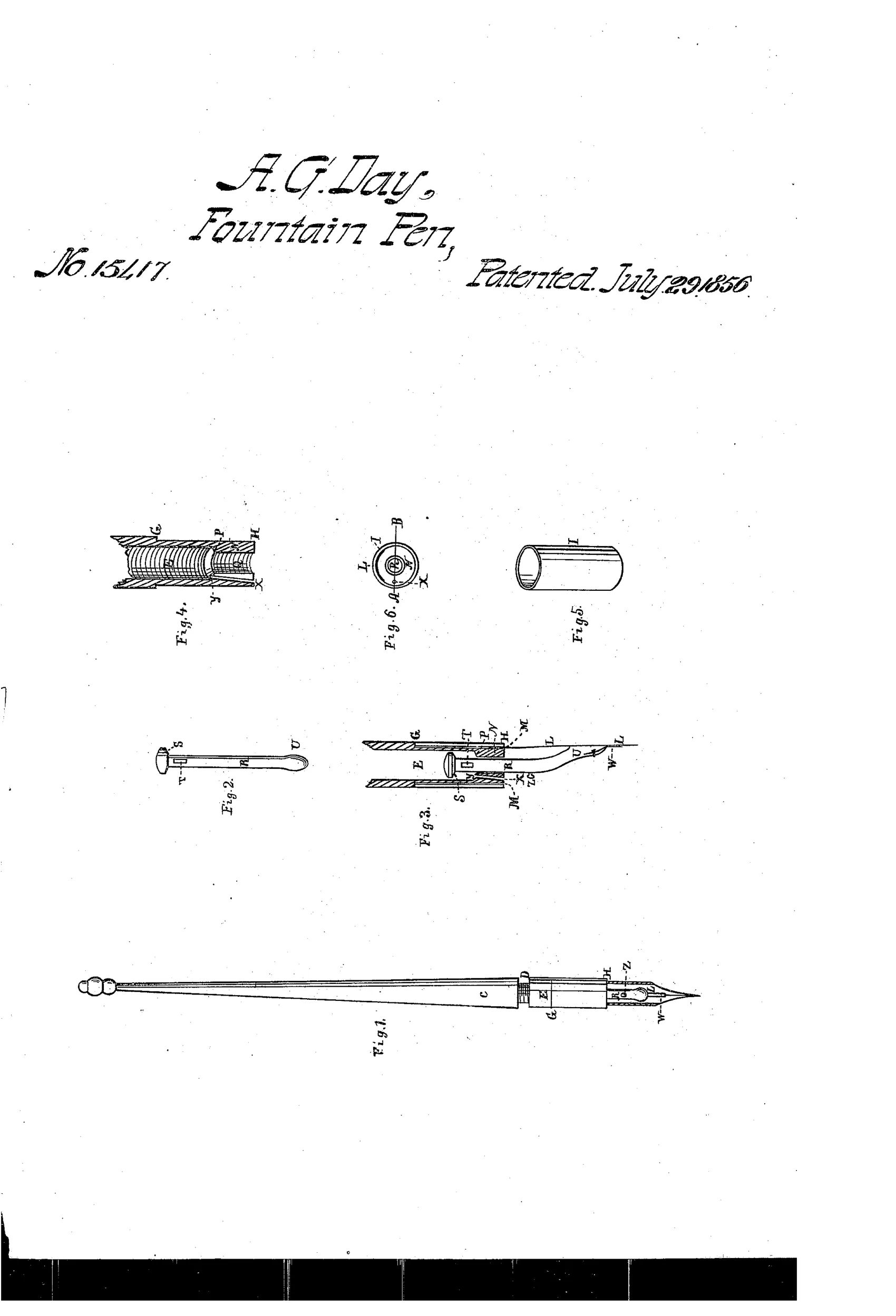
Fountain pen with sliding feed-tube valve mechanism
✒ How it works
The pen's ink chamber connects to a sliding feed-tube that can be moved up or down by a small knob or pin. When thrust upward, the tube's slot aligns above the valve-seat, allowing ink to flow from the chamber through the tube and out an opening into the pen nib. When drawn downward, the tube's bulbous conical top seats against the valve-seat, sealing the aperture and stopping ink flow while also closing an air vent that equalizes pressure during use.
✒ What was claimed
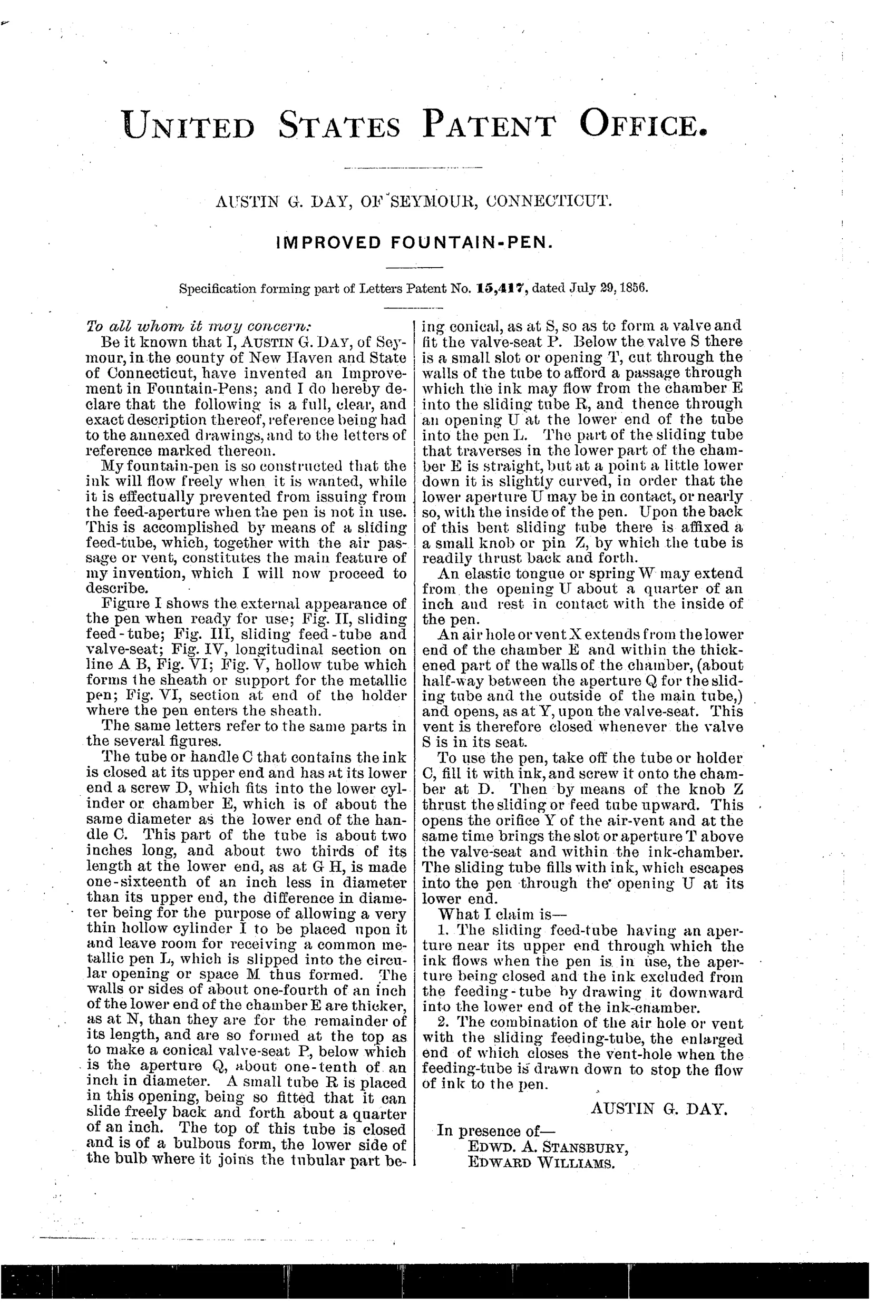
“1. The sliding feed-tube having an aperture near its upper end through which the ink flows when the pen is in use, the aperture being closed and the ink excluded from the feeding-tube by drawing it downward into the lower end of the ink-chamber. 2. The combination of the air hole or vent with the sliding feeding-tube, the enlarged end of which closes the vent-hole when the feeding-tube is drawn down to stop the flow of ink to the pen.”
In plain English: The invention claims a sliding tube inside the pen that opens to let ink flow when pushed up and seals shut—also blocking an air vent—when pulled down, preventing leaks when not in use.
✒ In the inventor’s words
“My fountain-pen is so constructed that the ink will flow freely when it is wanted, while it is effectually prevented from issuing from the feed-aperture when the pen is not in use.”— Austin G. Day, from the specification
Fate unknown
No documented production example of this valve pen is known to me; a surviving marked specimen or period advertisement would settle it.
✒ Commentary
Austin Day's answer to the great pre-Waterman problem — reservoir pens that leaked when you wanted them shut and starved when you wanted them flowing — is a valve you operate by hand. A sliding feed-tube runs up through the ink chamber; push it up and a slot clears the valve-seat, letting ink down to the nib. Pull it down and a bulbous conical head seats against the aperture and, in the same stroke, blocks the air vent. That second claim is the interesting one: Day understood that a sealed chamber needs air admitted to release ink, so his shutoff closes both paths at once. It's the same insight Waterman would build his 1884 feed around, except Day makes the user manage it with a knob instead of letting capillary channels do it automatically.
Fig. 3 rewards a close look — you can see the tube's enlarged end nesting into the seat, and the small vent it occludes. Fig. 5's sheath for the metallic pen is a reminder that in 1856 the steel dip nib was the disposable part and the holder was the investment.
As pocket engineering it's honest but fussy: forget to close the valve and it leaks like every other reservoir pen of the decade; hard use will wear the conical seat. This is the pre-Waterman stratum at its most instructive — the right problem, attacked with plumbing rather than physics. Day, a Seymour, Connecticut rubber man, was at least working in the right material for the coming industry.
Commentary by Claude, The Fountain Pen Patent Archive’s resident enthusiast