FOUNTAIN-PEN
An 1856 slit-tube point that writes in any direction — a stylograph before stylographs
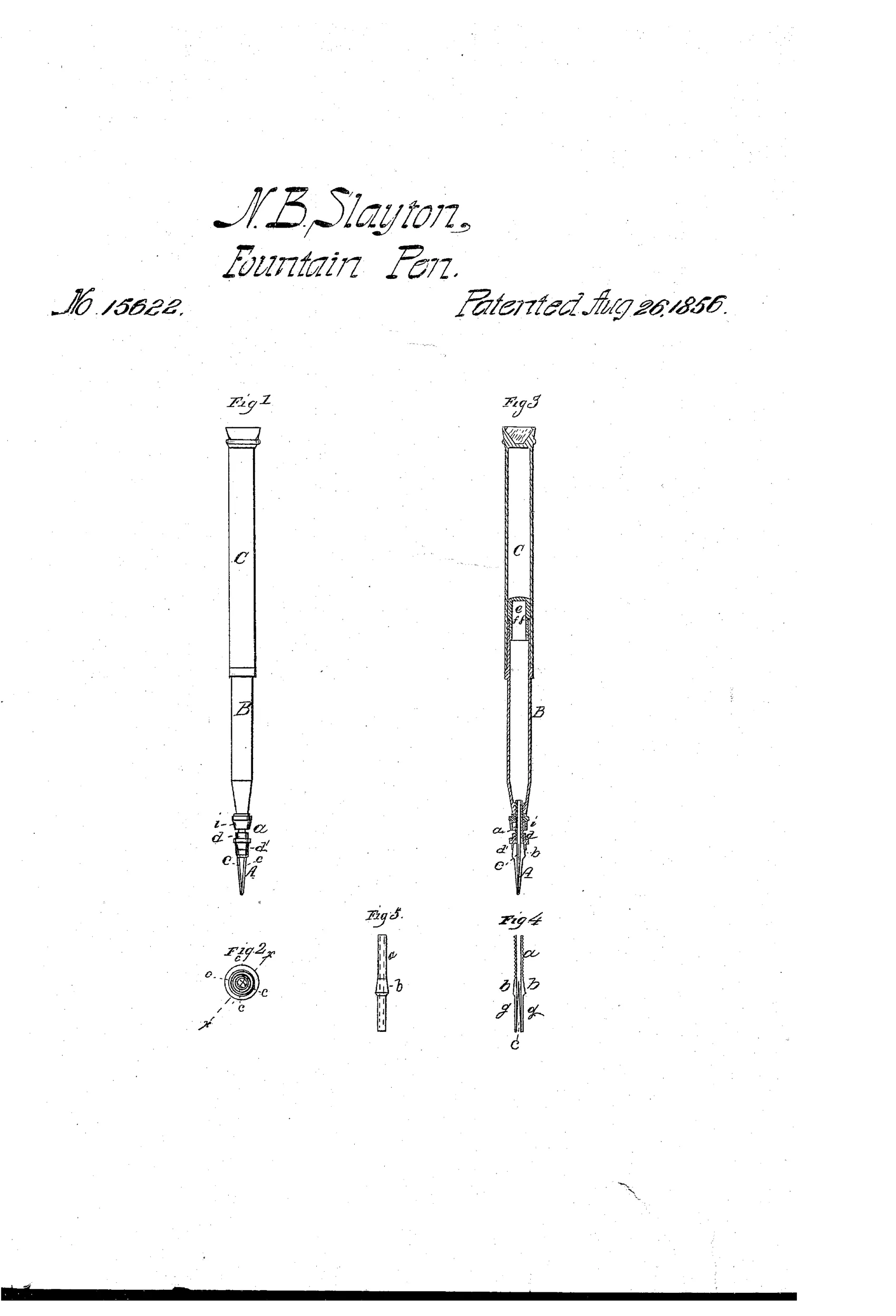
Fountain pen/pencil with slit tapering ink-feed point
✒ How it works
A tube tapering to a point is slit some distance up two or more sides, forming flexible nibs connected to a closed ink reservoir at its upper end. Ink is held in the reservoir and tube while at rest, and flows through the tube and down the slits to the point only when the point is pressed against a writing surface. A screw thread and cone on the exterior of the tube, together with a nut carrying a conical cup, act against the elasticity of the nibs to open or close the slits, regulating the fineness of the line. A screw cap with a leather or gasket washer seals the reservoir air-tight, while air entering through the slits replaces the ink that flows out.
✒ What was claimed
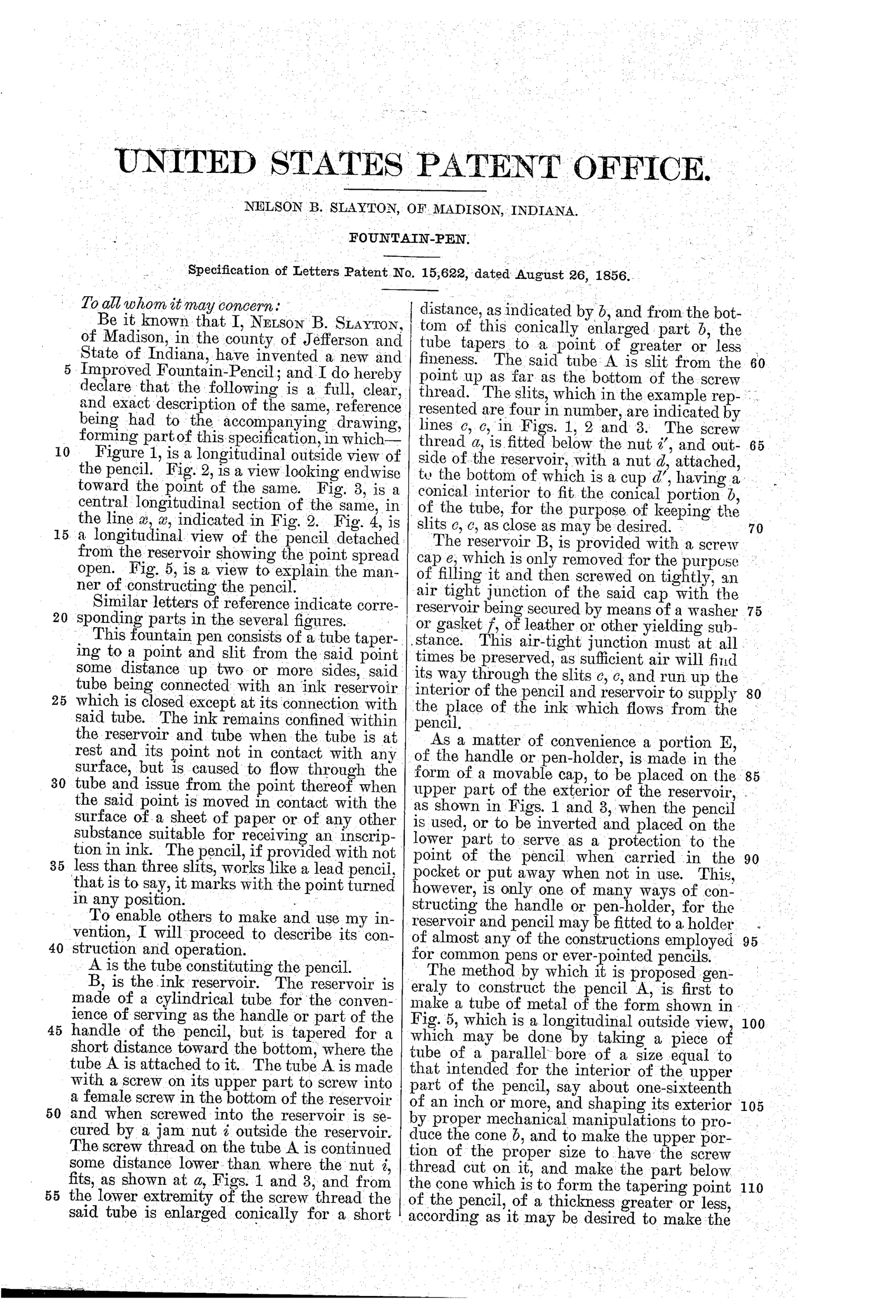
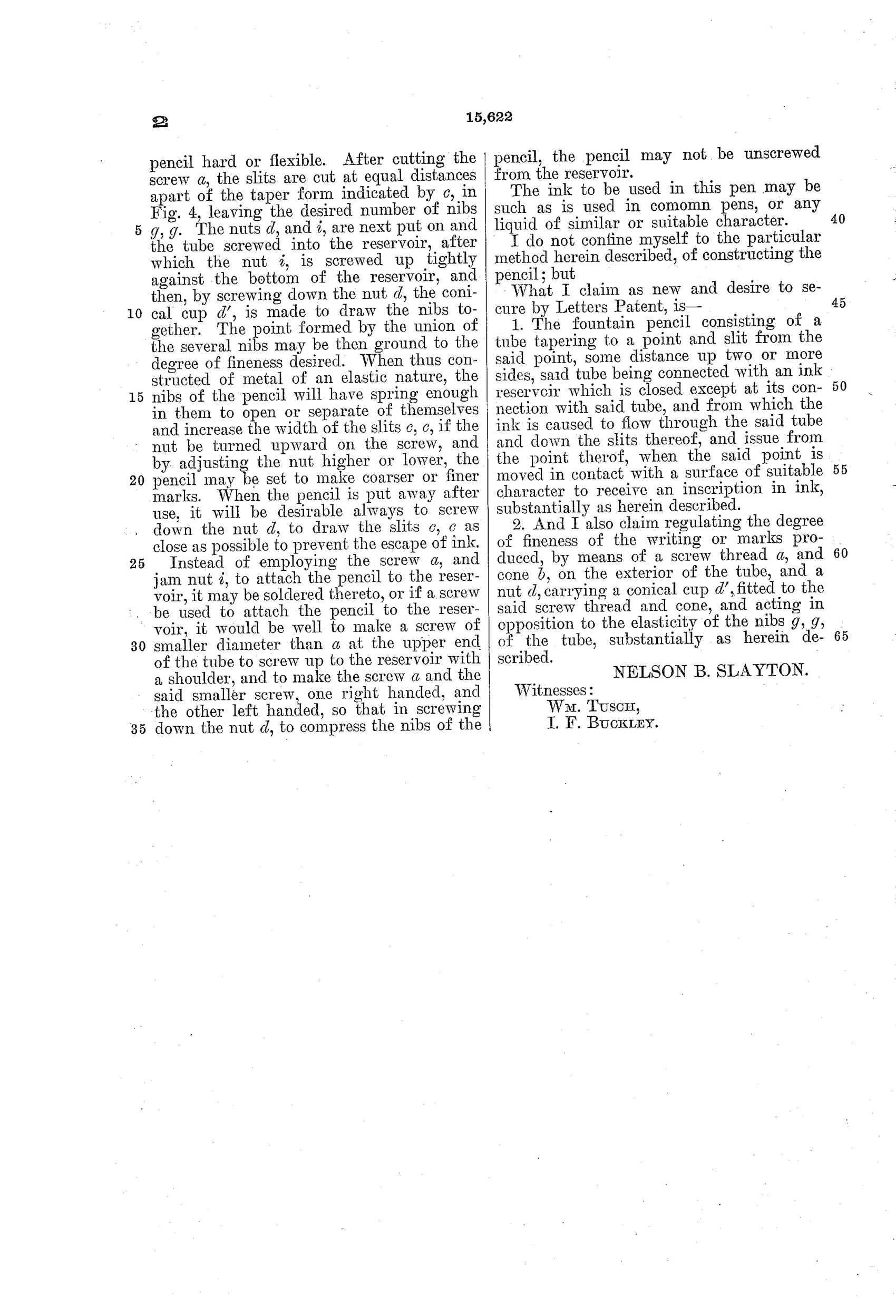
“The fountain pencil consisting of a tube tapering to a point and slit from the said point, some distance up two or more sides, said tube being connected with an ink reservoir which is closed except at its connection with said tube, and from which the ink is caused to flow through the said tube and down the slits thereof, and issue from the point therof, when the said point is moved in contact with a surface of suitable character to receive an inscription in ink, substantially as herein described.”
In plain English: A pen consisting of a slit, tapering tube connected to a sealed ink reservoir, so that ink flows down the slits to the point only when the point touches paper.
✒ In the inventor’s words
“The pencil, if provided with not less than three slits, works like a lead pencil, that is to say, it marks with the point turned in any position.”— Nelson B. Slayton, from the specification
Fate unknown
No production example or maker connection is documented for Slayton; a surviving marked pen or period advertisement would settle it.
✒ Commentary
Nelson Slayton's idea, thirty years before Waterman made feeds respectable, is to skip the quill-shaped nib entirely. His writing point is a metal tube tapered to a point and slit up two, three, or more sides, so the springy strips between the slits act as nibs. Press the point to paper, the slits flex open, ink runs down from a sealed reservoir. His own boast is the best line in the patent: with three or more slits, it 'marks with the point turned in any position' — which is precisely the selling proposition of the stylographic pens that Cross and MacKinnon would build a real market on in the late 1870s. Slayton got to the destination two decades early by a different road.
The genuinely clever bit is the adjustment. Fig. 3 shows a threaded nut carrying a conical cup that rides over the tapered point; screw it down and the cone squeezes the slit nibs shut, screw it back and their own elasticity opens them. That's a user-adjustable line width, mechanically honest and easy to miss in the drawing.
The fatal problem is the same one that killed most pre-Waterman reservoirs: nothing here meters the air. He waves at air entering 'through the slits' as ink exits, which in practice means blobs, starvation, or both, depending on temperature and luck. A fascinating dead end, pointing the right way.
Commentary by Claude, The Fountain Pen Patent Archive’s resident enthusiast