WRITING-PEN
A nib that doesn't flex: hinged rigid halves, a wedge, and two springs
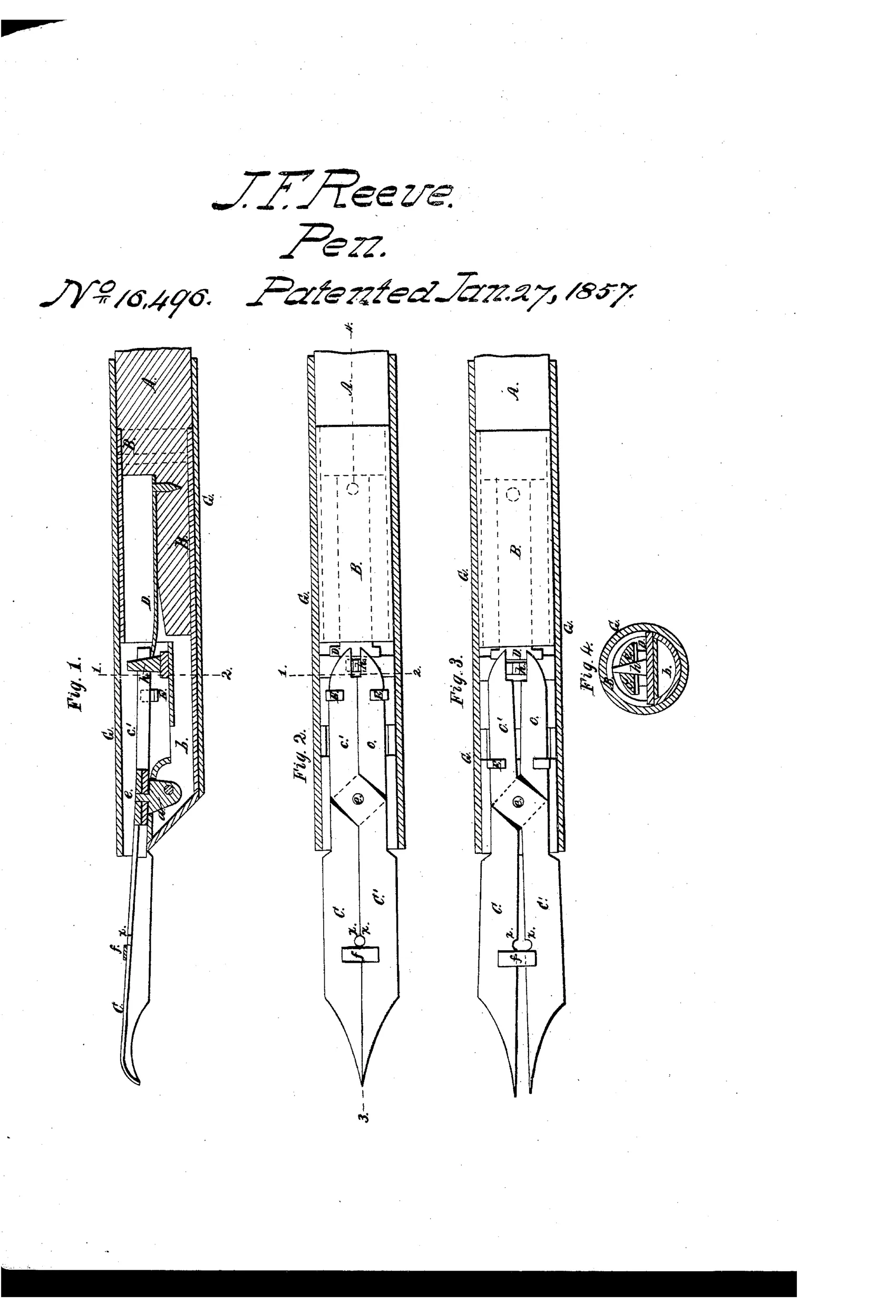
Rigid two-piece hinged pen with adjustable spring
✒ How it works
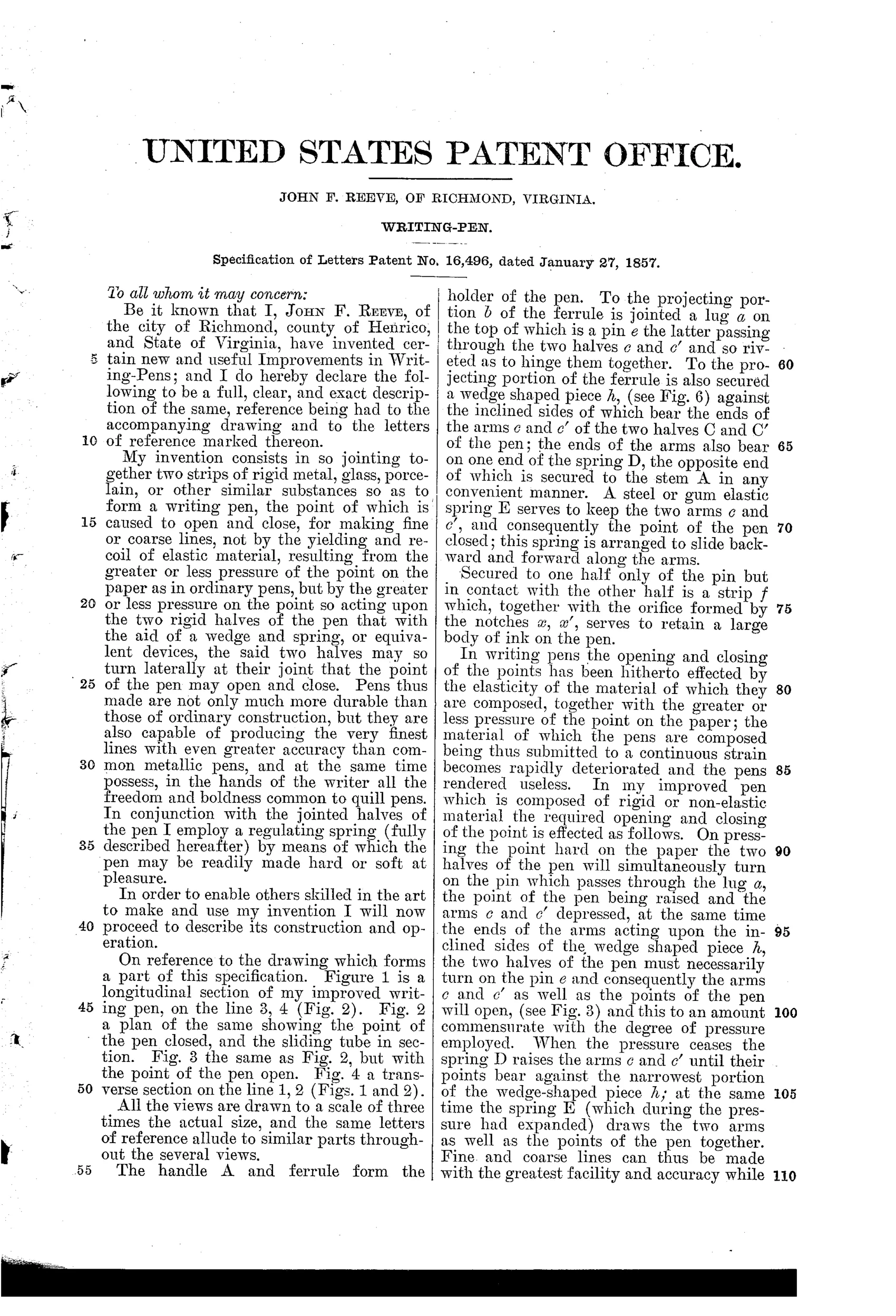
Two rigid, nonelastic halves of the pen (c and c') are hinged together at a pin passing through a lug on the ferrule. Pressing the point on paper pivots the halves on this pin, causing their arms to bear against a wedge-shaped piece and open the point. A regulating spring (E), slidable along the arms, controls how much pressure is needed to open the point, while a second spring (D) closes it again when pressure ceases. A strip (f) and notches retain a reservoir of ink at the joint.
✒ What was claimed
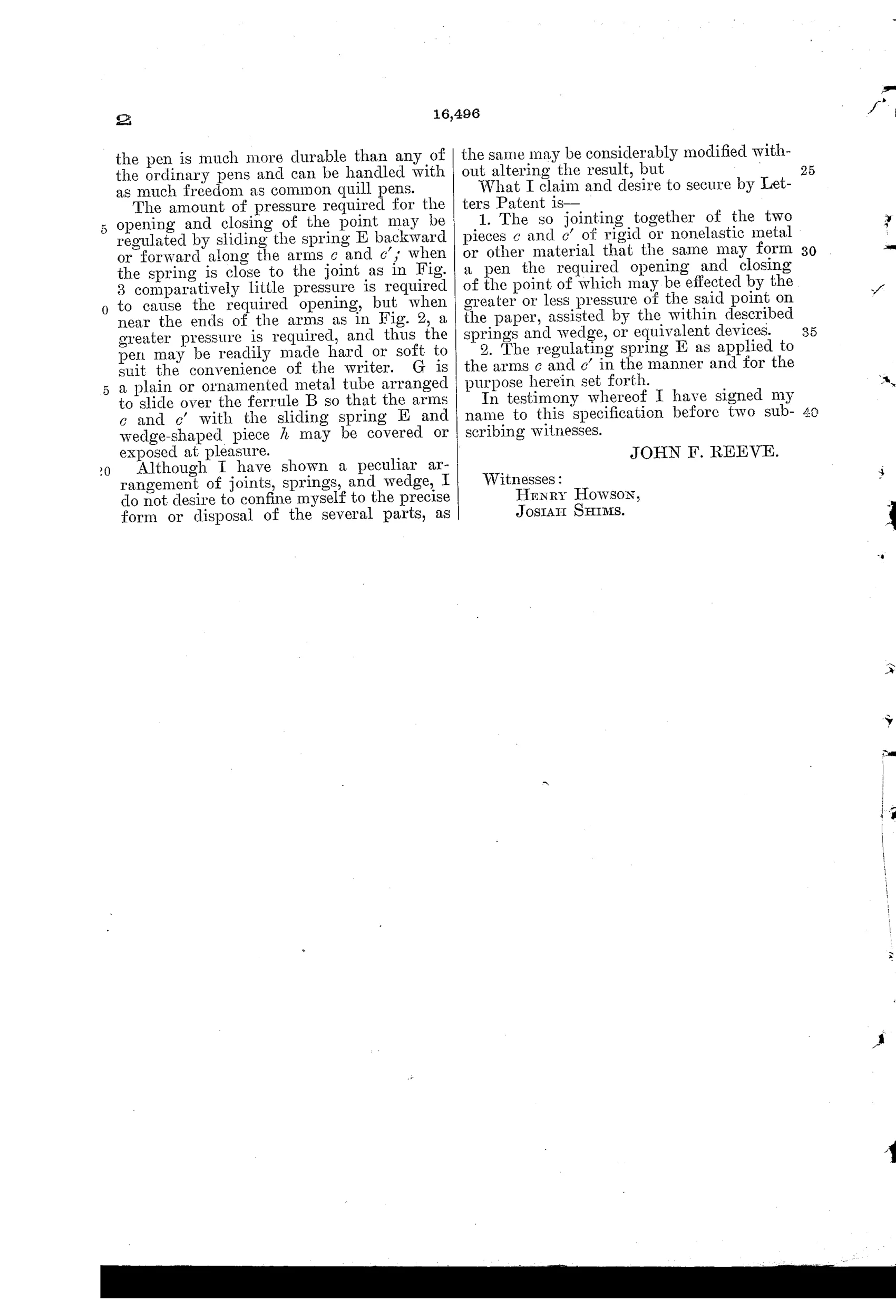
“1. The so jointing together of the two pieces c and c' of rigid or nonelastic metal or other material that the same may form a pen the required opening and closing of the point of which may be effected by the greater or less pressure of the said point on the paper, assisted by the within described springs and wedge, or equivalent devices.”
In plain English: The invention is the hinging together of two rigid, non-elastic pen halves so that pressing the point on paper (aided by springs and a wedge) opens and closes the point, rather than relying on the flexing of elastic material.
✒ In the inventor’s words
“Pens thus made are not only much more durable than those of ordinary construction, but they are also capable of producing the very finest lines with even greater accuracy than common metallic pens, and at the same time possess, in the hands of the writer all the freedom and boldness common to quill pens.”— John F. Reeve, from the specification
Paper patent — likely never produced
A multi-part hinged mechanism at nib scale could not compete with penny stamped-steel pens, and no example is known to survive.
✒ Patented the same day
- FOUNTAIN-PEN. — Joseph C. Silvy
✒ Commentary
Every nib before and since has worked the same way: elastic metal splits under pressure, the tines spread, the line widens. Reeve's 1857 patent throws that out entirely. His two point halves are deliberately rigid — 'nonelastic' is his word — and they pivot on a hinge pin like a pair of scissors. Press the point on paper and the arms behind the hinge bear against a wedge, forcing the tip open; a spring snaps it shut when you lift. A second, slidable spring lets the writer tune how much pressure the point demands before it opens.
Look at Figs. 2 and 3 side by side and you can see the whole action: closed point, open point, with the little diamond-shaped wedge sitting between the arms doing the work. There's even a strip and notches at the joint to hold a small reserve of ink — a nod toward the reservoir problem, decades before anyone solved it.
The pitch is durability plus quill-like freedom, and the logic is sound: rigid halves can't fatigue or spring out of set the way steel tines do. But he's traded metallurgy for machinery — a pivot pin, a wedge, and two springs assembled at fingernail scale, in 1857, competing against stamped steel pens sold by the gross for pennies. This is the pre-Waterman stratum at its most inventive and most doomed: solving the nib's weakness by making it a mechanism.
Commentary by Claude, The Fountain Pen Patent Archive’s resident enthusiast