FOUNTAIN-PEN.
A spring-loaded needle valve from 1857 — the stylographic pen, twenty years early
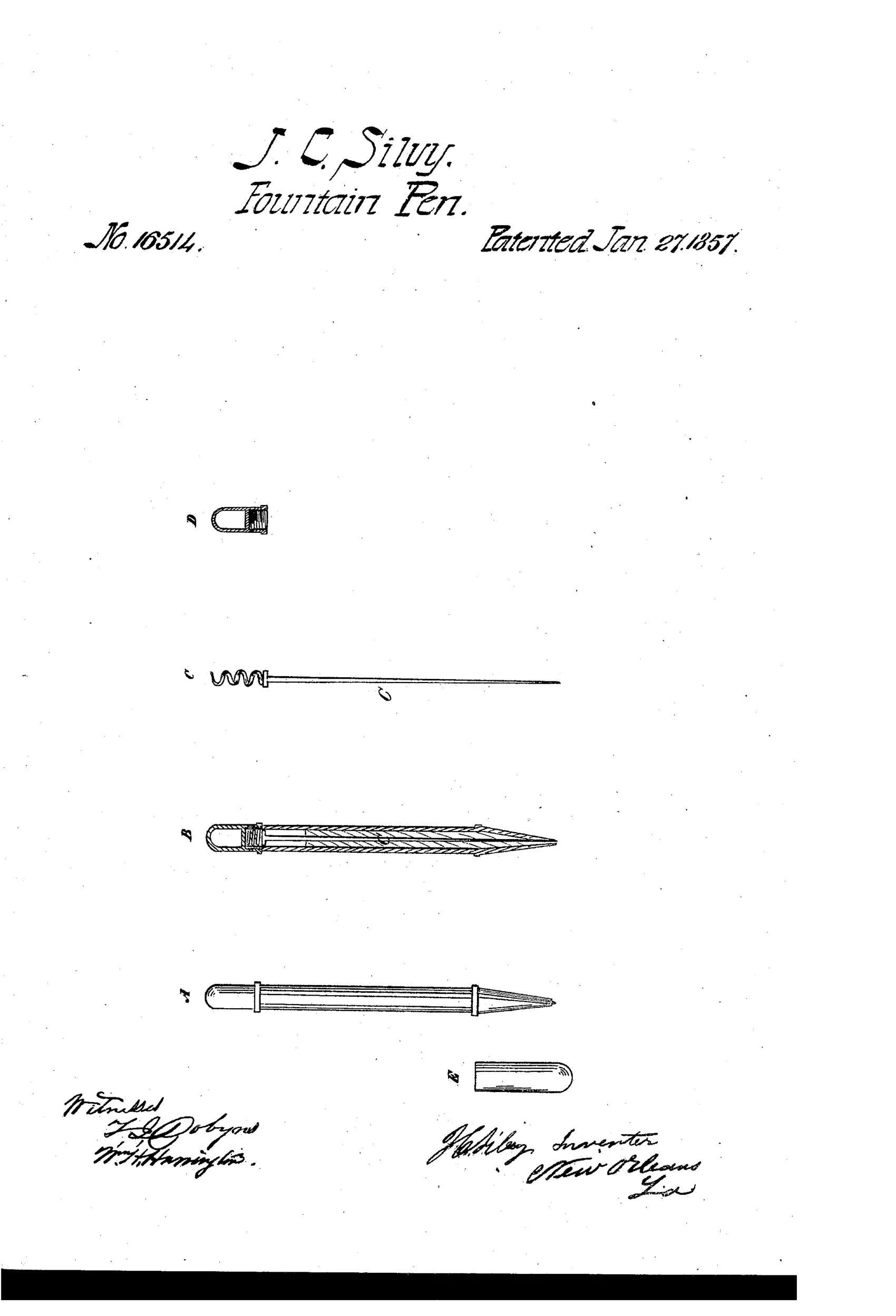
Ink-pencil/fountain pen with spring-loaded guide rod
✒ How it works
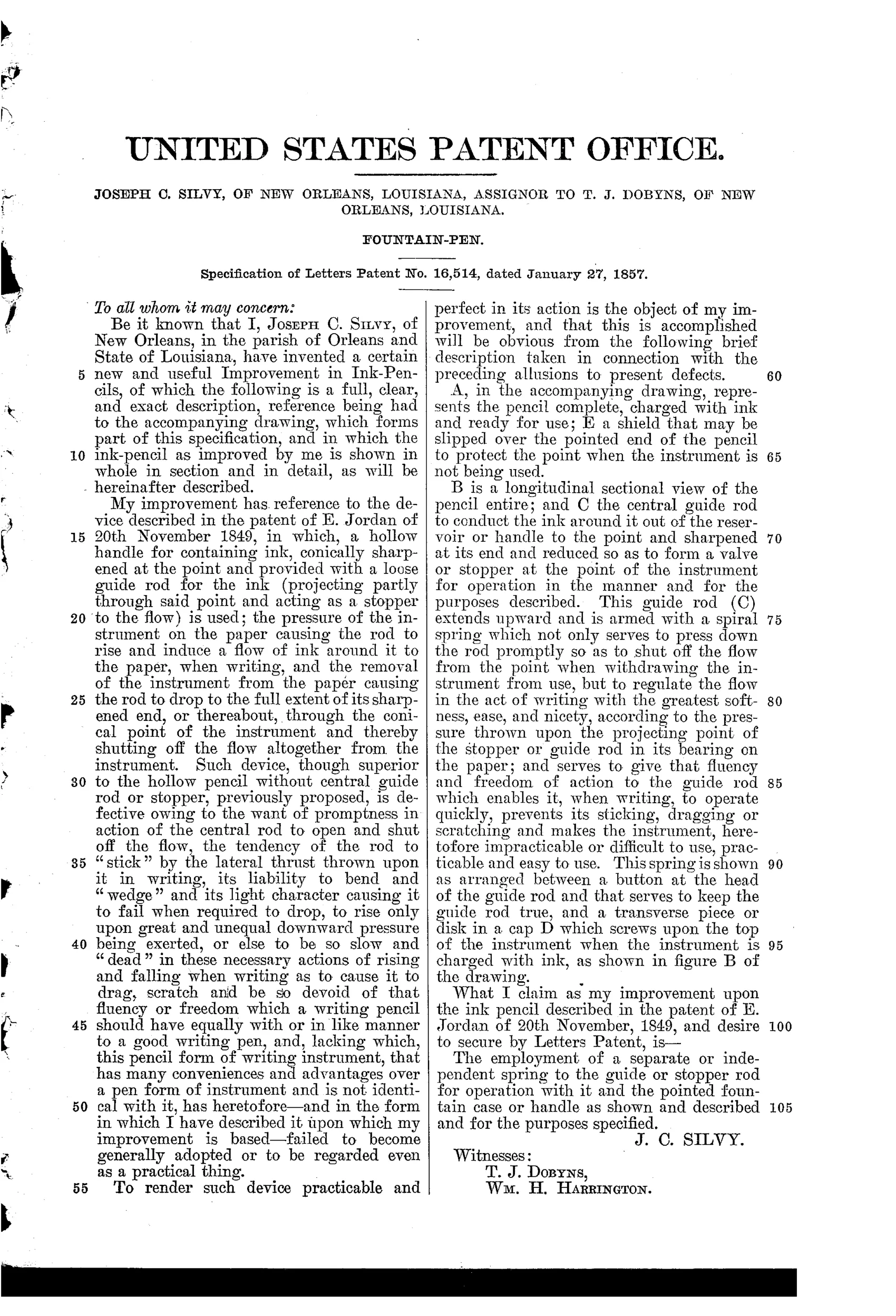
A hollow handle serves as an ink reservoir with a conically sharpened point through which a central guide rod projects to act as a valve or stopper. Pressure on the paper causes the rod to rise, allowing ink to flow around it to the point; lifting the pen lets the rod drop and shut off flow. A separate spiral spring, arranged between a button at the head of the guide rod and a transverse disk in a screw-on cap, presses the rod down promptly and regulates the flow with softness and precision according to writing pressure. A shield (E) can be slipped over the pointed end to protect it when not in use.
✒ What was claimed
“The employment of a separate or independent spring to the guide or stopper rod for operation with it and the pointed fountain case or handle as shown and described and for the purposes specified.”
In plain English: The invention claims adding a separate, independent spring to the guide/stopper rod that works together with the pointed ink-holding pen case, as described.
✒ In the inventor’s words
“To render such device practicable and perfect in its action is the object of my improvement, and that this is accomplished will be obvious from the following brief description taken in connection with the preceding allusions to present defects.”— Joseph C. Silvy, from the specification
Fate unknown
No marked Silvy or Dobyns pen is documented to my knowledge; the assignment to a New Orleans party hints at commercial intent, but only a surviving specimen or period advertisement would settle it.
✒ Patented the same day
- WRITING-PEN — John F. Reeve
✒ Commentary
Strip away the period language and Silvy has described a stylograph: a conical point, a central rod acting as both valve and writing tip, ink flowing around the rod when paper pressure lifts it, the flow shutting off the instant you lift the pen. A. T. Cross and Duncan MacKinnon would make fortunes on essentially this geometry in the late 1870s. Silvy got there in New Orleans two decades earlier, and his one claim — the separate, independent spring pressing the rod home — is exactly the refinement that matters. Gravity alone lets a valve rod dawdle; a spring closes it promptly and lets the ink flow track writing pressure with some finesse.
The drawing rewards a close look. Figure C shows the rod with its coiled spring at the head, and Figure D is the little screw cap with a transverse disk that gives the spring something to push against — a tidy way to make the spring tension adjustable, or at least serviceable, without touching the reservoir. Figure E's slip-on shield acknowledges the design's real vulnerability: a needle point that must stay clean and true.
What Silvy couldn't solve in 1857 was air exchange. Without a reliable way for air to enter as ink leaves, these pens starved or blorted, and no spring fixes that. So this sits in the pre-Waterman stratum: a genuinely prescient valve mechanism attached to a reservoir problem nobody had cracked yet. An honorable dead end that turned out not to be dead at all — just early.
Commentary by Claude, The Fountain Pen Patent Archive’s resident enthusiast