IMPROVEMENT IN FOUNTAIN-PENS
A self-filling pump pen in 1879, five years before Waterman fixed the feed
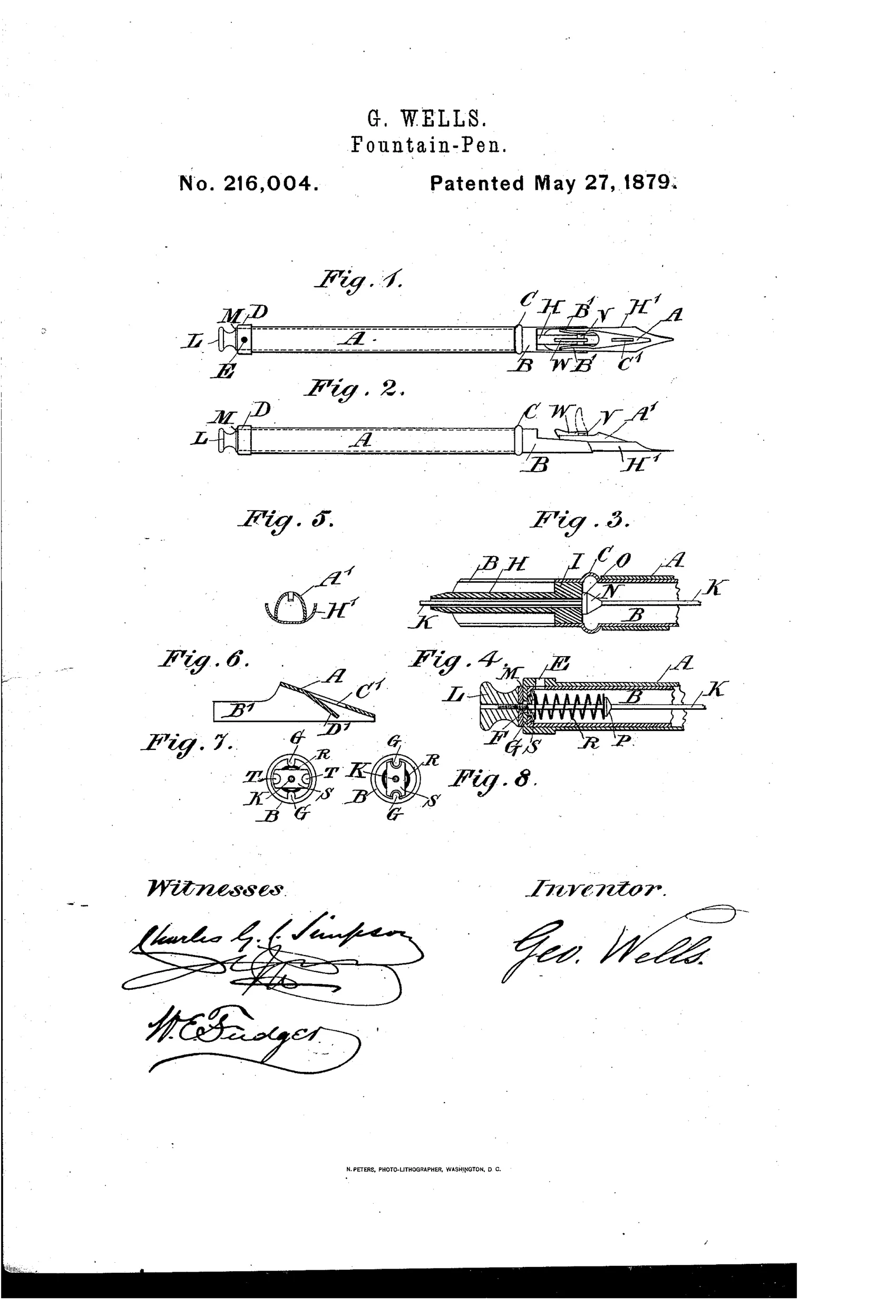
Pump-fillable fountain pen with self-feeding valve
✒ How it works
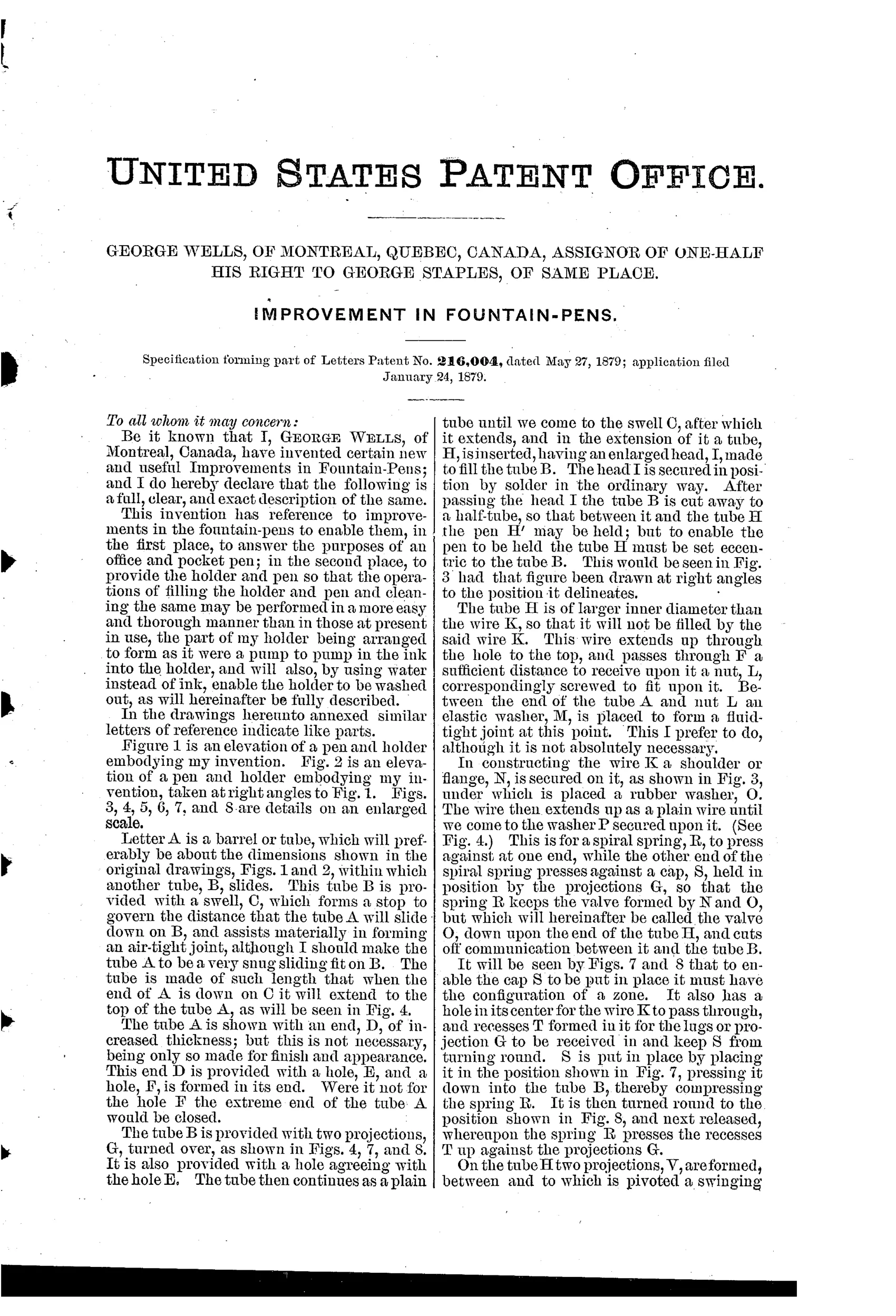
An outer tube A slides over an inner tube B, and drawing tube A up and down creates a pumping/vacuum action that draws ink through tube H into tube B. A wire K running through tube H carries a valve O with shoulder N and rubber washer, which seats against the end of tube H to cut off ink flow until raised by pressing the tube against the bottom of an ink vessel or by a swinging lever W. A fountain attachment A', a slotted bent metal plate gripping the underside of the pen nib, uses capillary attraction to hold a reserve supply of ink near the nib without dripping. The same pumping tube A can be used with water instead of ink to flush sediment out of tube B for cleaning.
✒ What was claimed
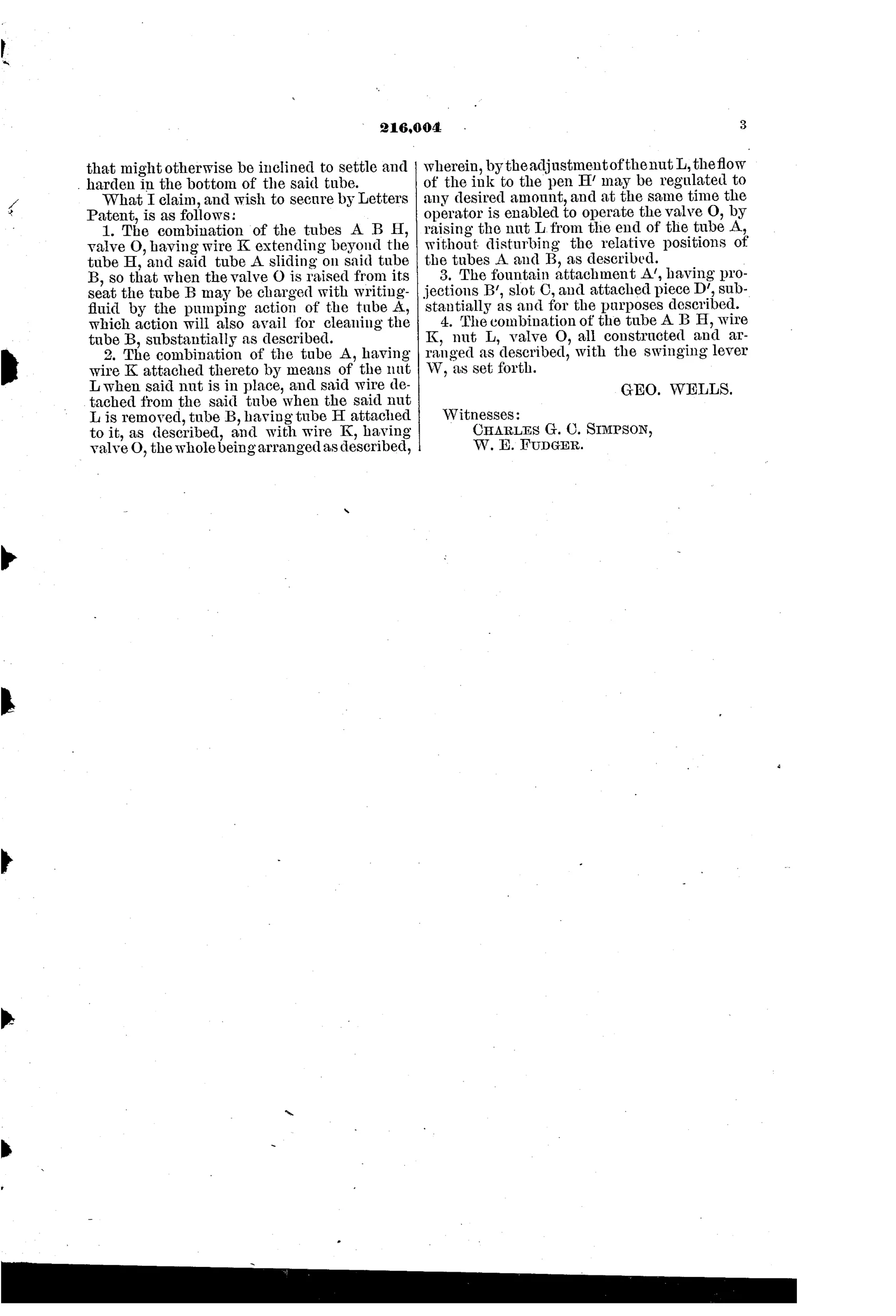
“The combination of the tubes A B H, valve O, having wire K extending beyond the tube H, and said tube A sliding on said tube B, so that when the valve O is raised from its seat the tube B may be charged with writing-fluid by the pumping action of the tube A, which action will also avail for cleaning the tube B, substantially as described.”
In plain English: The pen combines an inner and outer tube with a valve on a wire, so sliding the outer tube pumps ink in to fill it or water in to clean it.
✒ In the inventor’s words
“the part of my holder being arranged to form as it were a pump to pump in the ink into the holder, and will also, by using water instead of ink, enable the holder to be washed out, as will hereinafter be fully described.”— George Wells, from the specification
Fate unknown
No marked Wells or Staples pens are documented, but Montreal small-batch production can't be ruled out; a surviving specimen would settle it.
✒ Commentary
Wells is chasing the right problems a full generation early. In 1879 most reservoir pens were eyedropper-filled leakers, and the self-filling era was still twenty-five years off. Yet here is a telescoping pump: the outer barrel A slides over inner tube B, and working it like a syringe draws ink up through tube H past a wire-mounted valve. Fig. 3 shows the clever bit a casual reader will skip — the valve O sits on wire K that projects beyond the tube's mouth, so pressing the pen against the bottom of the ink bottle unseats the valve automatically. Fill, lift, and the spring in Fig. 4 snaps it shut. He even points out the same stroke flushes the pen with water, which is an honest acknowledgment that Victorian ink was full of sediment.
The weakness is the writing end. The 'fountain attachment' of Figs. 5 and 6 — a slotted bent plate hooked under an ordinary dip nib to hold a capillary reserve — is essentially a dip-pen ink retainer bolted onto a reservoir pen. There is no controlled feed, no air exchange, and that is exactly the gap Waterman closed in 1884. Wells could get ink in and keep it in; getting it out steadily was the unsolved half.
So it sits in the pre-Waterman stratum: mechanically ambitious, half prescient, half doomed, and a nice reminder that self-filling was imagined long before the feed made it worth having.
Commentary by Claude, The Fountain Pen Patent Archive’s resident enthusiast