STYLOGRAPHIC PEN
A slit rubber diaphragm, jiggled open by the writing needle itself
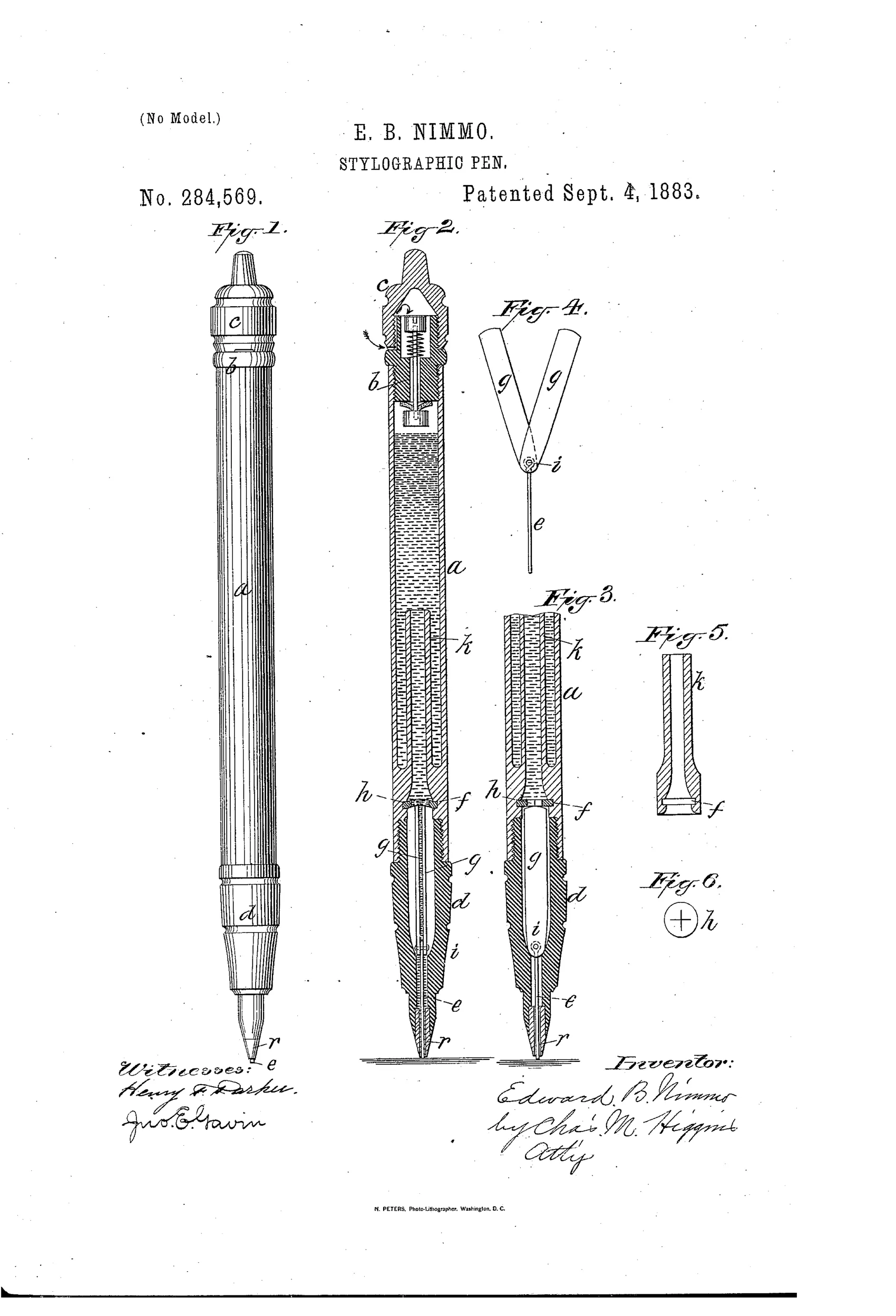
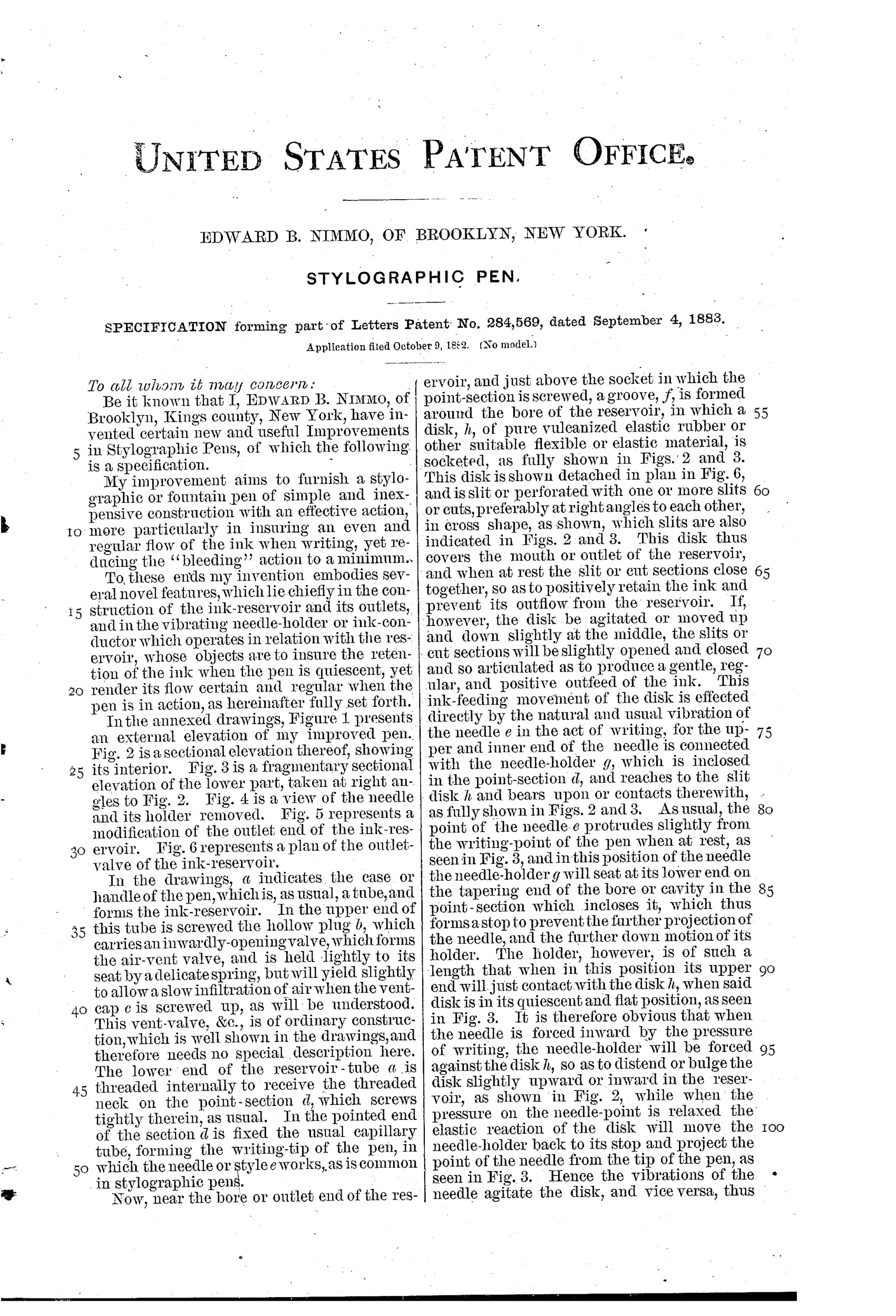
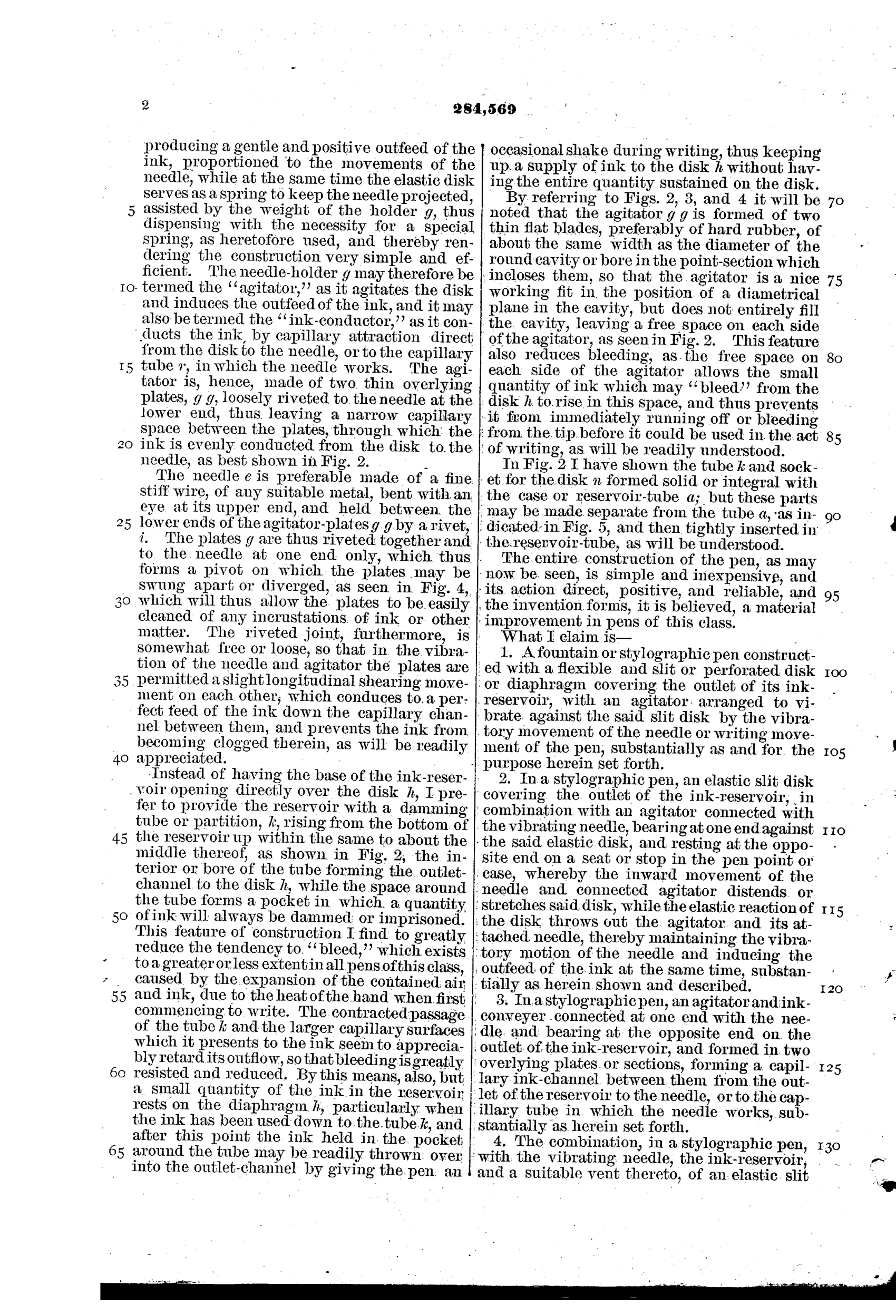
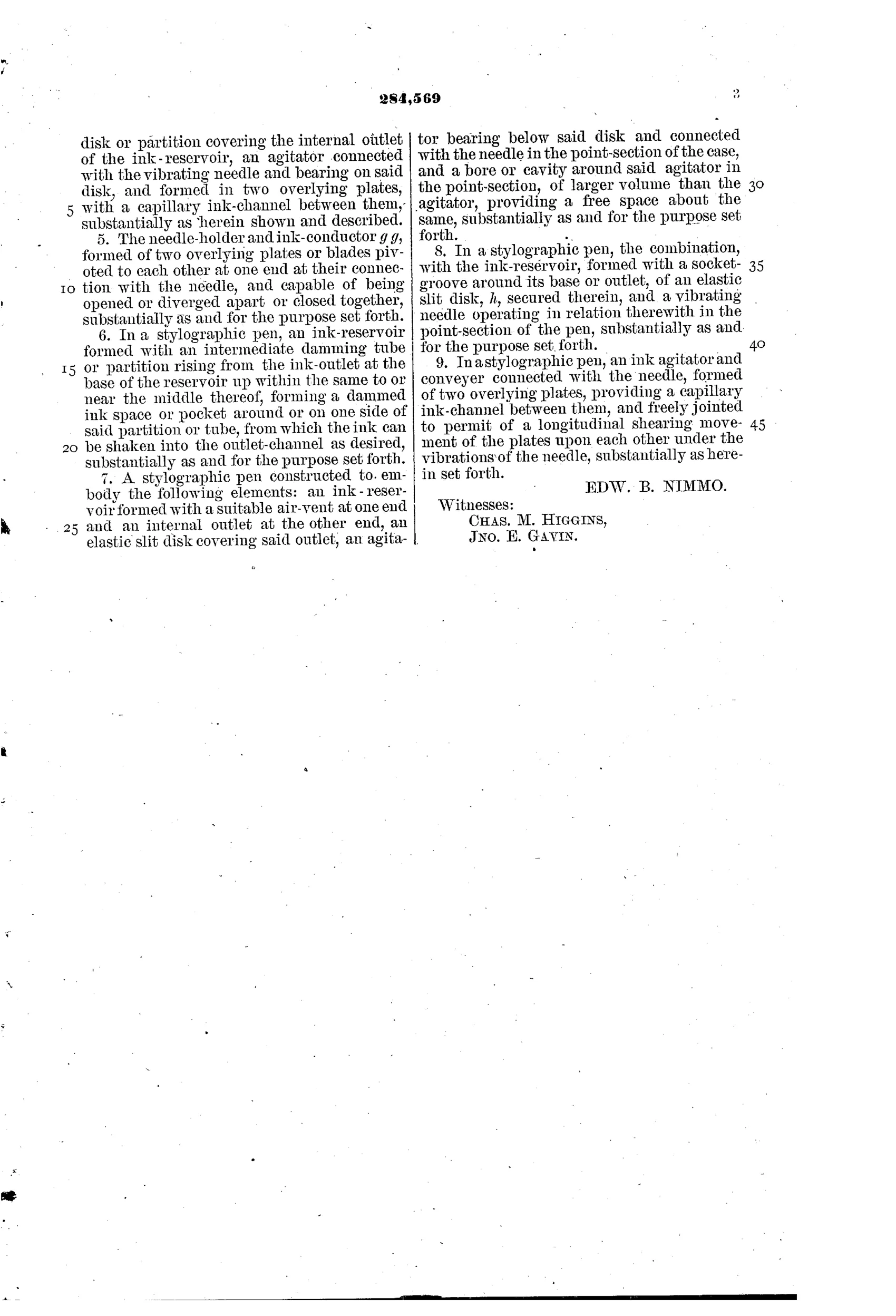
Stylographic (needle-type) fountain pen with vibrating ink agitator
✒ How it works
An ink reservoir tube stores ink and is closed at its lower outlet by an elastic slit disk of vulcanized rubber. A needle-holder called the agitator, made of two thin overlying plates riveted to the writing needle, bears against this disk inside the point-section. As the needle vibrates during writing, the agitator distends the slit disk, opening and closing its cross-cut slits to meter a gentle, regular outfeed of ink by capillary action along the channel between the plates to the needle and writing tip; a damming tube partition within the reservoir also traps a reserve of ink near the outlet to reduce bleeding.
✒ What was claimed
“A fountain or stylographic pen constructed with a flexible and slit or perforated disk or diaphragm covering the outlet of its ink-reservoir, with an agitator arranged to vibrate against the said slit disk by the vibratory movement of the needle or writing movement of the pen, substantially as and for the purpose herein set forth.”
In plain English: The pen uses a flexible slit disk over the ink reservoir outlet that is vibrated open and closed by an agitator connected to the writing needle, controlling ink flow.
✒ In the inventor’s words
“The entire construction of the pen, as may now be seen, is simple and inexpensive, and its action direct, positive, and reliable, and the invention forms, it is believed, a material improvement in pens of this class.”— Edward B. Nimmo, from the specification
Fate unknown
No Nimmo-marked stylograph is documented in the standard references; a surviving example or trade advertisement would settle it.
✒ Commentary
This is 1883 — a year before Waterman's feed — and the stylographic pen, not the nibbed fountain pen, was the reservoir pen that actually worked. MacKinnon and Cross had already put needle-point stylographs in pockets across the country. Nimmo's contribution is at the valve: instead of relying on the needle's weight alone to seat and unseat, he covers the reservoir outlet with a cross-slit disk of vulcanized rubber (Fig. 6) and rivets the needle to a two-plate 'agitator' that bears against it. Every vibration of the needle in writing flexes the slits open; the ink that escapes runs by capillarity down the channel between the plates to the point. Fig. 4, with the plates spread apart, shows how the pair doubles as feed channel and valve actuator.
It's a genuinely tidy piece of thinking — flow is metered by the very motion that demands ink, and the damming partition in the reservoir keeps a reserve near the outlet so the pen starts promptly. The weakness a casual reader would miss is the material: a slit rubber membrane in constant contact with iron-gall ink hardens, and dried ink in those slits would glue the valve shut. Every stylograph fought clogging; Nimmo adds one more surface for it to happen on.
A footnote worth savoring: the attorney signing the drawing is Chas. M. Higgins — the Brooklyn ink man himself. The stylograph trade was a small world.
Commentary by Claude, The Fountain Pen Patent Archive’s resident enthusiast