FOUNTAIN-PEN
A telescoping piston-filler patented three months before Waterman changed everything
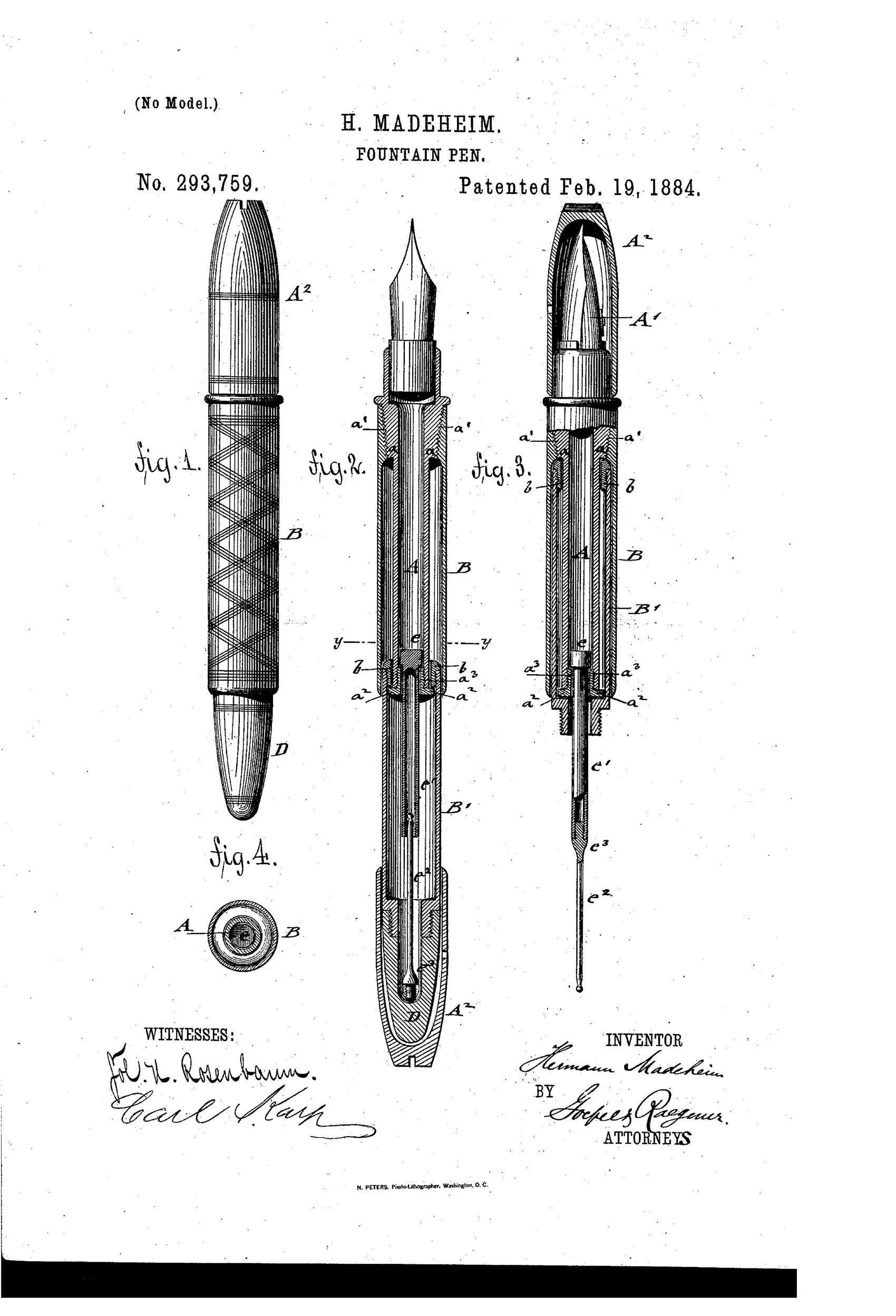
Telescoping extension-handle fountain pen with filling piston
✒ How it works
A tubular ink-fountain A holds ink and terminates in a valved discharge spout fitted with a nib. A fixed handle-section B surrounds the ink-fountain, while a sliding tubular extension-handle B' rides in the annular space between them, guided by shoulders so it can be drawn out for writing or pushed in for compact carrying. Inside the ink-fountain a tightly fitting piston e, moved by a hollow piston-rod e', draws ink in through the spout when the rod is pulled back. A detachable extension e2 screws into the outer end of the hollow piston-rod to lengthen it for filling, then unscrews and stores inverted inside the hollow rod when the pen is in writing position.
✒ What was claimed
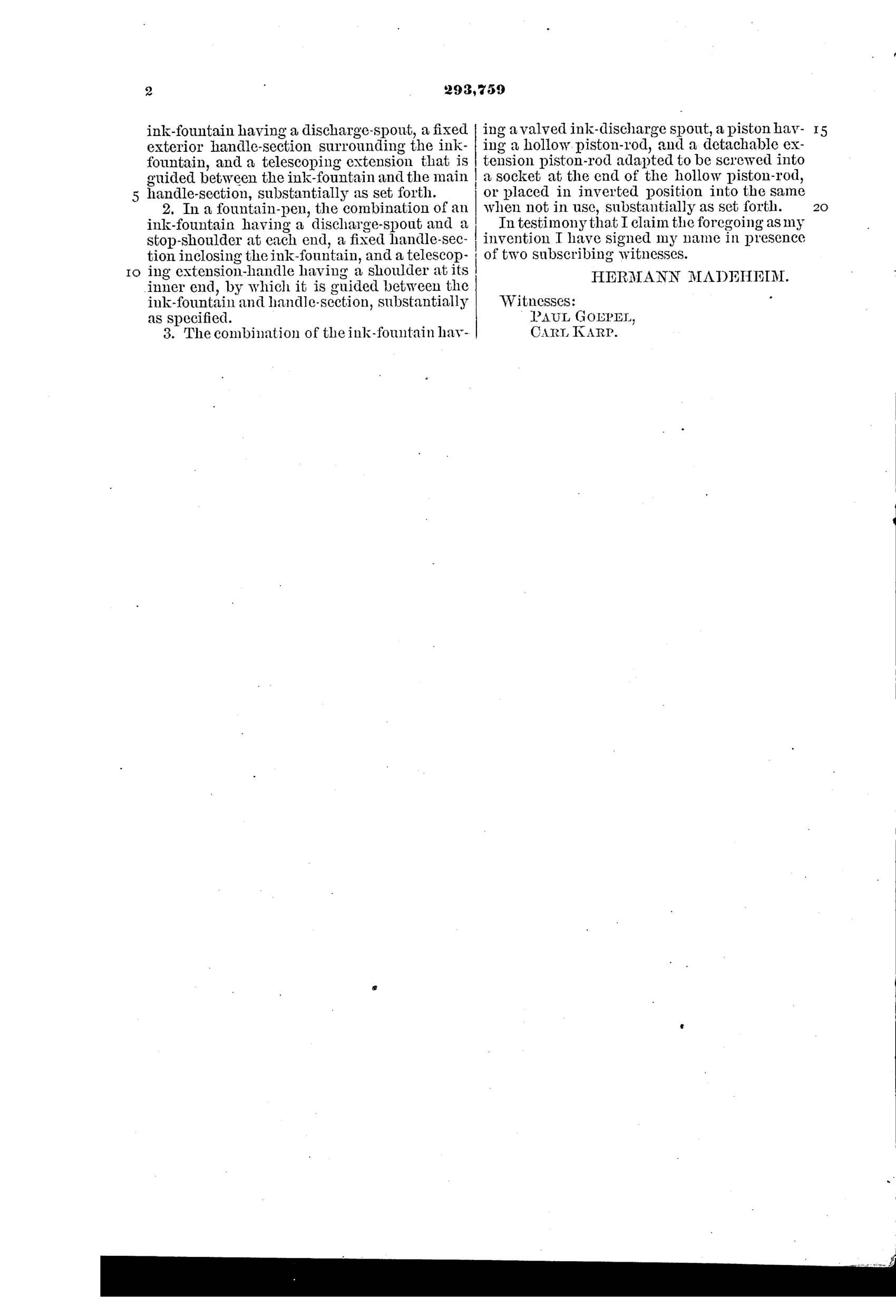
“In a fountain-pen, the combination of an ink-fountain having a discharge-spout, a fixed exterior handle-section surrounding the ink-fountain, and a telescoping extension that is guided between the ink-fountain and the main handle-section, substantially as set forth.”
In plain English: The pen combines an ink reservoir with a spout, a fixed outer handle sleeve around it, and a sliding extension handle guided between the reservoir and the sleeve so the pen can lengthen or shorten.
✒ In the inventor’s words
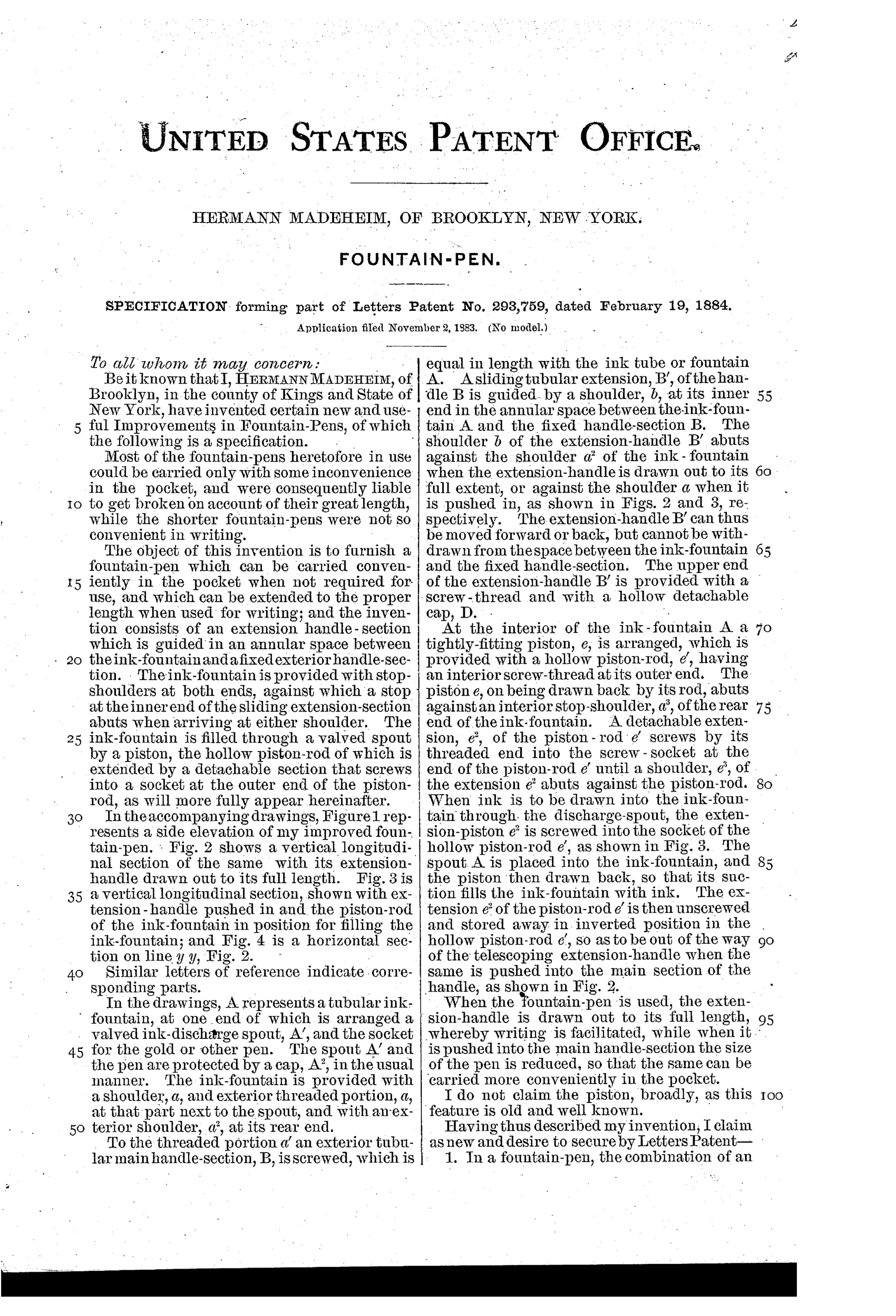
“Most of the fountain-pens heretofore in use could be carried only with some inconvenience in the pocket, and were consequently liable to get broken on account of their great length, while the shorter fountain-pens were not so convenient in writing.”— Hermann Madeheim, from the specification
Fate unknown
No production example or maker's line matching this design is documented; a marked telescoping specimen would settle it.
✒ Commentary
The date is the first thing to notice: February 1884. Lewis Waterman's capillary-feed patent — the one the whole modern industry descends from — issued that same year. Madeheim is working right at the hinge point, and his pen is a snapshot of what inventors thought the problem was before Waterman clarified it. To Madeheim, the trouble with fountain pens was that they were too long for the pocket and too short when shortened. His answer is a sliding extension handle riding in the annular gap between the ink reservoir and the outer barrel — collapse it to carry, draw it out to write.
The filling system is the quietly ambitious part. Look at Fig. 3: a genuine piston, pulled back by a hollow rod, sucking ink in through the spout. The rod gets a screw-on extension for the filling stroke, which then unscrews and stows inverted inside the hollow rod. That's decades ahead of the piston fillers that finally worked in the 1920s and 30s — but the parts count is high, the seals are asked to do a lot, and every joint is a leak waiting to happen in an era before reliable gaskets.
What's missing is what mattered: any real answer to feed regulation. The nib sits on a valved spout with no capillary channels balancing air against ink, so this pen would likely blob and starve like every other pre-Waterman reservoir pen. Clever packaging around an unsolved core problem — an honest, well-drawn dead end.
Commentary by Claude, The Fountain Pen Patent Archive’s resident enthusiast