FOUNTAIN-PEN
A thumb-button sac squeezer in 1890, two decades before the self-filler wars
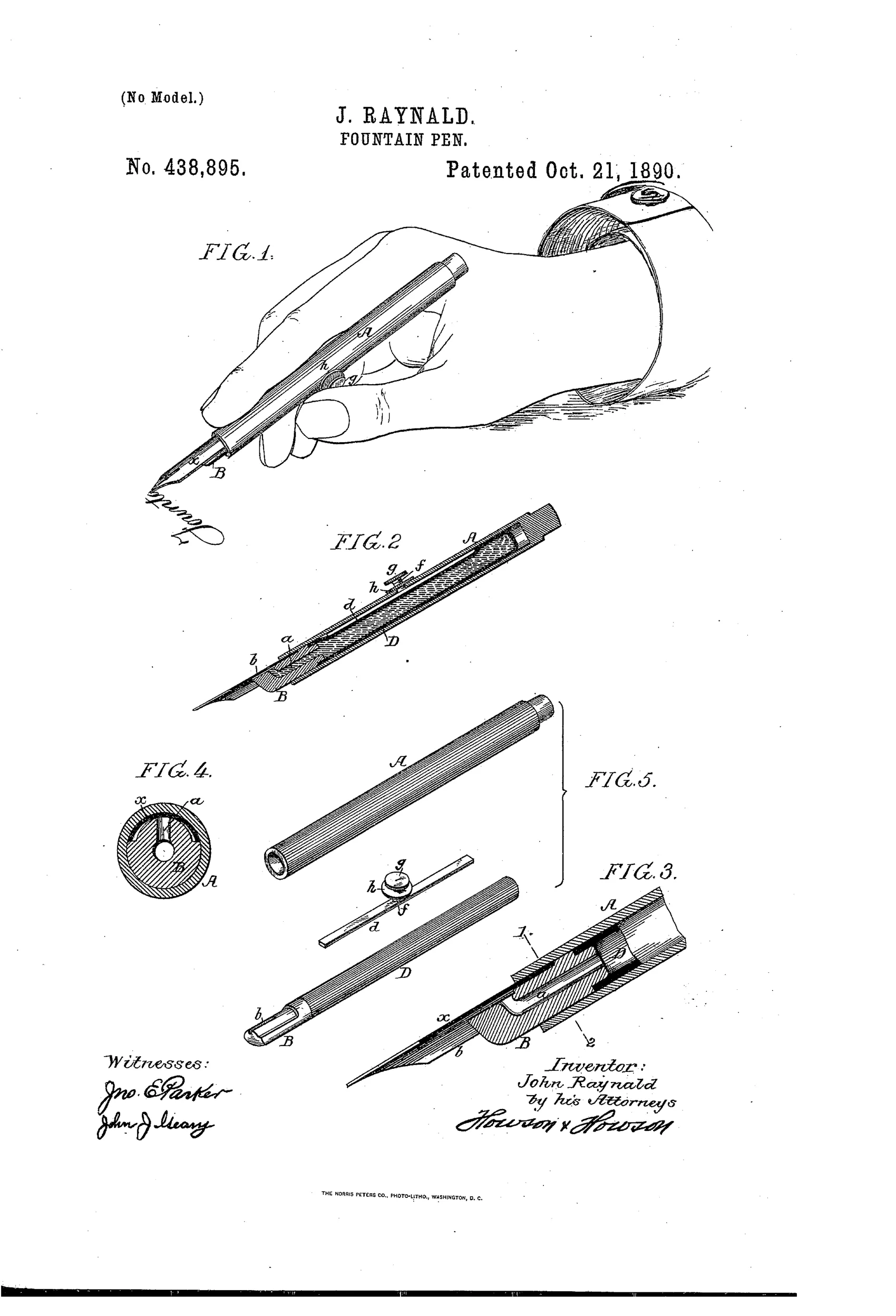
A pressure-fed elastic-reservoir fountain pen
✒ How it works
The pen body A holds an elastic ink reservoir D that supplies ink through a channel to the nib. A presser-bar d bears against the reservoir and is actuated by a stem f with an external button g, which the user presses with the thumb to compress the reservoir and force ink to the pen point. A threaded nut h locks the stem to prevent accidental compression when the pen is in a pocket. A plug B at the end of the holder confines the pen nib in an eccentric passage so pens of different sizes can be firmly held.
✒ What was claimed
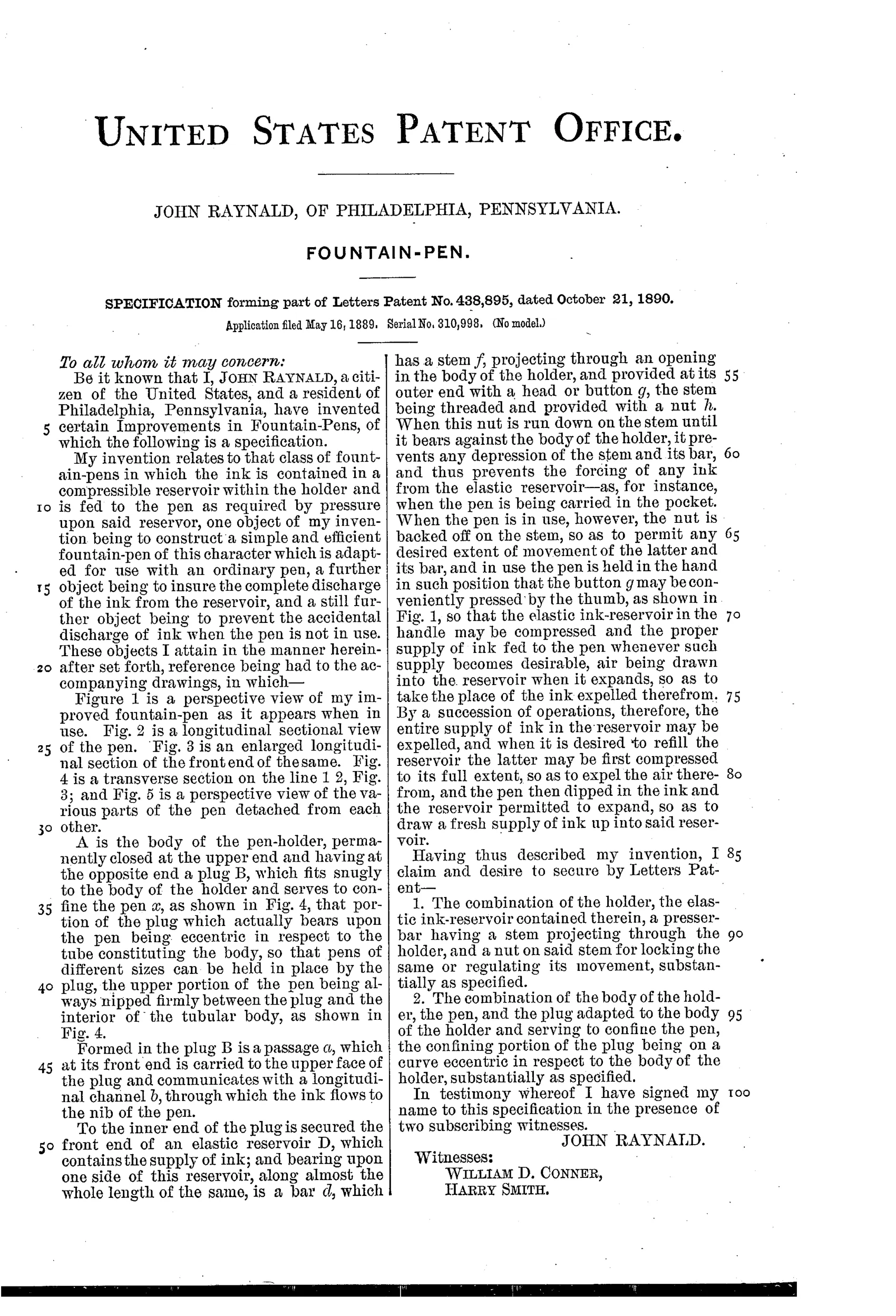
“1. The combination of the holder, the elastic ink-reservoir contained therein, a presser-bar having a stem projecting through the holder, and a nut on said stem for locking the same or regulating its movement, substantially as specified.”
In plain English: The pen combines a holder, a squeezable ink reservoir inside it, a pressure bar with a stem sticking out through the holder, and a locking nut on that stem to control or stop the pressing motion.
✒ In the inventor’s words
“By a succession of operations, therefore, the entire supply of ink in the reservoir may be expelled, and when it is desired to refill the reservoir the latter may be first compressed to its full extent, so as to expel the air therefrom, and the pen then dipped in the ink and the reservoir permitted to expand, so as to draw a fresh supply of ink up into said reservoir.”— John Raynald, from the specification
Fate unknown
No Raynald-marked pen or documented production is known to me; a surviving specimen with this button-and-locknut stem would settle it.
✒ Commentary
Raynald's pen is a sac pen with a presser-bar you work from outside the barrel — press the button g with your thumb and the bar squeezes the elastic reservoir, forcing ink down to the nib. Read that again with the calendar in mind: this is 1890, and the presser-bar-against-a-sac idea is exactly the architecture Conklin's crescent and Sheaffer's lever would ride to fortunes fifteen to twenty years later. Raynald even describes the full filling cycle in the specification: squeeze the sac flat to expel air, dip the point, release, and let the sac inflate with ink. That is a self-filler, described plainly, before anyone was calling it that.
The honest catch is that Raynald's stated purpose is mostly the opposite of filling — he wants to push ink *out* on demand, a pressure feed for a pen that presumably starved otherwise. That tells you where 1890 really was: Waterman's capillary feed was only six years old, and plenty of inventors still assumed you had to pump ink to the point rather than let air exchange do the work. The threaded locking nut h, to keep the button from being mashed in a pocket, is a nice confession of the mechanism's main hazard.
Don't miss Fig. 4: the eccentric plug B grips ordinary dip nibs of varying sizes off-center, so the pen isn't married to one proprietary point. A dead end as drawn, but the sac-and-presser-bar bones were prophetic.
Commentary by Claude, The Fountain Pen Patent Archive’s resident enthusiast