IMPROVEMENT IN PENS.
A hinged flap turns a dip nib into a self-cleaning ink reservoir, 1868
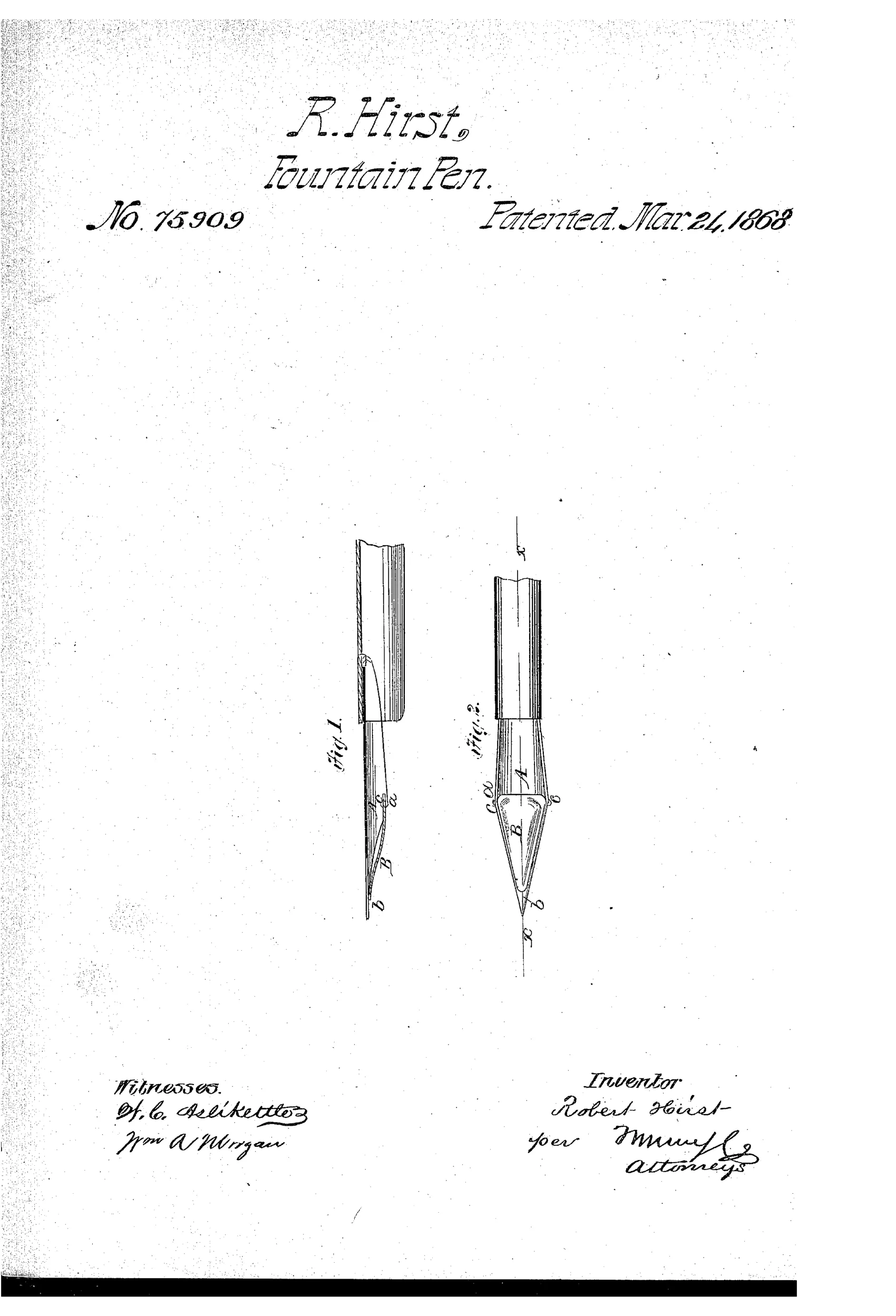
Hinged ink-reservoir flap for writing pens
✒ How it works
A hinged flap or pallet, shaped to match the outer curve of the pen, is mounted at its wide end on journals passing through both sides of the pen near the point. This flap sits over the concave inner side of the pen, and when the pen is dipped in ink it presses against the pen body by atmospheric pressure, forming a sealed ink-reservoir chamber. As the pen is used, this pressure holds the flap in place, letting ink flow steadily to the nib, while the hinge lets the flap swing open when dry, allowing the pen to be cleaned without restricting the spread of the nib slit.
✒ What was claimed
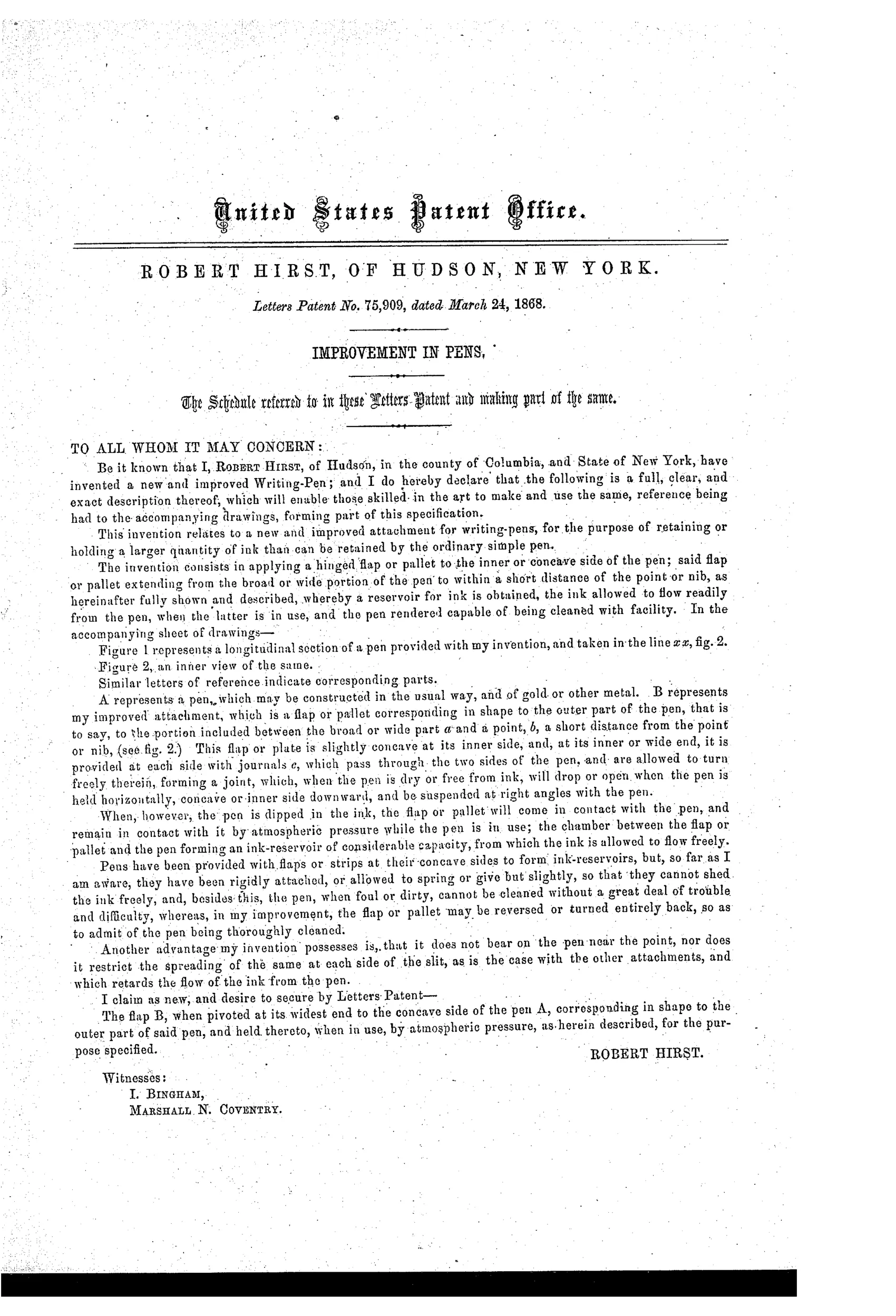
“The flap B, when pivoted at its widest end to the concave side of the pen A, corresponding in shape to the outer part of said pen, and held thereto, when in use, by atmospheric pressure, as herein described, for the purpose specified.”
In plain English: A hinged flap shaped to match the pen's outer curve, attached at its wide end, that is held against the pen by air pressure while writing to store extra ink.
✒ In the inventor’s words
“Pens have been provided with flaps or strips at their concave sides to form ink-reservoirs, but, so far as I am aware, they have been rigidly attached, or allowed to spring or give but slightly, so that they cannot shed the ink freely.”— Robert Hirst, from the specification
Fate unknown
Reservoir-flap dip nibs were made by various firms in this era, but no Hirst-marked example is documented; a surviving nib would settle it.
✒ Commentary
This is a pre-Waterman reservoir attempt, and a modest one: not a fountain pen with a barrel of ink, but a dip nib carrying a small under-slung tank. The idea of a strip or pallet on the concave side of a steel pen was already old in 1868 — Hirst says so himself in the specification. His contribution is the hinge. Where earlier reservoir strips were soldered or clamped rigidly, his flap pivots on journals near the point, so it swings open for cleaning and doesn't stiffen the nib or interfere with the slit spreading under pressure.
The clever part is what holds it shut: nothing. Dip the pen, and Hirst claims atmospheric pressure — really the capillary grip of the ink film between flap and nib — seals the flap against the pen body while you write. It's the same wet-surfaces-cling physics that later feed designers would exploit deliberately, used here almost by accident. Fig. 2 shows how the flap tapers with the nib so the chamber narrows toward the point, which would help meter the flow.
Would it work? Probably, for a few extra lines per dip, which is all these accessories ever promised. The dried-ink problem that killed rigid reservoir strips is genuinely answered by the hinge. But this is a refinement of a dead-end lineage: the future belonged to pens that carried ink inside, not underneath.
Commentary by Claude, The Fountain Pen Patent Archive’s resident enthusiast