IMPROVEMENT IN FOUNTAIN PEN-HOLDERS
1852 valve pen the writer opens with a finger squeeze, thirty years before Waterman
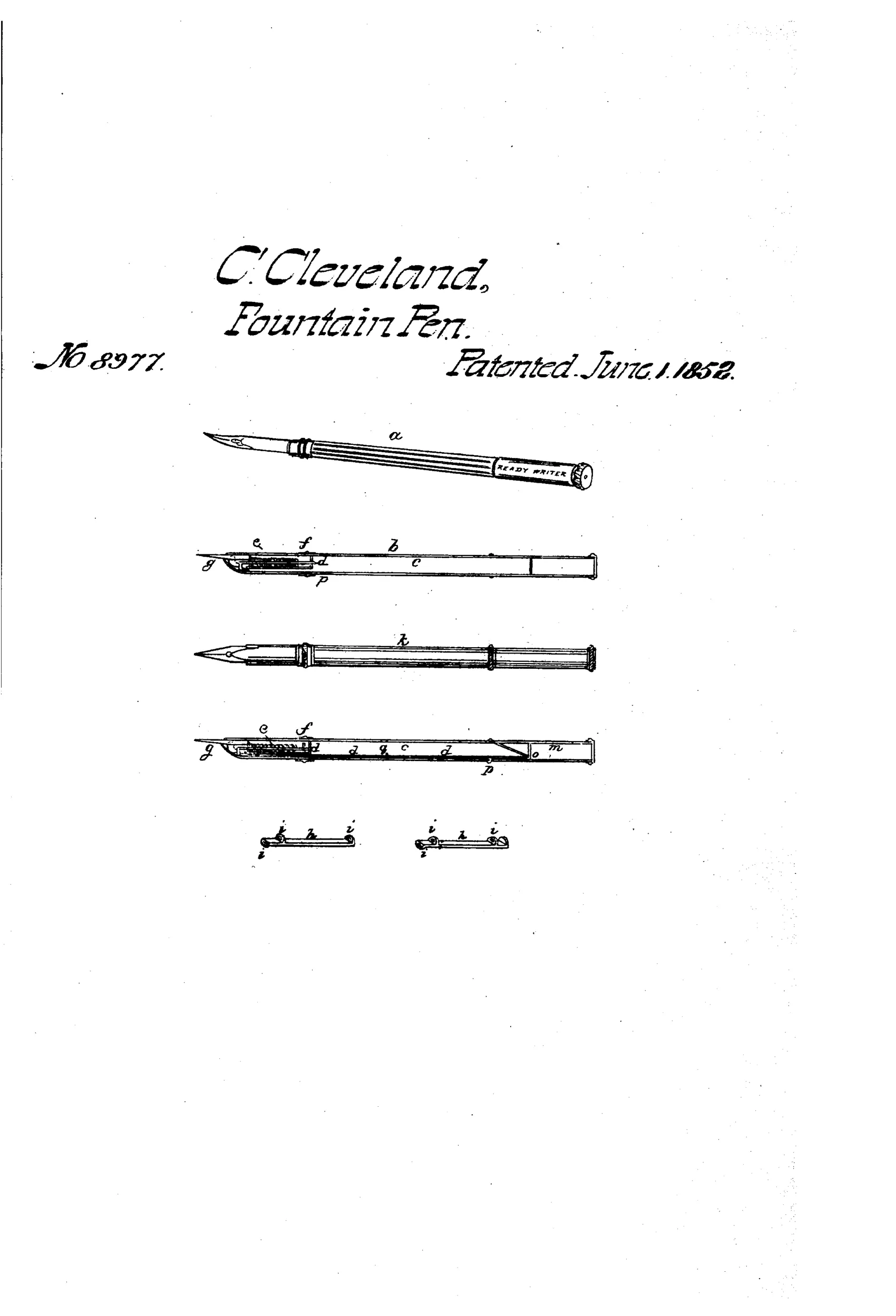
Self-regulating valve mechanism for a fountain pen
✒ How it works
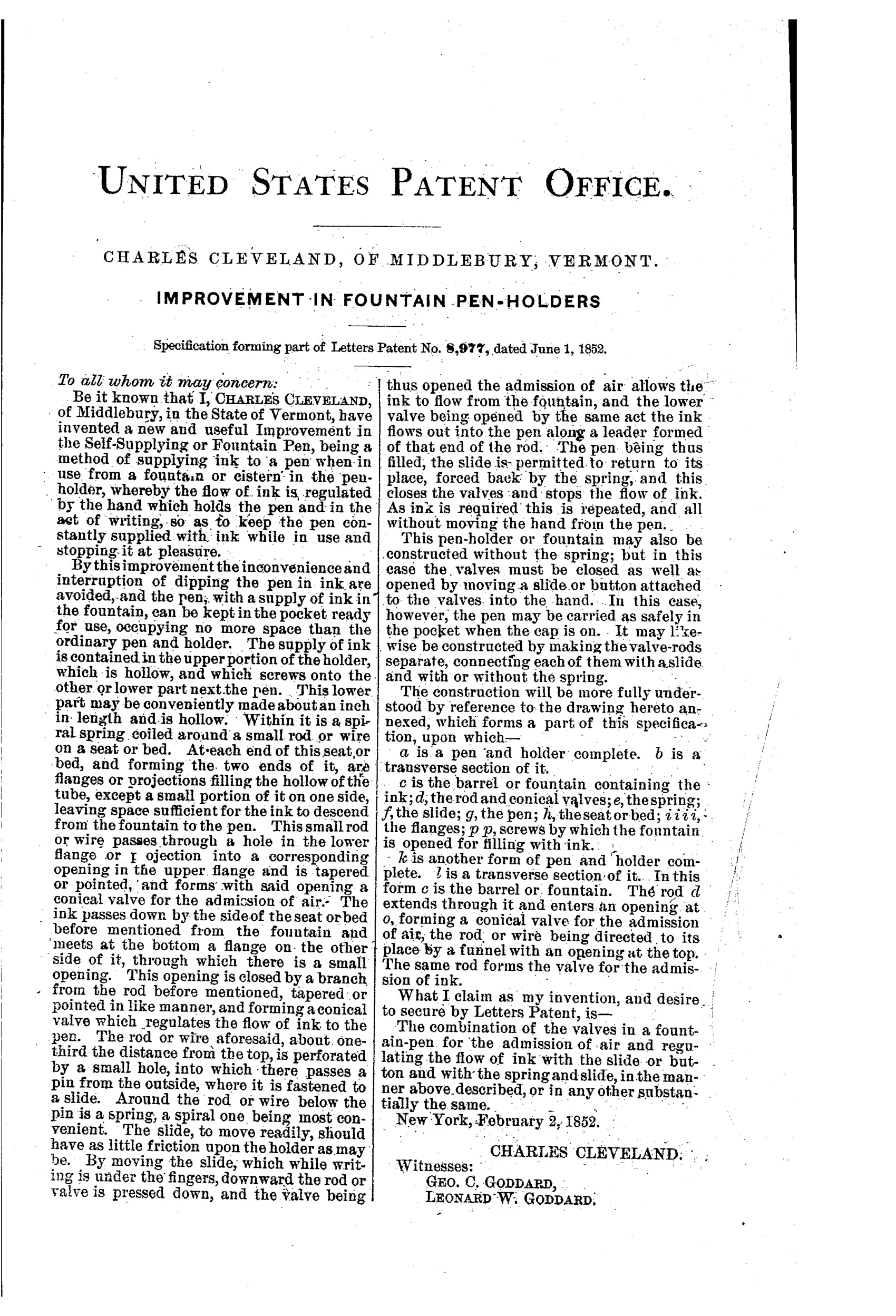
A hollow upper barrel serves as an ink fountain that screws onto the lower pen holder. A rod with two conical valves runs through the seat or bed inside the holder; one valve admits air into the fountain while the other releases ink to the pen. A slide, moved by the fingers during writing, presses the rod and spring downward to open both valves simultaneously, allowing ink to flow to the pen while air enters to replace it; releasing the slide lets the spring return the rod, closing both valves and stopping the flow.
✒ What was claimed
“The combination of the valves in a fountain-pen for the admission of air and regulating the flow of ink with the slide or button and with the spring and slide, in the manner above described, or in any other substantially the same.”
In plain English: The invention claims combining air-admission and ink-flow valves with a spring-loaded slide that the writer's fingers operate to control ink flow in a fountain pen.
✒ In the inventor’s words
“By this improvement the inconvenience and interruption of dipping the pen in ink are avoided, and the pen, with a supply of ink in the fountain, can be kept in the pocket ready for use, occupying no more space than the ordinary pen and holder.”— Charles Cleveland, from the specification
Fate unknown
The 'READY WRITER' branding on the drawing hints at commercial intent, but no surviving marked example is documented; one turning up would settle it.
✒ Commentary
Charles Cleveland of Middlebury, Vermont, attacked the pre-Waterman era's core problem head-on: how do you let ink out of a sealed reservoir without letting it all out? His answer was mechanical honesty — don't try to balance the flow, just turn it on and off. A rod running through the barrel carries two conical valves, one admitting air to the fountain, one releasing ink to the nib. A spring holds both shut. Press a slide with your fingers as you write, both valves open together, ink comes down as air goes up; relax, and the spring seals everything.
The simultaneous air-and-ink valve is the genuinely thoughtful part. Cleveland understood that ink won't leave a closed reservoir unless air can replace it — the same insight Waterman would solve passively with capillary feed channels in 1884. Cleveland solved it actively, with hardware. The trouble is the writer's hand: keeping constant, correct pressure on a slide while forming letters is asking two jobs of the same fingers, and the moment you press too long the pen floods.
Note the drawing's first figure carries the name 'READY WRITER' lettered right on the barrel — Cleveland was already thinking like a marketer, trade name and all, in 1852. It sits firmly in the fascinating-but-doomed stratum: the right diagnosis of the airflow problem, the wrong prescription for a writing hand.
Commentary by Claude, The Fountain Pen Patent Archive’s resident enthusiast