IMPROVEMENT IN INK-RETAINING ATTACHMENT FOR PENS
A clip-on ink bowl that promised dip pens a longer breath, 1870
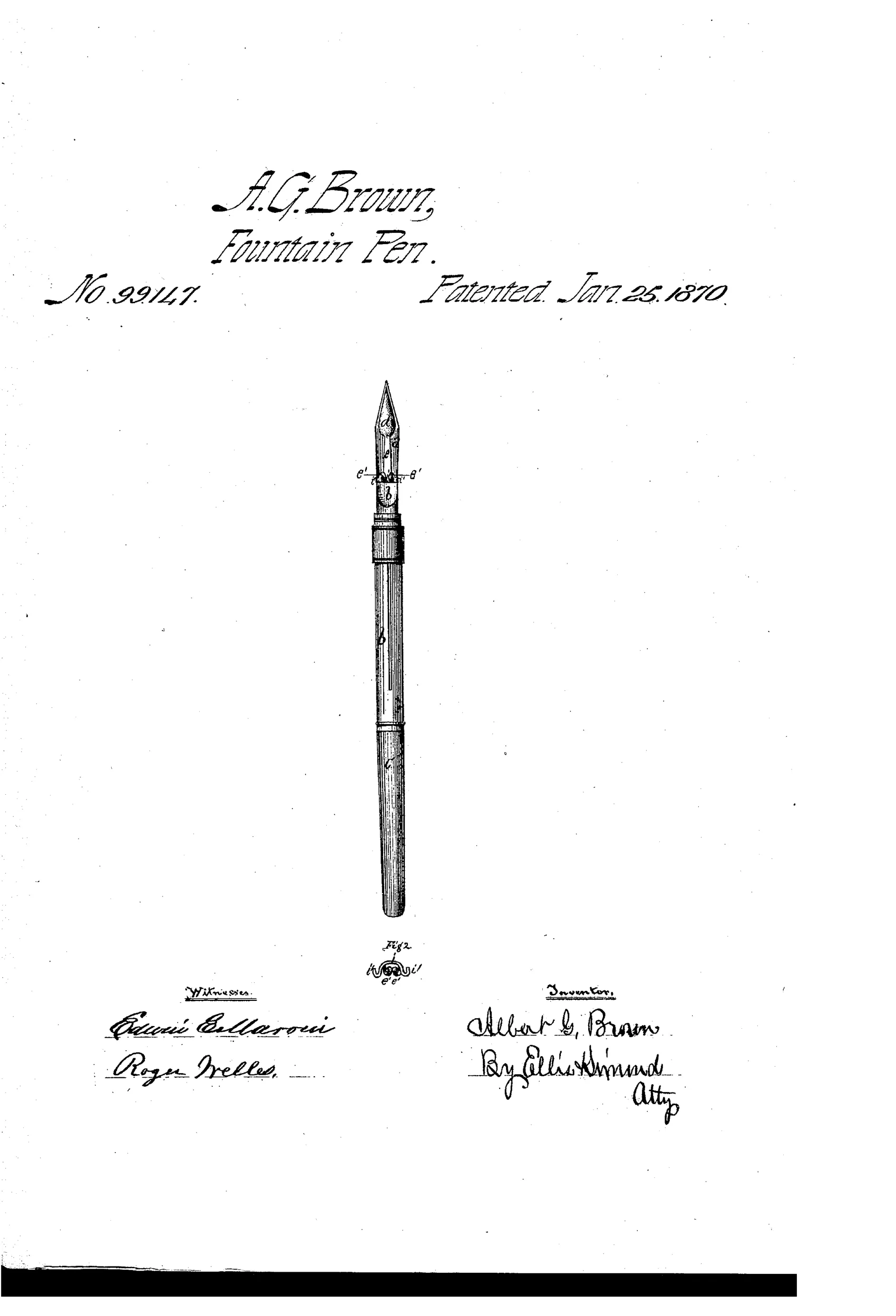
Detachable ink-reservoir clip for dip pens
✒ How it works
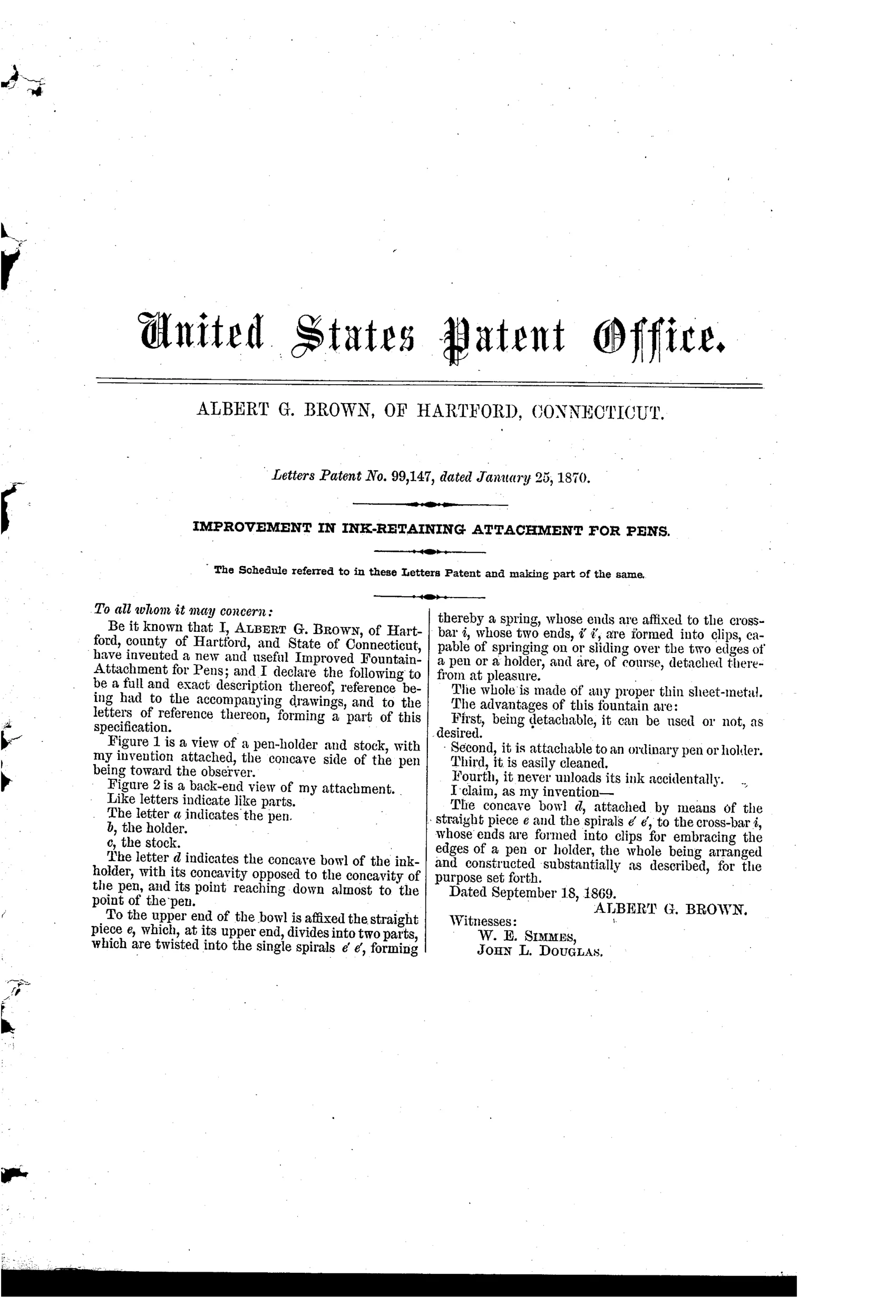
A concave bowl is mounted opposite the concavity of the pen nib, holding a reserve of ink near the point. The bowl is connected by a straight piece that splits into two twisted spiral arms acting as springs. These spirals attach to a cross-bar whose ends are bent into clips that spring onto or slide over the edges of a pen or pen-holder. The whole device is made of thin sheet metal and can be attached to or removed from an ordinary pen at will.
✒ What was claimed
“The concave bowl d, attached by means of the straight piece e and the spirals e' e', to the cross-bar i, whose ends are formed into clips for embracing the edges of a pen or holder, the whole being arranged and constructed substantially as described, for the purpose set forth.”
In plain English: The invention is a spring-clip ink bowl, connected by a straight piece and twisted spirals to a cross-bar with clip ends, that attaches to and embraces the edges of a pen or holder.
✒ In the inventor’s words
“Fourth, it never unloads its ink accidentally.”— Albert G. Brown, from the specification
Fate unknown
Reservoir clips of this general type were sold as stationery goods, but no example marked to Brown or this patent is documented; a surviving specimen would settle it.
✒ Patented the same day
- IMPROVEMENT IN FOUNTAIN-PENS — G. A. Becker
✒ Commentary
This isn't a fountain pen at all — it's a piece of the prehistory. Fourteen years before Waterman solved the feed problem, Albert Brown of Hartford was attacking the annoyance from the other end: instead of building ink storage into the pen, he made a little sheet-metal accessory that clips onto any ordinary dip nib. A concave bowl sits opposite the nib's own concavity, holding a small reserve of ink just behind the point, connected through twisted spiral arms to a cross-bar whose bent ends spring onto the holder.
The spirals are the interesting detail, easy to miss in the drawing. They're not decoration — they act as springs, letting the bowl float with a little give and letting the same device fit pens and holders of different widths. It's the whole design philosophy of the era in miniature: cheap stamped metal, no machining, universal fit, removable at will.
Brown's claim that it "never unloads its ink accidentally" is the tell — that was exactly what these reservoir attachments and full reservoir pens were notorious for. Physically, a small bowl feeding by gravity and capillarity to the nib back is plausible for a few extra lines per dip; dozens of similar attachments were patented and some sold as stationery novelties. But without a feed, it's a longer dip, not a fountain pen. A sensible, modest gadget on the road to the real thing.
Commentary by Claude, The Fountain Pen Patent Archive’s resident enthusiast