IMPROVEMENT IN PENS
One nib, four writing personalities — plus a valved pneumatic pump, in 1870
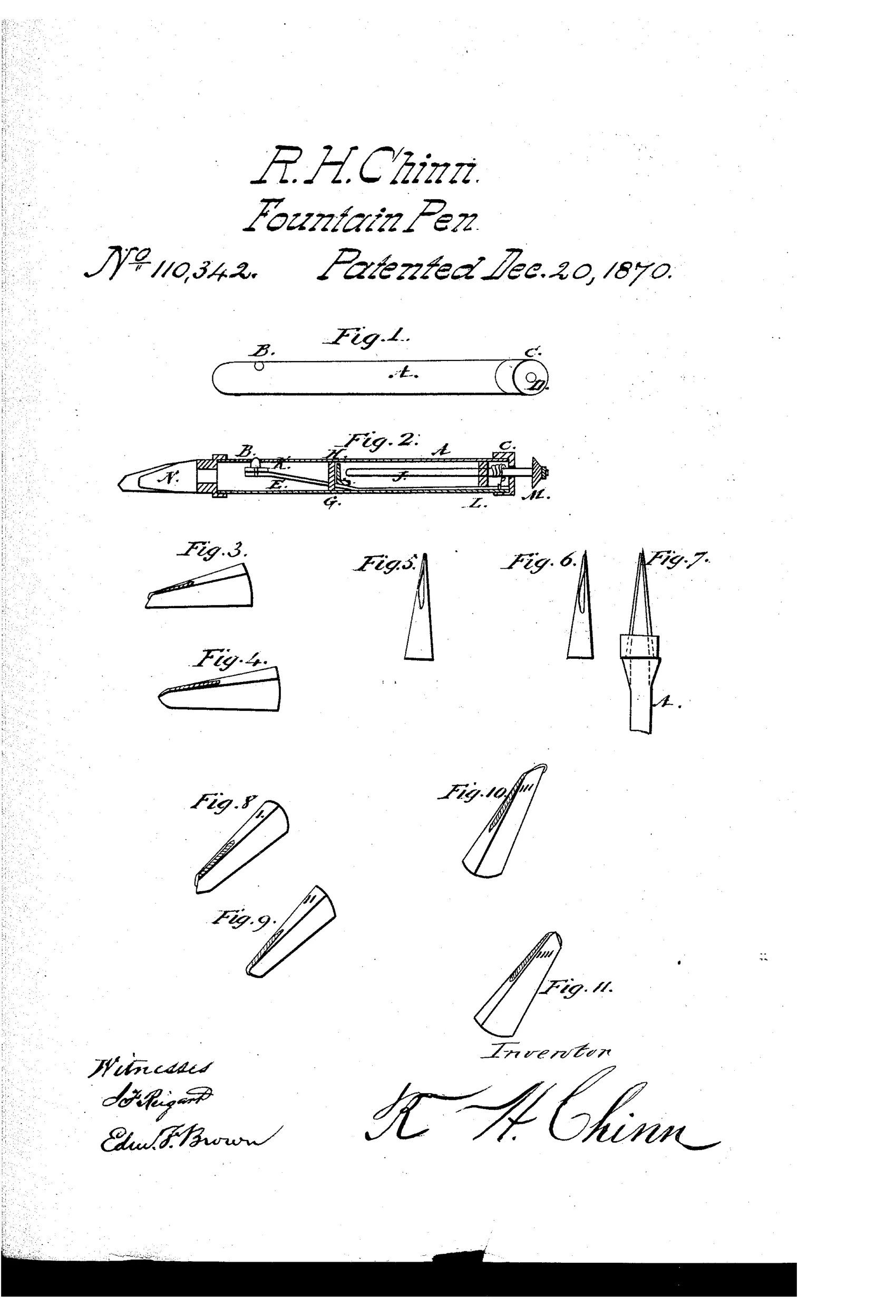
Four-sided fountain pen with pneumatic ink holder
✒ How it works
The pen has four distinct sides—two stiff points and two elastic points—allowing four different writing styles from one nib. The holder consists of a cylinder with an internal flat spring, valves, and a piston that acts as a pneumatic pump to draw ink into the pen from an inkstand. Pressing a button at the top depresses the piston, opening valves to admit ink; releasing it closes the valves via a spring-loaded India-rubber valve, sealing the ink except for flow through the pen point. Rubber rings and a gum-elastic ring keep the holder airtight and prevent ink from leaking backward.
✒ What was claimed
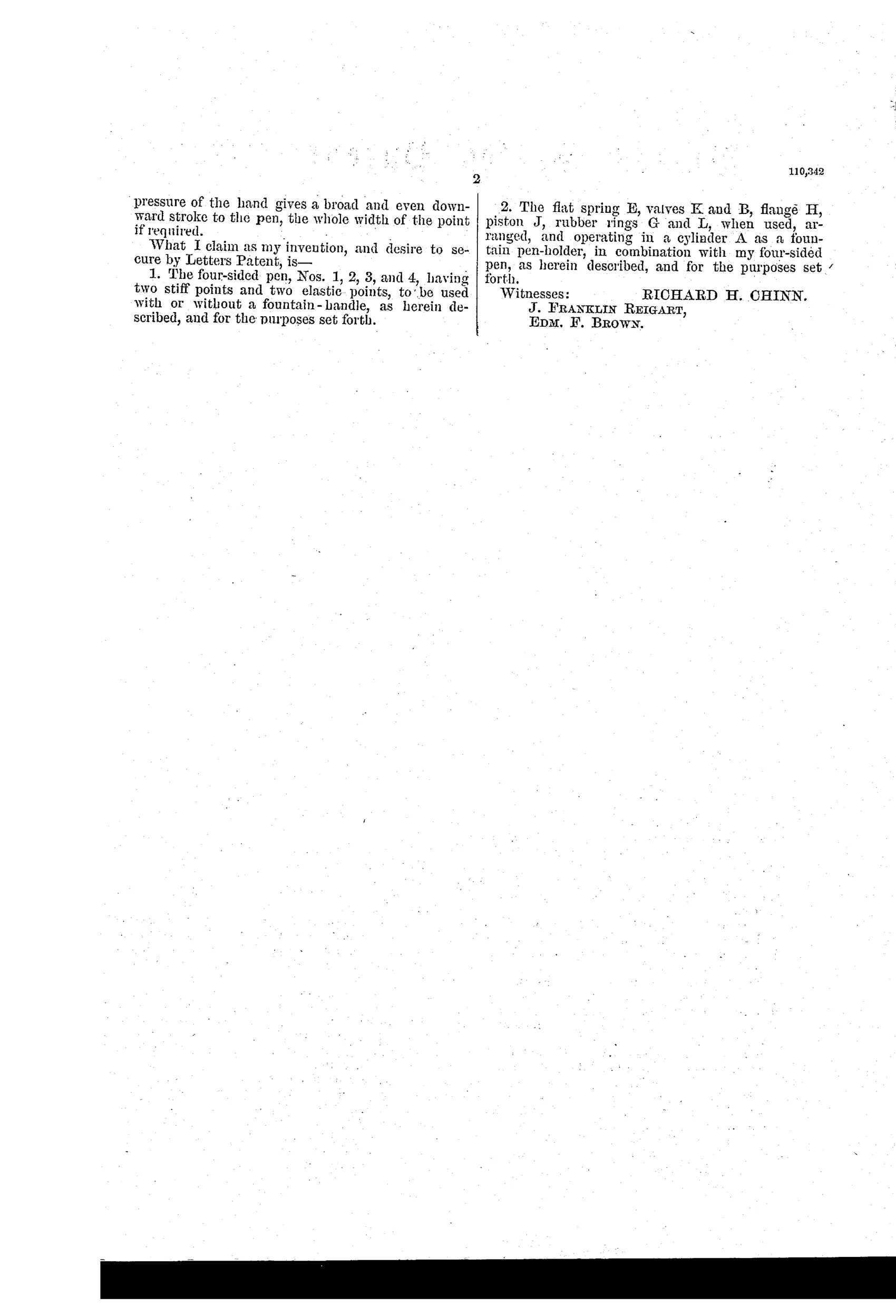
“1. The four-sided pen, Nos. 1, 2, 3, and 4, having two stiff points and two elastic points, to be used with or without a fountain-handle, as herein described, and for the purposes set forth.”
In plain English: A pen with four distinct writing sides—two rigid and two flexible—that can be used with or without a fountain pen holder.
✒ In the inventor’s words
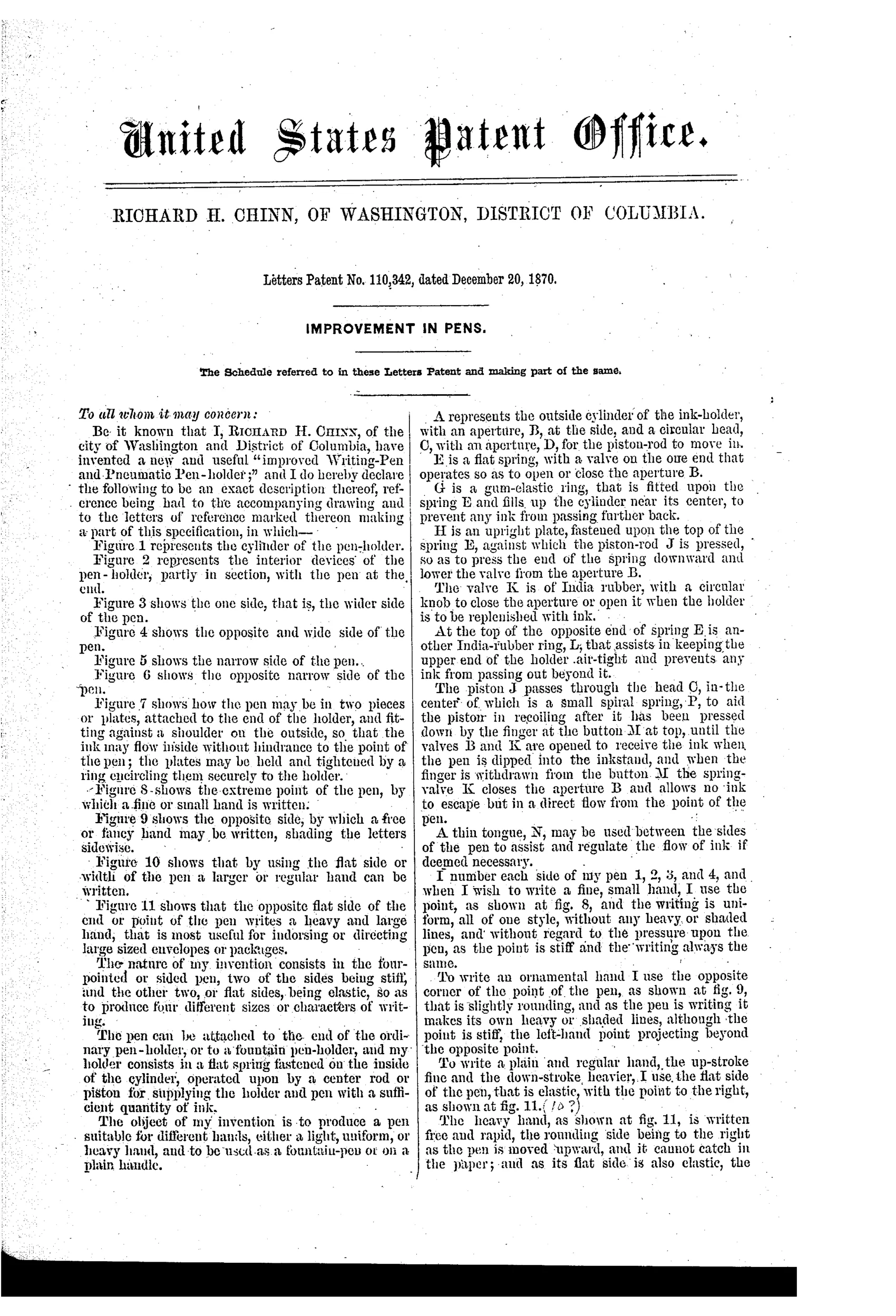
“The object of my invention is to produce a pen suitable for different hands, either a light, uniform, or heavy hand, and to be used as a fountain-pen or on a plain handle.”— Richard H. Chinn, from the specification
Paper patent — likely never produced
No maker or surviving specimen is associated with this design, and the valved pump plus faceted nib would have been costly to produce in 1870; a marked example would overturn this.
✒ More by Richard H. Chinn
- IMPROVEMENT IN WRITING-PENS (1873)
✒ Commentary
Chinn is really patenting two inventions at once, and the nib is the stranger of the pair. Look at Figures 3 through 11: that's one pen point shown facet by facet, a four-sided nib with two stiff faces and two elastic ones. Rotate the pen in your fingers and you go from a fine copperplate point to a flat shading point to a heavy round hand. It's the interchangeable-nib idea compressed into a single piece of metal — clever on paper, but a nib's flexibility comes from its whole geometry, not just the face touching the page, so getting four genuinely distinct behaviors from one grind is a tall order.
The holder is the more historically interesting half. Fourteen years before Waterman, Chinn builds a pneumatic filler: press the button at the top, a piston drops, valves open, and ink is drawn up from the inkstand. Release, and a spring-loaded India-rubber valve seals everything except the flow to the point. Figure 2 shows the whole works — flat spring, piston, valve seats — packed into a slim cylinder. That's a self-filling pen decades before the self-filler wars of 1900-1915.
The fatal gap is the one every pre-Waterman pen shared: no controlled air exchange at the feed. Chinn seals the ink in beautifully and then trusts gravity and the point to meter it out, which is exactly the recipe for blots. A fascinating dead end, ahead of its time in filling and behind it in feeding.
Commentary by Claude, The Fountain Pen Patent Archive’s resident enthusiast