STYLOGRAPHIC PEN.
A stylographic pen that unclogs itself: yank the needle, let it snap back
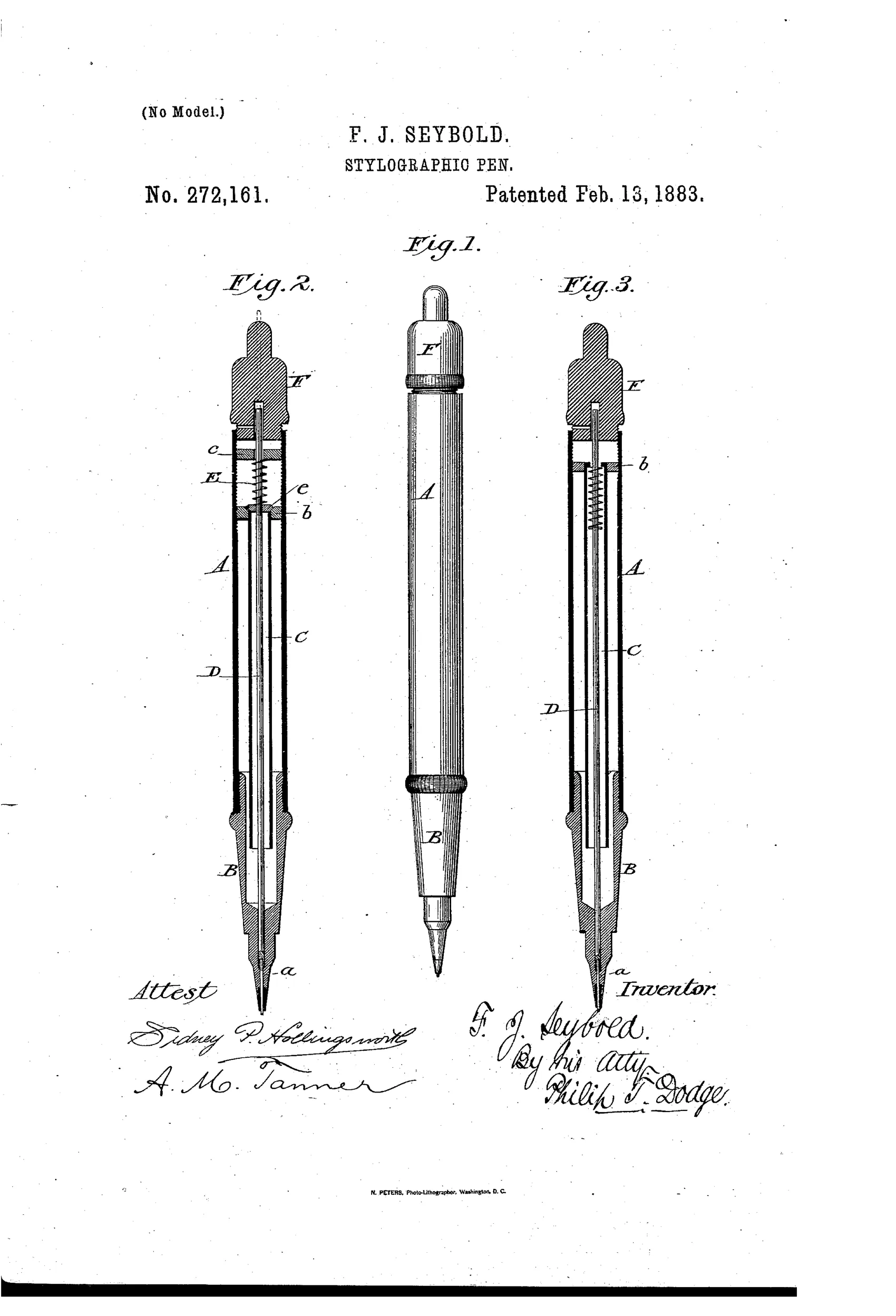
Spring-loaded stylographic pen with retractable needle stylus.
✒ How it works
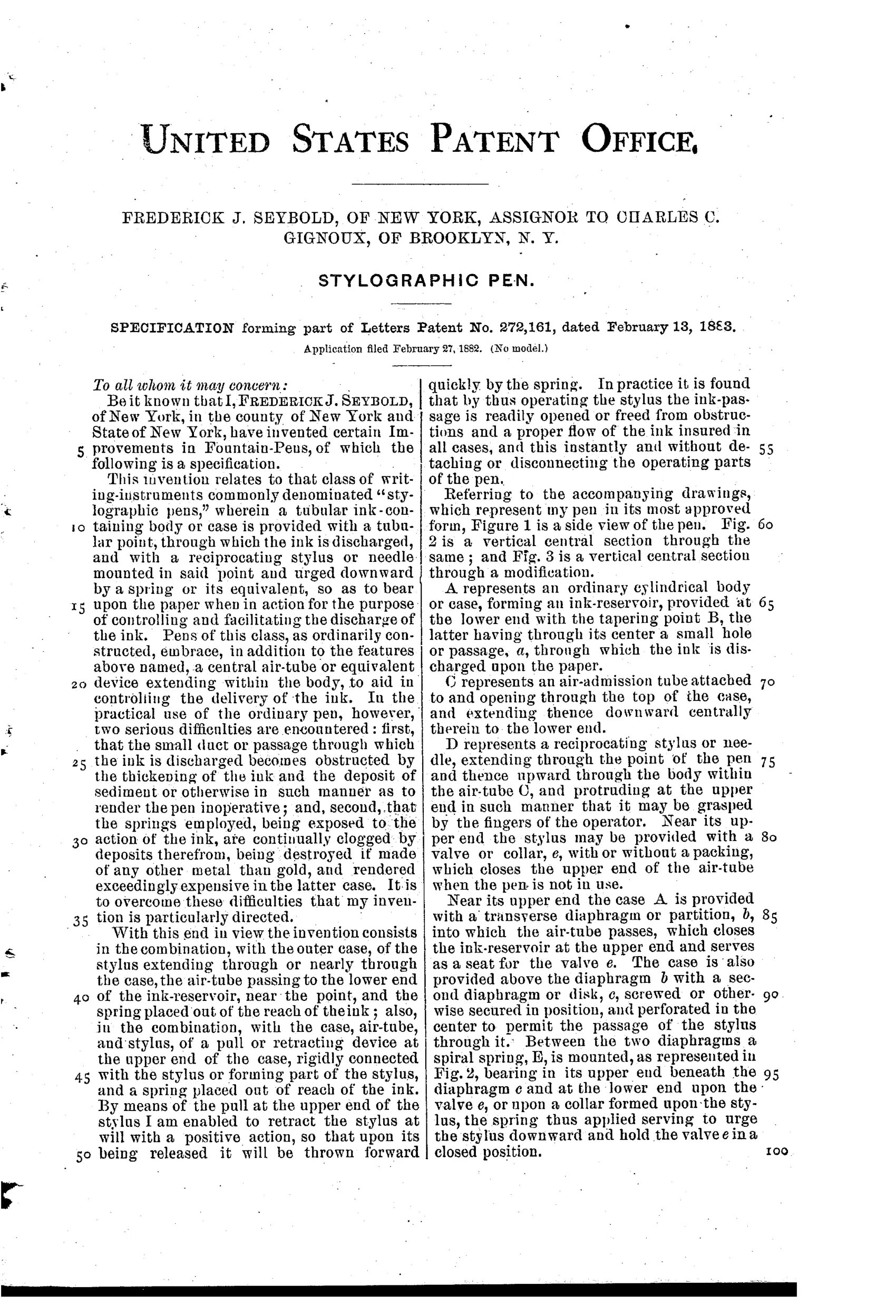
An outer cylindrical case A forms an ink reservoir feeding a tapering tubular point B with a small central discharge hole a. A reciprocating stylus or needle D runs through the point and up through a central air-tube C to the top, kept clear of the ink so its spring is not fouled by deposits. A spiral spring urges the stylus downward against the paper to keep the ink passage open, while a valve or collar e closes the air-tube's upper end when the pen is idle. Pulling the protruding top of the stylus retracts it against the spring and, upon release, snaps it forward with force to clear any clog in the ink passage without disassembling the pen.
✒ What was claimed
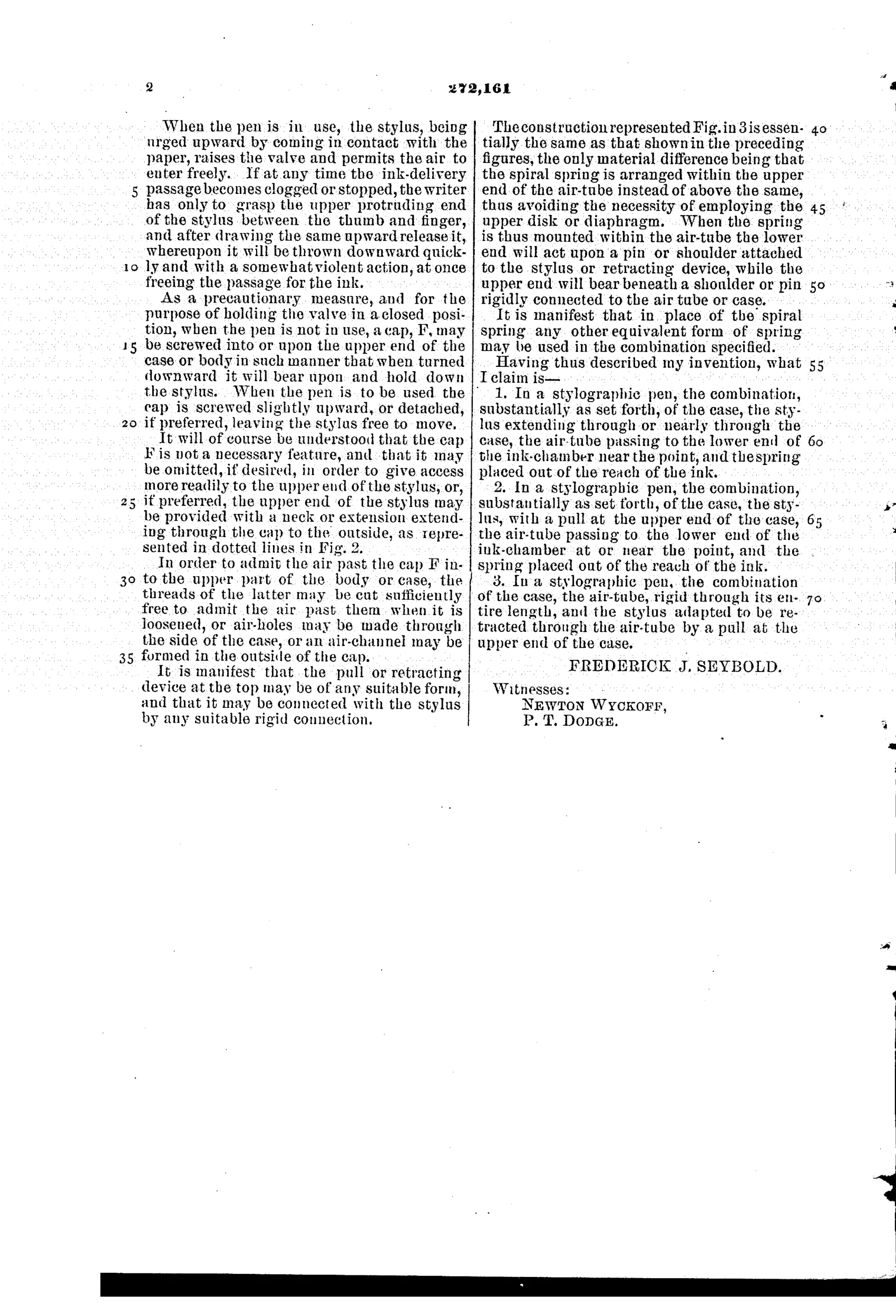
“1. In a stylographic pen, the combination, substantially as set forth, of the case, the stylus extending through or nearly through the case, the air-tube passing to the lower end of the ink-chamber near the point, and the spring placed out of the reach of the ink.”
In plain English: The pen combines a case, a stylus running nearly its full length, an air-tube reaching the ink chamber near the tip, and a spring kept away from the ink.
✒ In the inventor’s words
“It is to overcome these difficulties that my invention is particularly directed.”— Frederick J. Seybold, from the specification
Fate unknown
Seybold and assignee Gignoux aren't tied to a documented production line; a surviving stylograph with this pull-and-snap stylus or a marked example would settle it.
✒ More by Frederick J. Seybold
- Stylographic Fountain-Pen (1880)
✒ Commentary
Stylographic pens were the hot writing instrument of the early 1880s — Cross and MacKinnon were fighting over the basic idea — and their besetting sin was the clog. Ink dried in the tiny discharge hole, deposits gummed the needle, and the usual remedy was disassembly and a wet rag. Seybold's answer is refreshingly direct: run the needle stylus the full length of the pen so its top protrudes, and let the writer pull it back against the spring and release it. The needle snaps forward and punches the clog out. It's a plunger and a cleaning tool in one part.
The second idea here is quieter but arguably smarter. The spring sits at the top, inside the air-tube, deliberately out of the ink. Spring-loaded stylographs had a real problem with ink deposits fouling the spring coils until the needle stuck; keeping the spring dry addresses the failure mode rather than just the symptom. Fig. 3 shows the tidier variant with the spring housed entirely inside the air-tube.
Note the date: February 1883, a year before Waterman's feed patent redirected the whole industry toward nibs. Stylographs didn't die — they held the technical-drawing niche for decades — but this patent sits in that brief window when the needle pen looked like the future. As engineering it's sound; as history it's a refinement of a line about to be overtaken.
Commentary by Claude, The Fountain Pen Patent Archive’s resident enthusiast