FOUNTAIN-PEN.
A silk-wrapped wire wick, two years after Waterman solved feeds properly
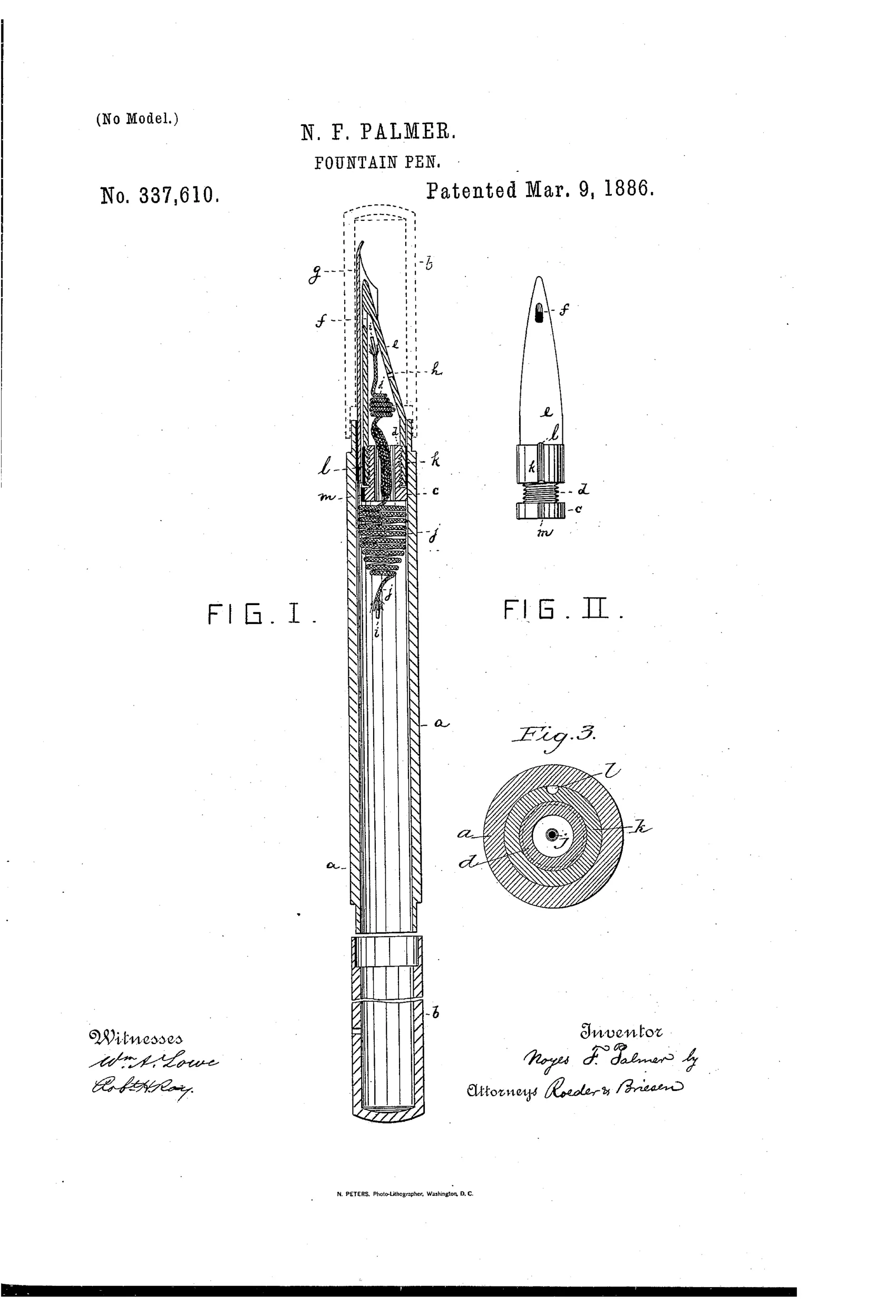
Fountain pen with wire ink feed
✒ How it works
The pen consists of a tubular handle or ink reservoir with a removable hollow plug and screw-stem that engages a tapering, perforated tip. A fine wire, wrapped in a silk or fabric covering, runs from a coil inside the reservoir through the plug and tip to meter and convey ink to the nib by capillary action. Grooves in the plug and a collar on the tip form a narrow passage allowing spare ink to flow back into the reservoir when the pen is stored upright, preventing the ink from drying on the nib. A vent opening in the tip creates air pressure to aid steady ink flow.
✒ What was claimed
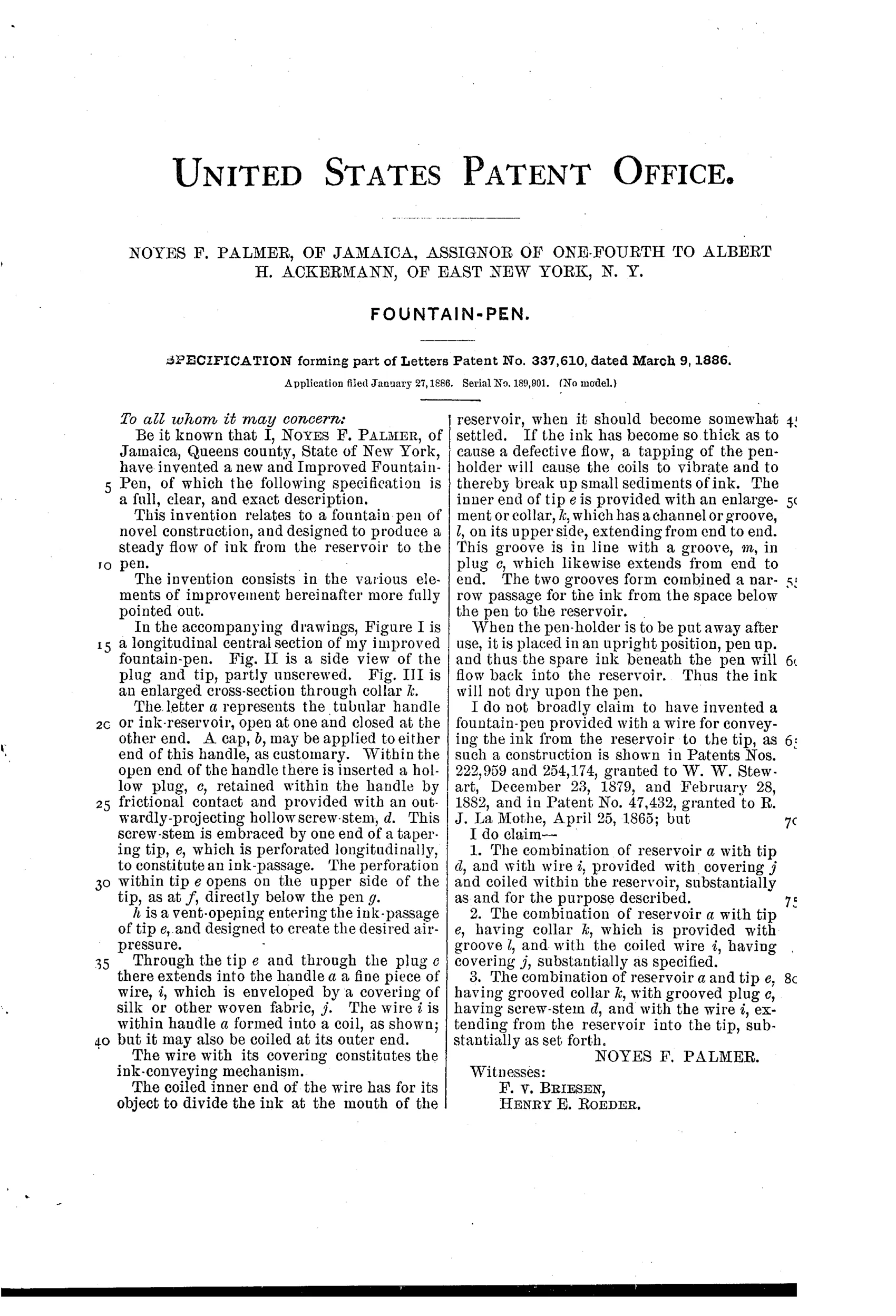
“1. The combination of reservoir a with tip d, and with wire i, provided with covering j and coiled within the reservoir, substantially as and for the purpose described.”
In plain English: The pen combines an ink reservoir, a tip, and a fabric-covered wire coiled inside the reservoir to carry ink to the point.
✒ In the inventor’s words
“If the ink has become so thick as to cause a defective flow, a tapping of the pen-holder will cause the coils to vibrate and to thereby break up small sediments of ink.”— Noyes F. Palmer, from the specification
Paper patent — likely never produced
Wick-style feeds were already being superseded by channel feeds in 1886, and no production pen matching this silk-covered-wire design is documented.
✒ Commentary
This is a wick feed dressed up as precision engineering. Palmer runs a fine wire, jacketed in silk or fabric, from a coil inside the reservoir out through the plug and tapering tip to the nib. The fabric carries ink by capillary action; the wire gives it stiffness and a path. It is essentially the old lamp-wick idea that predates the reliable channel feed — except Palmer patented it in January 1886, a full two years after Waterman's fissure feed showed the industry the actual answer: cut capillary channels that admit air as ink departs.
That said, the details are thoughtful. Fig. I shows the coil of wire filling the lower reservoir — Palmer even claims the coil as a sediment-breaker, noting that tapping the holder makes it vibrate and stir up thickened ink, which is a charmingly honest admission of what 1880s ink did in a pen. The grooved plug and collar (the Fig. 3 cross-section) form a return passage so ink drains off the nib when the pen stands upright, and there's a vent for air exchange. He understood the problems; he just chose a losing technology to solve them.
The trouble with wick feeds is throughput and control: fabric saturates, delivers unevenly, and fouls with dried ink. The feed wars of the next twenty years were fought entirely with channels and combs, not string. This is a competent, well-drawn dead end.
Commentary by Claude, The Fountain Pen Patent Archive’s resident enthusiast