FOUNTAIN-PEN.
A slidable feed bar and a screw-down valve, four years after Waterman
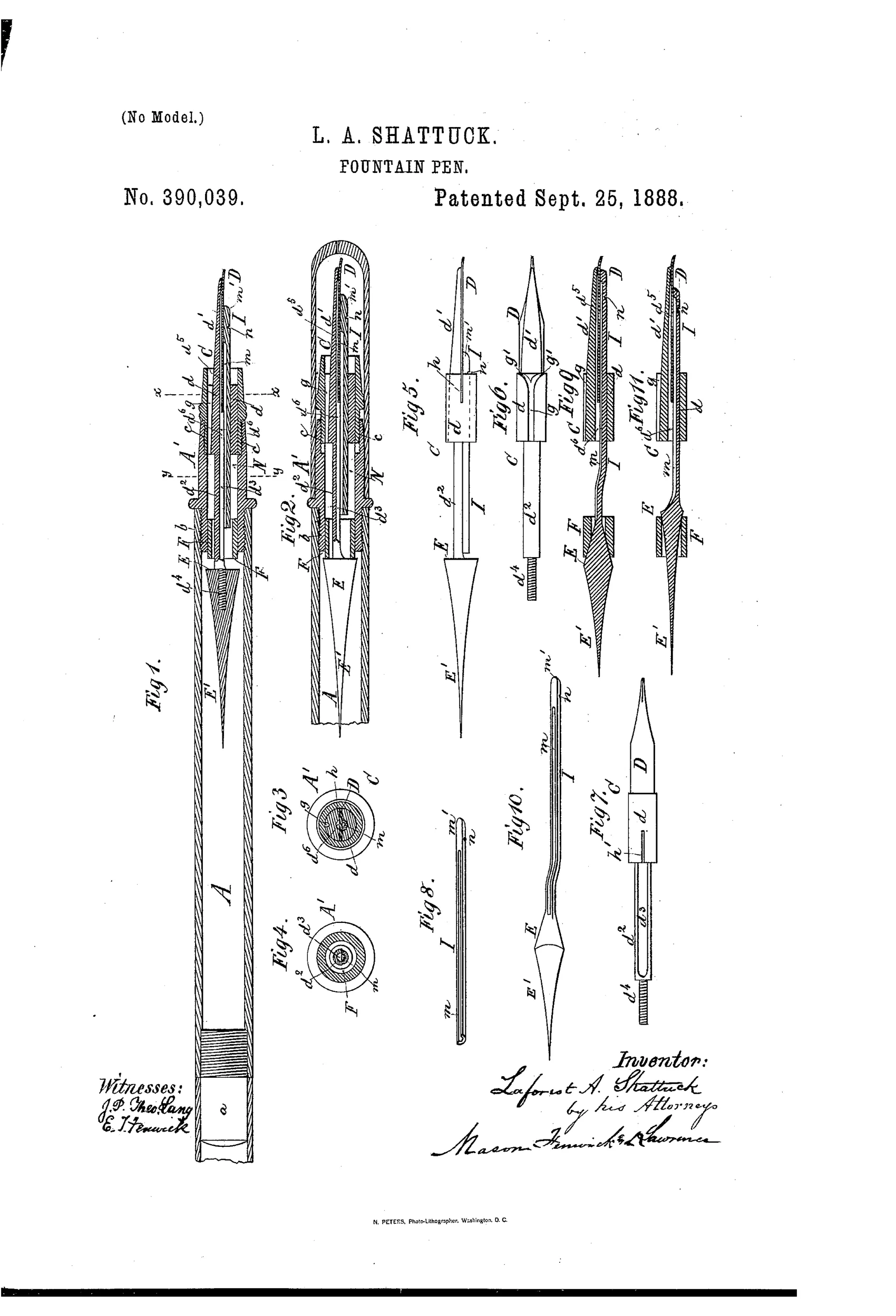
Adjustable dual-feed fountain pen with shut-off valve
✒ How it works
The reservoir handle's lower end contains a combined lock-and-feed device with an air vent and ink passage leading to a valve seat. An independently adjustable feed-bar passes through the ink passage and can be slid back or forward via a notch to control ink flow to the nib, switching between single and double feed. A valve fastened to a rear tongue on the feed device can be closed by unscrewing the divisible nozzle portion, entirely shutting off ink flow when the pen is not in use. Lateral branch grooves communicate with the main air-vent to conduct stray ink to the back of the pen, keeping the vent clear for air circulation as ink is drawn out.
✒ What was claimed
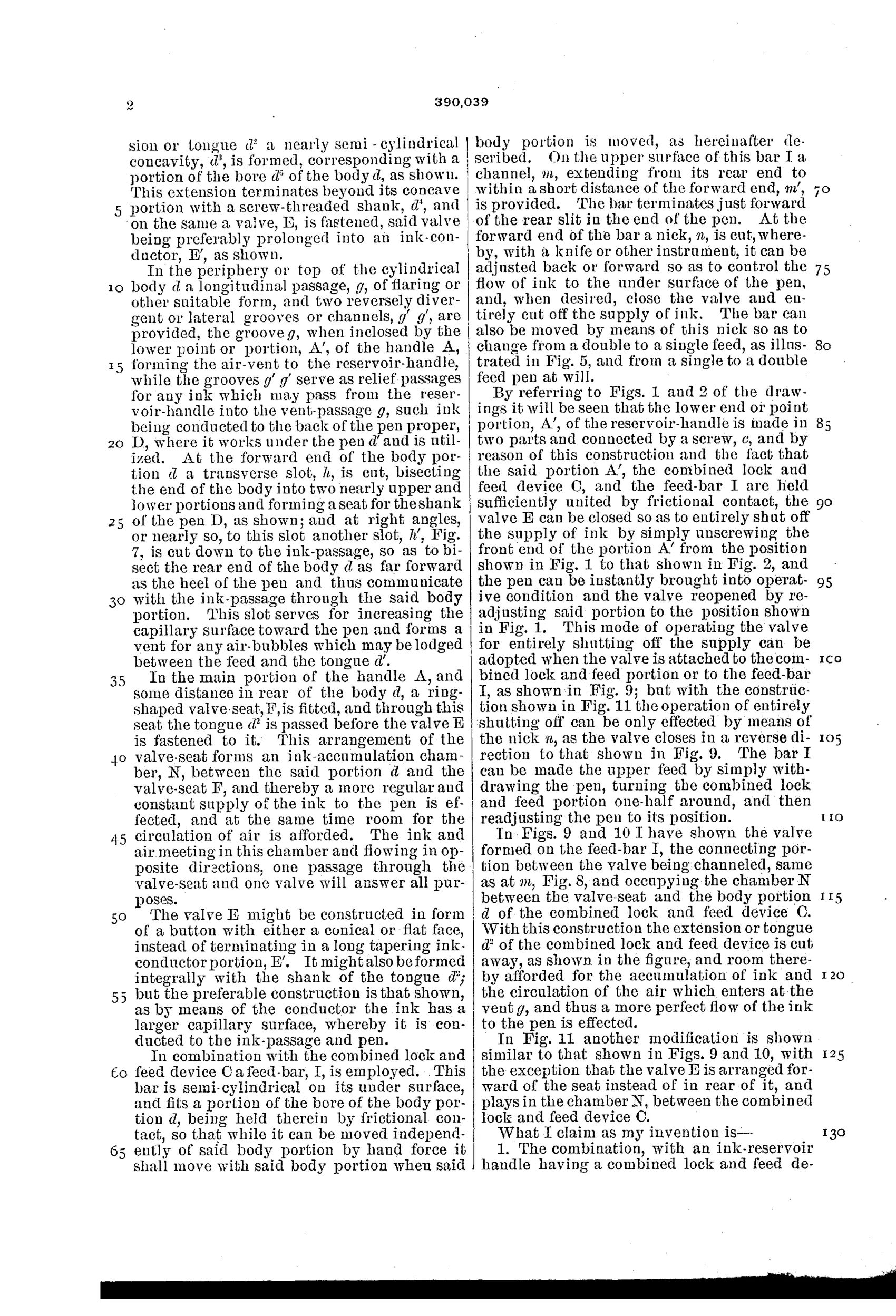
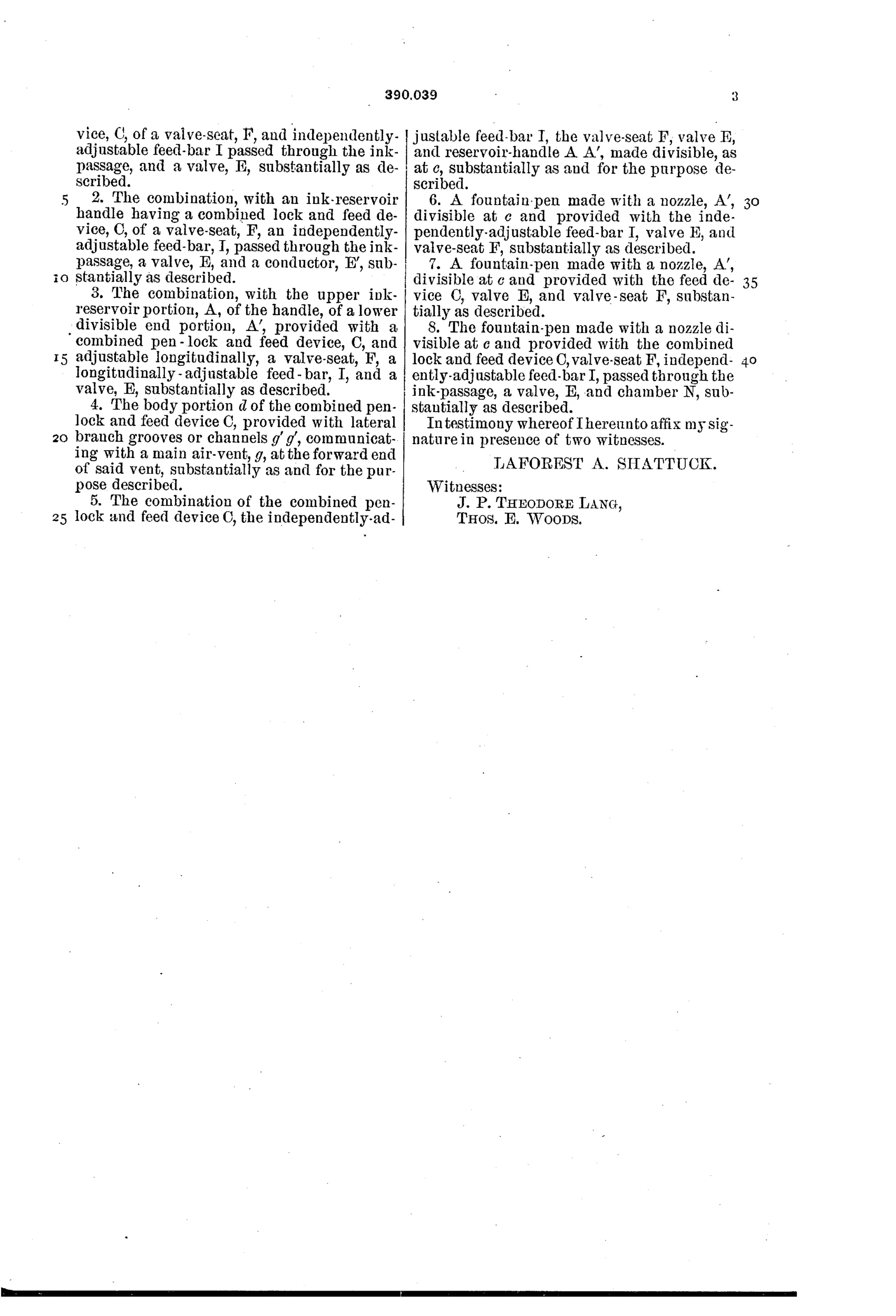
“1. The combination, with an ink-reservoir handle having a combined lock and feed device, C, of a valve-seat, F, and independently-adjustable feed-bar I passed through the ink-passage, and a valve, E, substantially as described.”
In plain English: The invention combines an ink reservoir handle fitted with a lock-and-feed device, a valve seat, an independently adjustable feed bar running through the ink passage, and a valve.
✒ In the inventor’s words
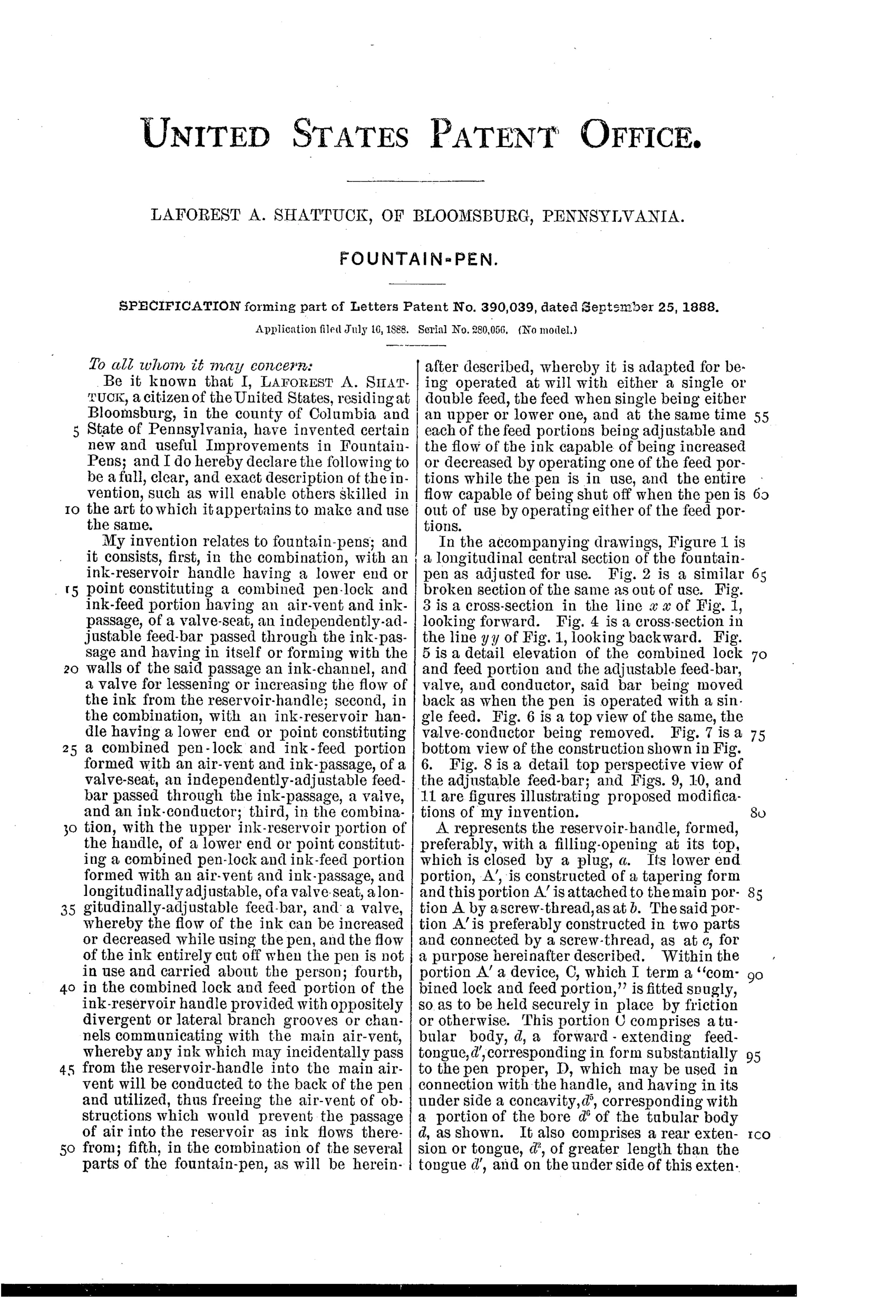
“My invention relates to fountain-pens; and it consists, first, in the combination, with an ink-reservoir handle having a lower end or point constituting a combined pen-lock and ink-feed portion having an air-vent and ink-passage, of a valve-seat, an independently-adjustable feed-bar passed through the ink-passage and having in itself or forming with the walls of the said passage an ink-channel, and a valve for lessening or increasing the flow of the ink from the reservoir-handle.”— Laforest A. Shattuck, from the specification
Fate unknown
Shattuck is not tied to any known production line; a hard-rubber pen with this patent date imprinted would settle it.
✒ Commentary
By 1888 Waterman's fissured feed had shown the trade what a reliable fountain pen looked like, and the response was a rush of inventors trying to do it one better. Shattuck's answer is characteristically ambitious: not one feed but two, with a feed bar that slides fore and aft through the ink passage so the writer can dial between single and double feed, plus a valve at the reservoir mouth that seats shut when you unscrew the divisible nozzle — a true shut-off for the pocket.
The shut-off is the interesting half. Leakage was the pen's great sin in this era, and Shattuck attacks it directly rather than trusting capillarity to hold the ink back. Figs. 1 and 2 tell the story: the pen 'adjusted for use' versus 'out of use,' with the valve E closing against seat F when the front section is backed off. That anticipates the logic of the later safety pens, if not their mechanism. The lateral branch grooves feeding stray ink back from the air vent are a nice, quiet detail — he understood that the vent must stay clear for air exchange, which is the Waterman insight restated.
The adjustable feed is the dubious half. Any part the user can slide is a part the user can misplace by a hair, and ink flow is unforgiving of hairs. Three 'proposed modifications' in Figs. 9-11 suggest Shattuck himself was still hunting for the right arrangement. A thoughtful, over-articulated entry in the feed wars.
Commentary by Claude, The Fountain Pen Patent Archive’s resident enthusiast