TIP FOR MUCILAGE-BOTTLES.
A pressure-opened slit valve for glue, cousin to the stylographic pen
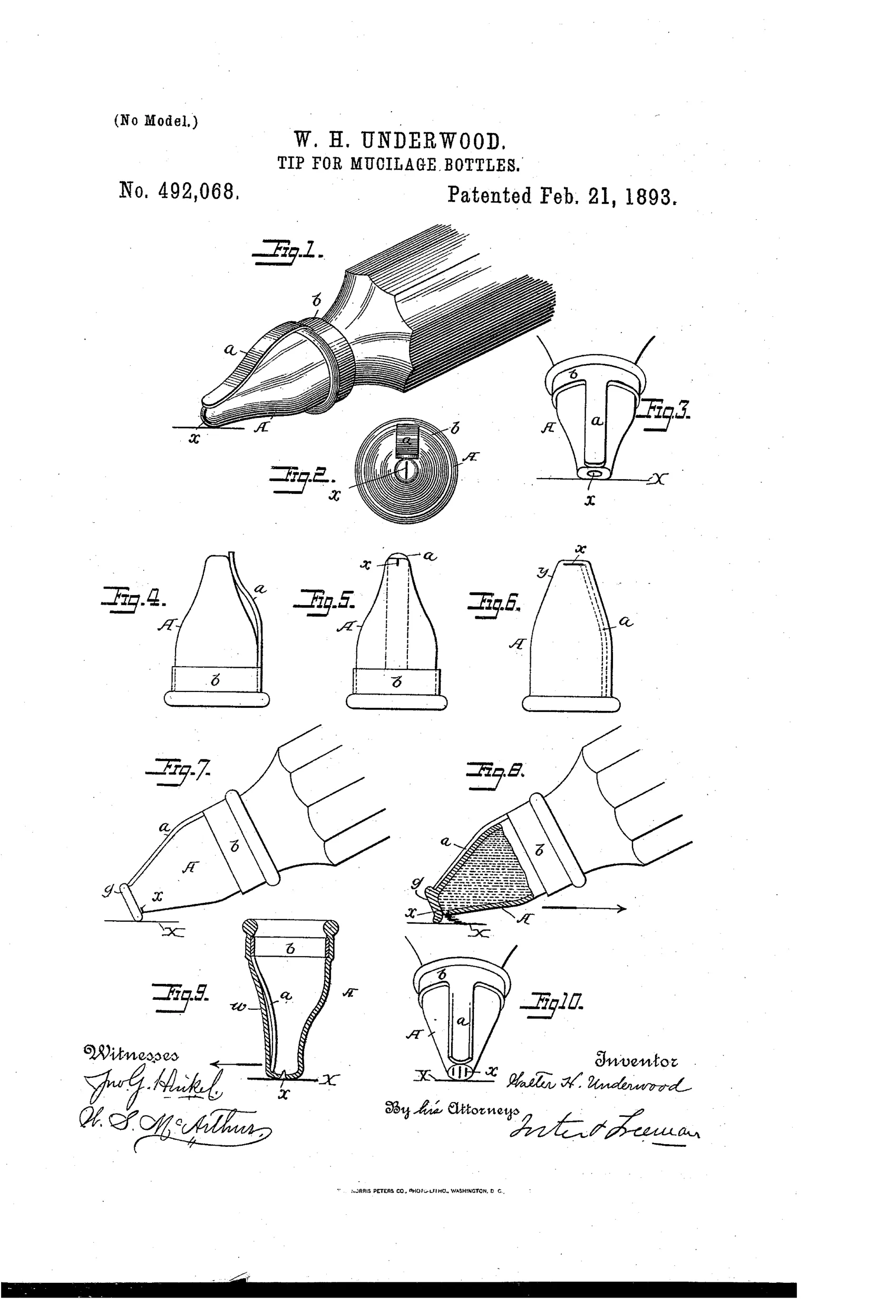
Self-sealing applicator tip for mucilage bottles.
✒ How it works
The tip is molded with a perforation or slit near its end that is normally closed. A rigid bearing or support arm, attached to a collar or embedded within the tip body, holds one side of the tip immovable while pressure is applied against the surface to be coated. This pressure compresses the opposite, unsupported portion of the tip between the bearing and the surface, distending the slit and separating its lips to allow mucilage to flow out. When pressure is released, the lips return together, sealing the bottle and preventing hardening or clogging of the opening.
✒ What was claimed
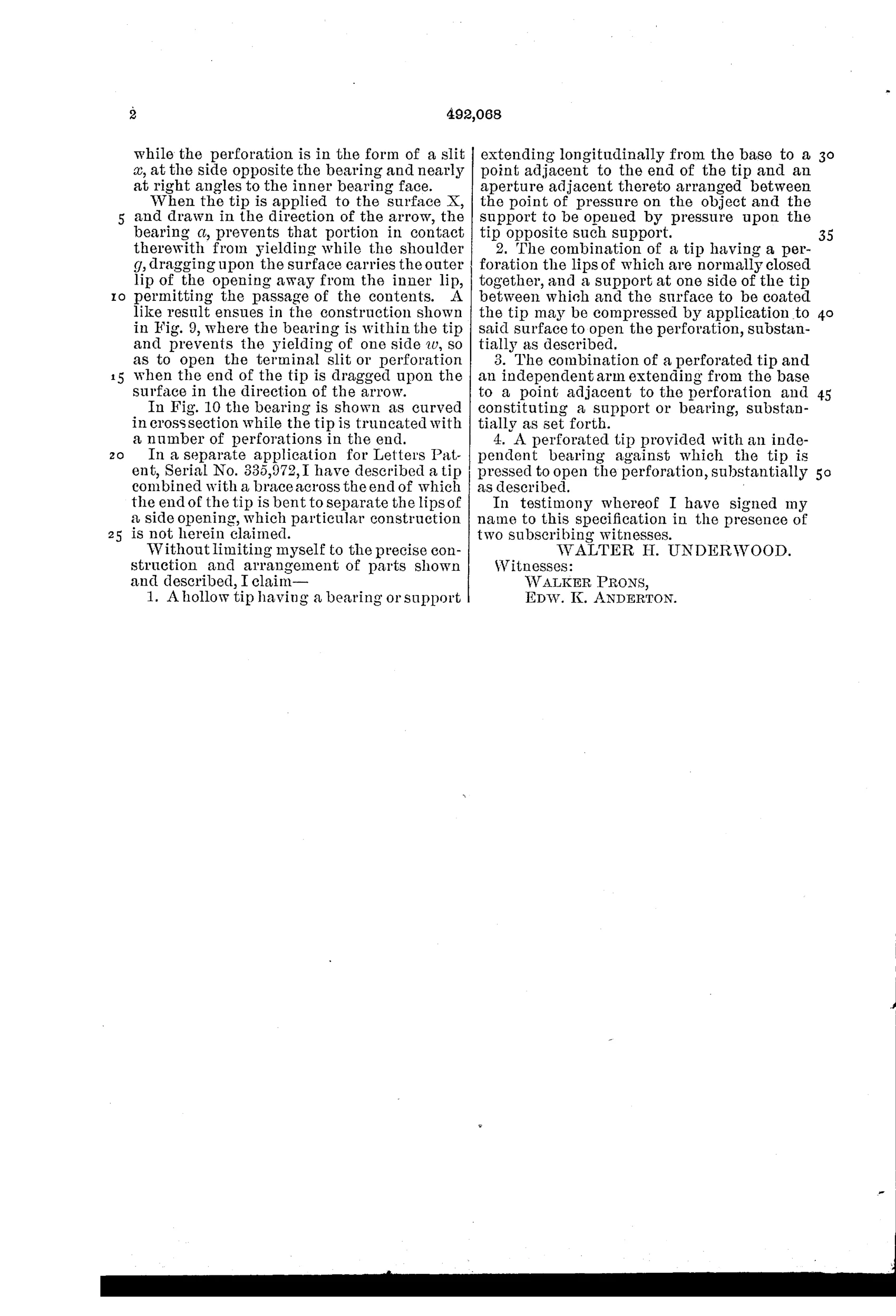
“A hollow tip having a bearing or support extending longitudinally from the base to a point adjacent to the end of the tip and an aperture adjacent thereto arranged between the point of pressure on the object and the support to be opened by pressure upon the tip opposite such support.”
In plain English: The tip contains an internal rigid support running most of its length next to a slit opening, so that pressing the tip against a surface opens the slit to release mucilage.
✒ In the inventor’s words
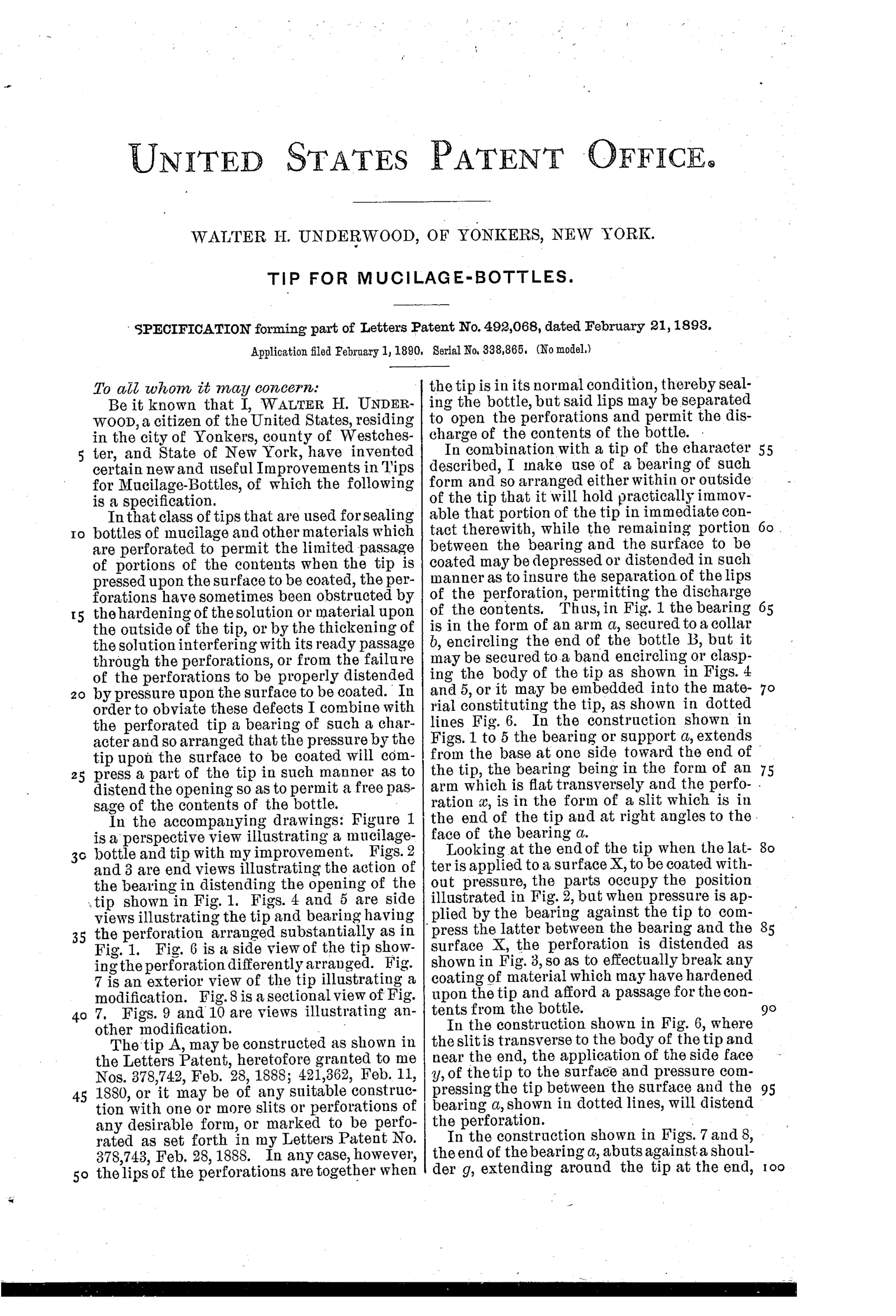
“In order to obviate these defects I combine with the perforated tip a bearing of such a character and so arranged that the pressure by the tip upon the surface to be coated will compress a part of the tip in such manner as to distend the opening so as to permit a free passage of the contents of the bottle.”— Walter H. Underwood, from the specification
Fate unknown
No documented Underwood mucilage bottle is known to me; a surviving marked tip or trade-catalog listing would settle it.
✒ More by Walter H. Underwood
- RESERVOIR-BRUSH. (1889)
- SPREADING-TIP FOR LIQUID-RECEPTACLES. (1890)
✒ Commentary
This one is a neighbor rather than a resident: a tip for mucilage bottles, not a pen. But look at what Underwood is actually doing and you'll see why it belongs in the conversation. The problem is identical to the pen-maker's — a reservoir of liquid that must flow freely when the point touches paper and seal instantly when it doesn't, before the contents skin over and clog. His answer is a soft molded tip with a normally-closed slit, backed by a rigid internal bearing arm. Press the tip against a surface and the unsupported side compresses against the bearing, the slit's lips spread apart, and mucilage flows. Lift off and the slit snaps shut.
Figs. 2 and 3 are the whole invention in two end views: closed at rest, distended under pressure. The bearing arm is the clever part — without it, pressure would simply squash the whole tip and the slit could pinch tighter rather than open. The rigid backbone converts downward force into lateral spreading, which is genuinely good mechanics.
Stylographic pens of the same era solved this with a spring-loaded needle in a tube; Underwood solved it with elasticity and geometry, no moving parts at all. It anticipates the flexible valve tips on modern glue and shoe-polish bottles by decades. Whether anyone bottled glue behind it in 1893 is another question.
Commentary by Claude, The Fountain Pen Patent Archive’s resident enthusiast