SPREADING-TIP FOR LIQUID-RECEPTACLES.
A self-sealing rubber slit for mucilage — the fountain pen feed's messier desk cousin
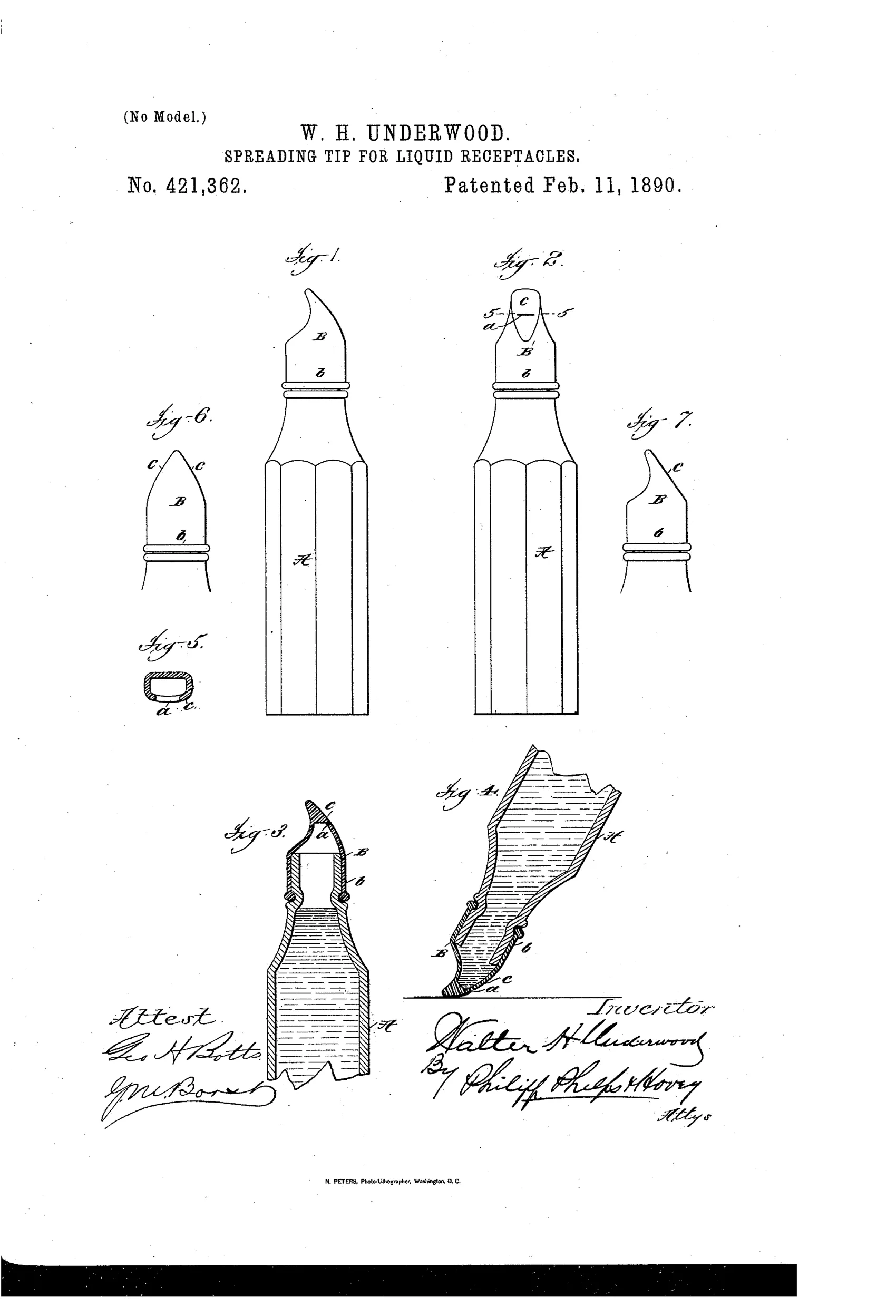
Flexible rubber spreading tip for mucilage bottles
✒ How it works
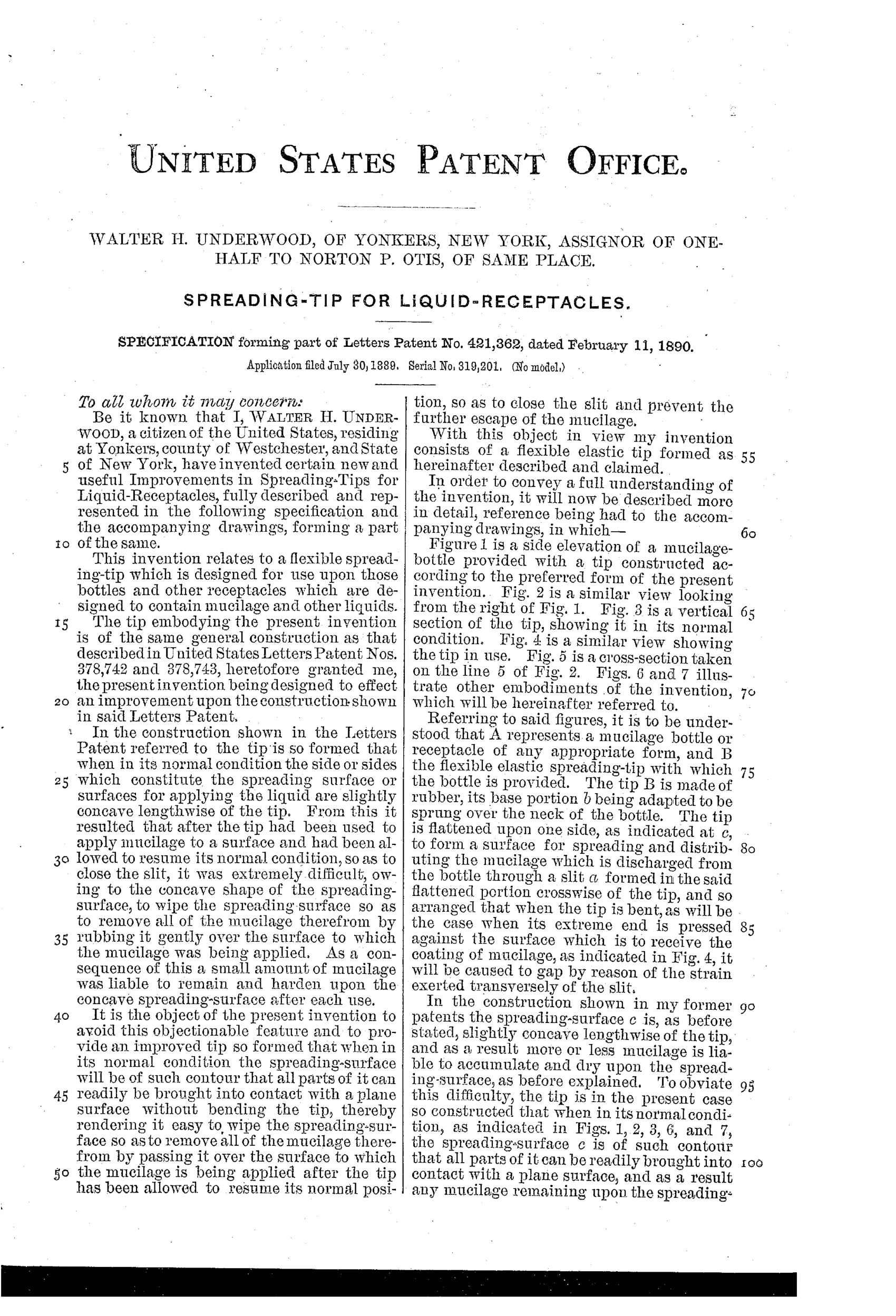
A flexible elastic rubber tip fits over the neck of a mucilage or liquid bottle, with its base sprung over the neck for attachment. One side of the tip is flattened to form a spreading surface containing a slit through which the liquid is discharged. When the tip is bent by pressing its end against a surface, the slit gaps open under transverse strain to release mucilage, and when released the elastic tip resumes its normal shape, closing the slit. The spreading surface is contoured (convex lengthwise and/or crosswise) so that all parts of it can contact a flat surface without bending the tip, allowing it to be wiped clean of residual mucilage after use.
✒ What was claimed
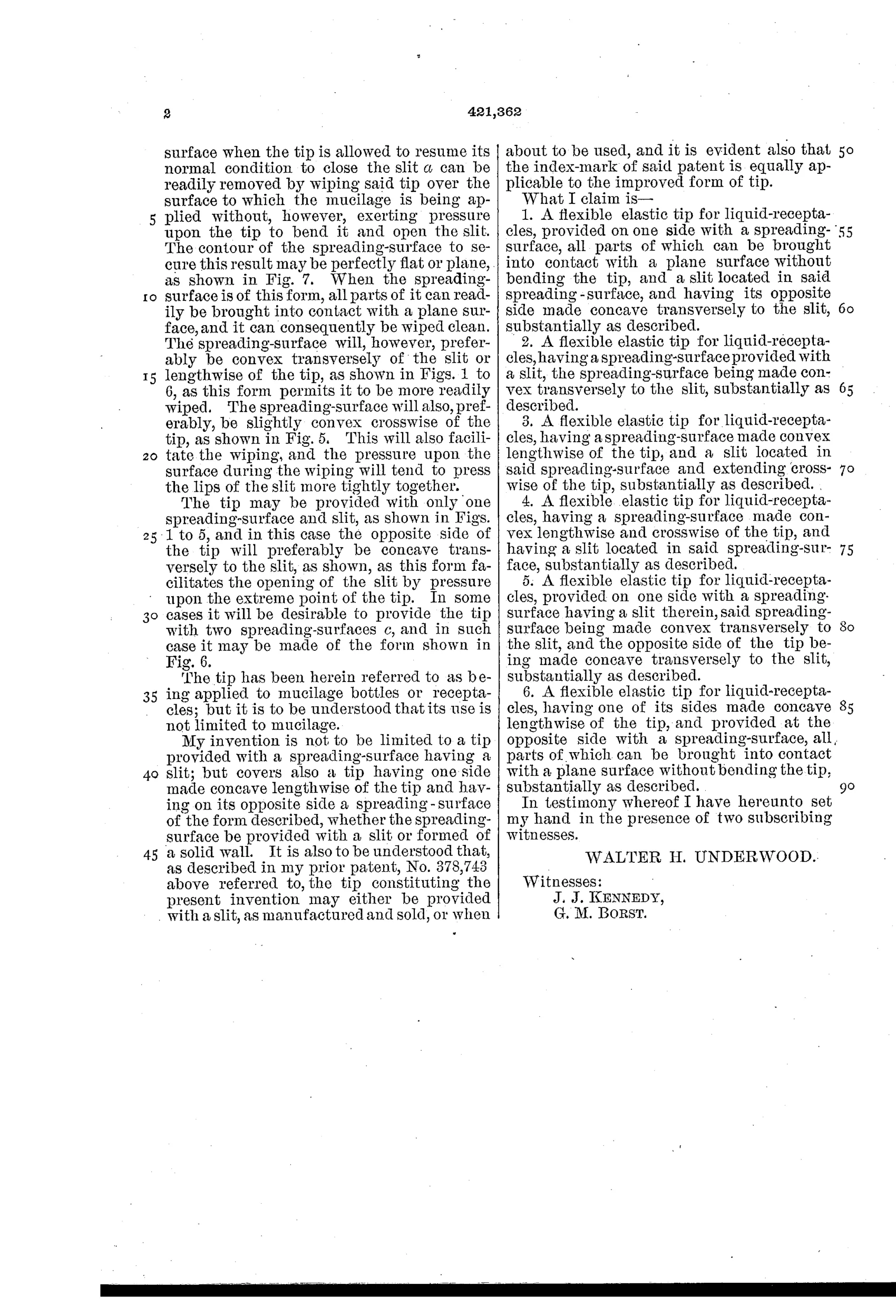
“A flexible elastic tip for liquid-receptacles, provided on one side with a spreading-surface, all parts of which can be brought into contact with a plane surface without bending the tip, and a slit located in said spreading-surface, and having its opposite side made concave transversely to the slit, substantially as described.”
In plain English: A bendy rubber bottle tip with a slit-bearing spreading surface that lies flat against any surface for easy wiping, and a concave back side opposite the slit.
✒ In the inventor’s words
“As a consequence of this a small amount of mucilage was liable to remain and harden upon the concave spreading-surface after each use.”— Walter H. Underwood, from the specification
Fate unknown
Rubber-tipped mucilage spreaders were common trade goods of the era, but I know of no bottle traced to this patent or to assignee Norton P. Otis; a marked example would settle it.
✒ Patented the same day
- STYLOGRAPHIC PEN — Thomas W. Evans
✒ More by Walter H. Underwood
- RESERVOIR-BRUSH. (1889)
- TIP FOR MUCILAGE-BOTTLES. (1893)
✒ Commentary
This one sits at the edge of our beat: not a pen at all, but a mucilage bottle from the same desks where fountain pens lived and the same 1880s wave of rubber-goods ingenuity. Underwood's problem is one every pen designer knew intimately — how do you let a sticky liquid out on demand and keep it in the rest of the time, without a hardened crust ruining the next use?
His answer is elegant in the way good rubber engineering often is: no moving parts, just geometry. The slit in the spreading face stays closed while the elastic tip holds its shape; bend the tip against paper and the transverse strain gapes the slit open, feeding mucilage right where you're spreading. Release, and the rubber snaps shut. Figures 3 and 4 tell the whole story — the section at rest, then the same tip flexed with the slit yawning open under load.
The subtle part is the second claim: the spreading surface is contoured so every part of it can touch a flat plane without bending the tip. That sounds like fussiness until you read the specification's confession that prior concave tips left mucilage to harden in the hollow after each use. Underwood designed the tip to be wiped clean on the bottle's own lip or a scrap of paper. It's the same instinct that drove Parker's Lucky Curve a few years later — obsessing over where the residue goes when you stop.
Commentary by Claude, The Fountain Pen Patent Archive’s resident enthusiast