RESERVOIR-BRUSH.
A brush, not a pen — but it solves the fountain pen's air problem
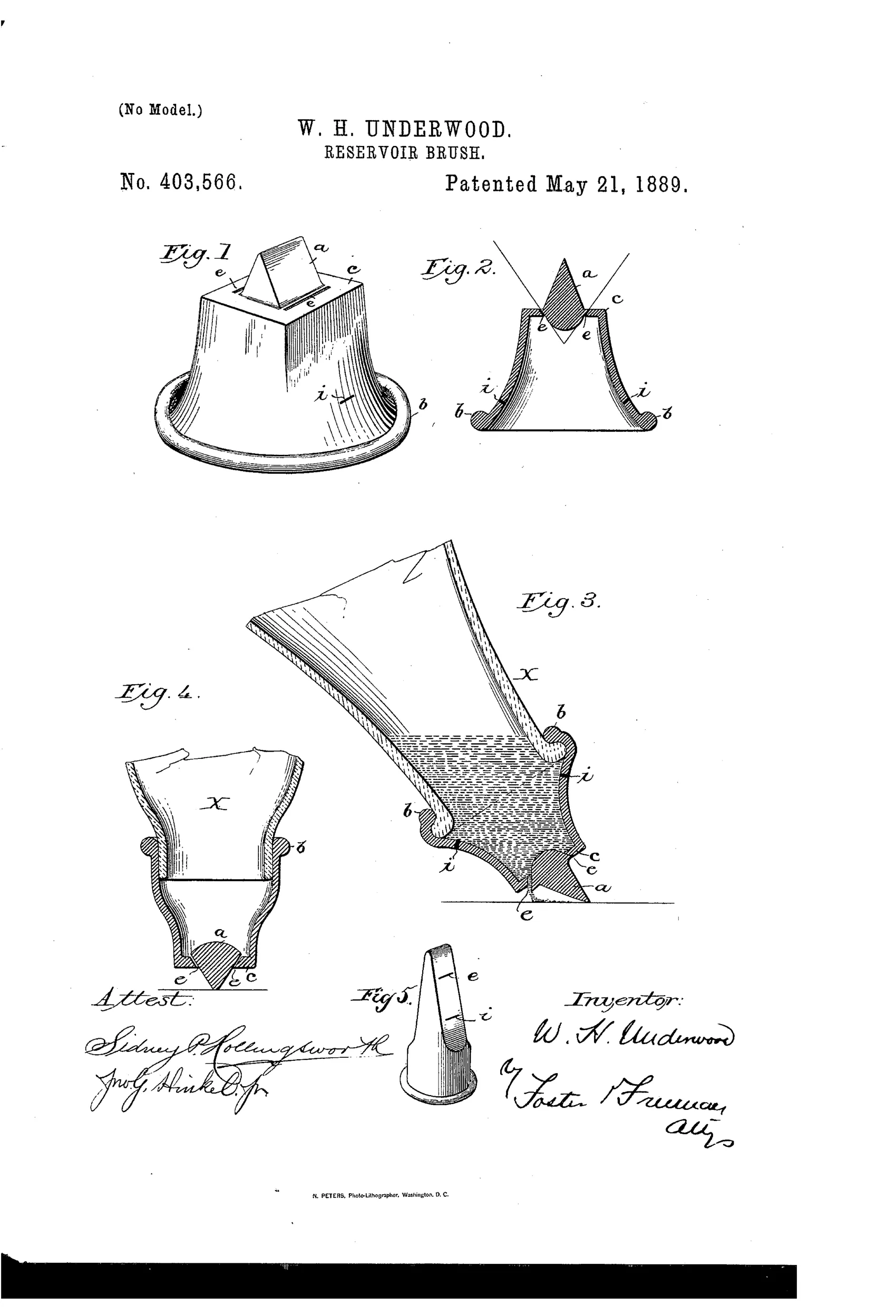
Self-sealing flexible nozzle for liquid-filled bottles
✒ How it works
The nozzle is a hollow, flexible nipple with a flat, slit blade end that normally closes by the elasticity of its own material, sealing the reservoir. When pressure or bending force is applied by pressing the blade against a surface, the slits open at the pressure point, allowing liquid to flow out and be spread trowel-like. Supplemental air-inlet slits open simultaneously to admit air and prevent a vacuum from forming inside the bottle. A more rigid terminal blade projecting from the flexible body helps direct the bending force needed to open the main distributing slits.
✒ What was claimed
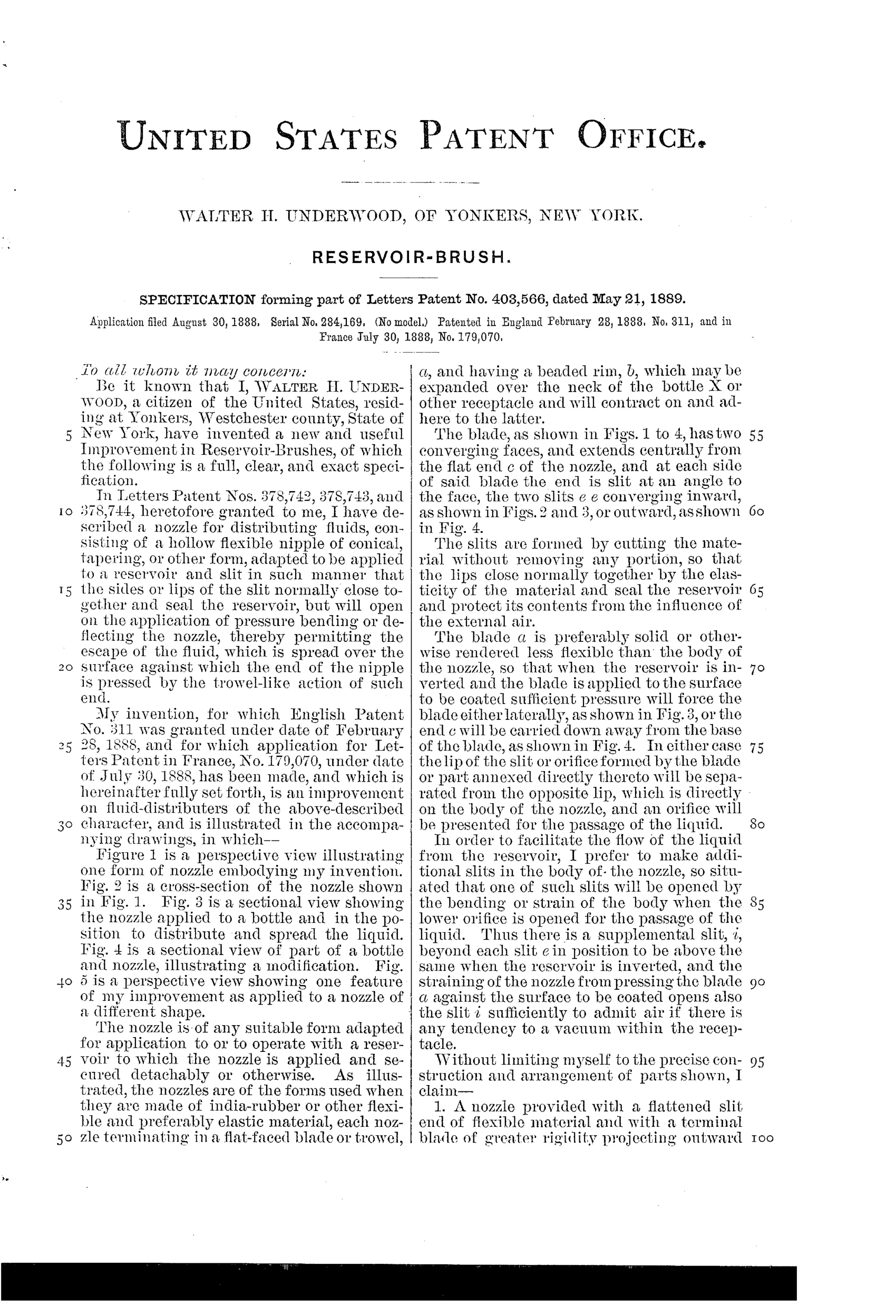
“A nozzle provided with a flattened slit end of flexible material and with a terminal blade of greater rigidity projecting outward adjacent to the slit, substantially as described.”
In plain English: The invention claims a flexible nozzle with a flat slit opening and a stiffer blade sticking out next to the slit to help it work.
✒ In the inventor’s words
“The slits are formed by cutting the material without removing any portion, so that the lips close normally together by the elasticity of the material and seal the reservoir and protect its contents from the influence of the external air.”— Walter H. Underwood, from the specification
Fate unknown
Slit-nozzle applicators of this general type became common household items, but no evidence ties production directly to Underwood's patent; a marked example or licensing record would settle it.
✒ Commentary
This one sits at the edge of our category, and that's exactly why it's worth a look. Underwood's reservoir brush isn't a pen — it's a rubber nozzle for a bottle of mucilage or blacking — but it wrestles with the identical problem Waterman had cracked five years earlier: how do you let liquid out of a sealed reservoir without either flooding or airlocking it? His answer is elegant in its cheapness. Cut slits in flexible rubber without removing any material, and the lips seal themselves by pure elasticity. Press the blade against paper, the slits gape at the pressure point, liquid flows, and supplemental slits open at the same instant to admit air and break the vacuum.
Look at Fig. 2 in cross-section: the stiffer terminal blade (a) isn't decoration. It's a lever. The flexible body alone would just squash uselessly; the rigid blade converts your downward stroke into a bending force that pries the main slit open exactly where you want the fluid. That's the one genuinely clever move here — using stiffness differential in a single molded part as the valve actuator.
In the pen story this is a cousin, not an ancestor: the slit-valve idea went on to live in glue spreaders and shoe-polish daubers, not feeds. But it's a nice reminder that the 1880s were full of people independently discovering that a reservoir needs to breathe as it drinks.
Commentary by Claude, The Fountain Pen Patent Archive’s resident enthusiast