FOUNTAIN-PEN.
A shutoff valve with an 'Open/Closed' dial — and a theory of vibration
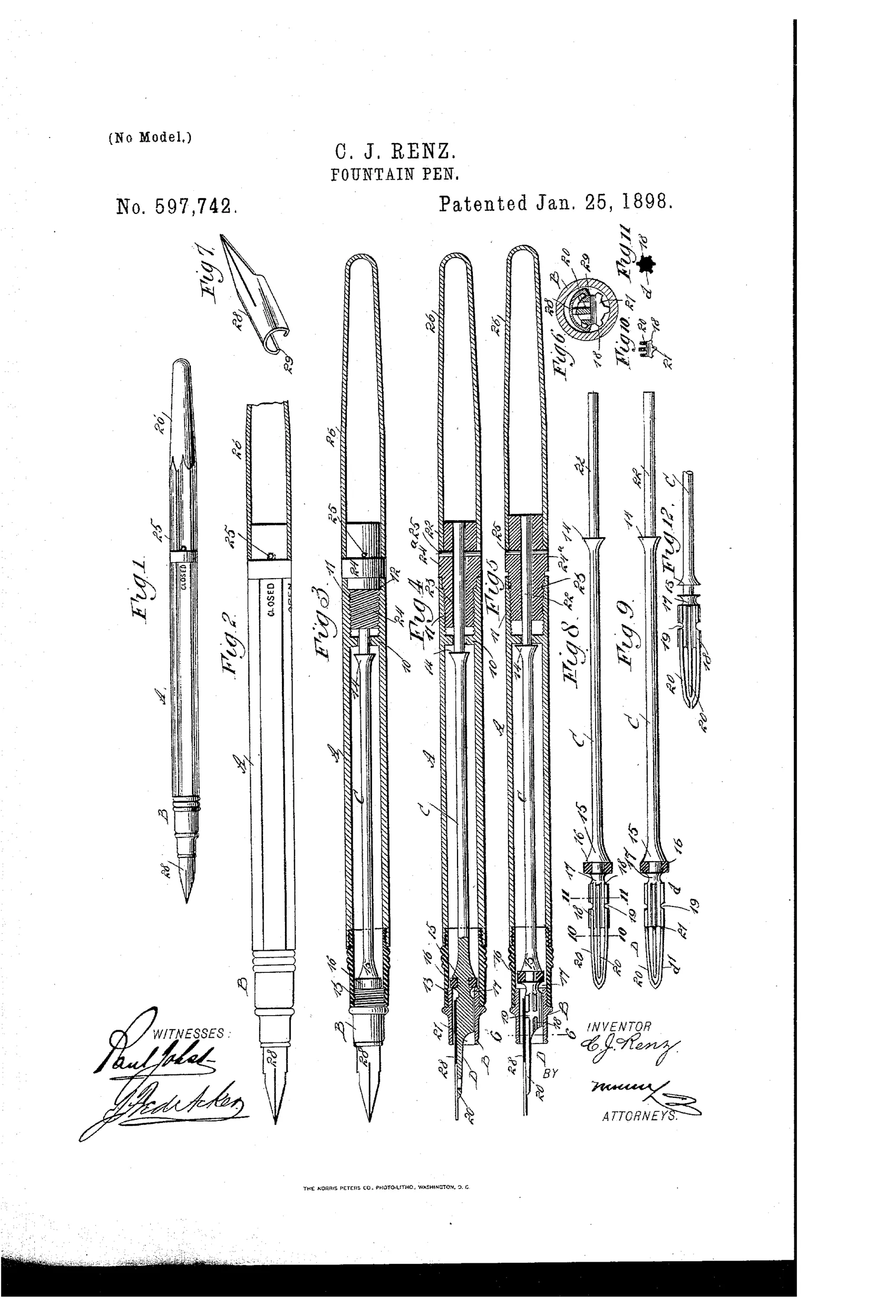
Valve-controlled fountain pen with vibrating feeder
✒ How it works
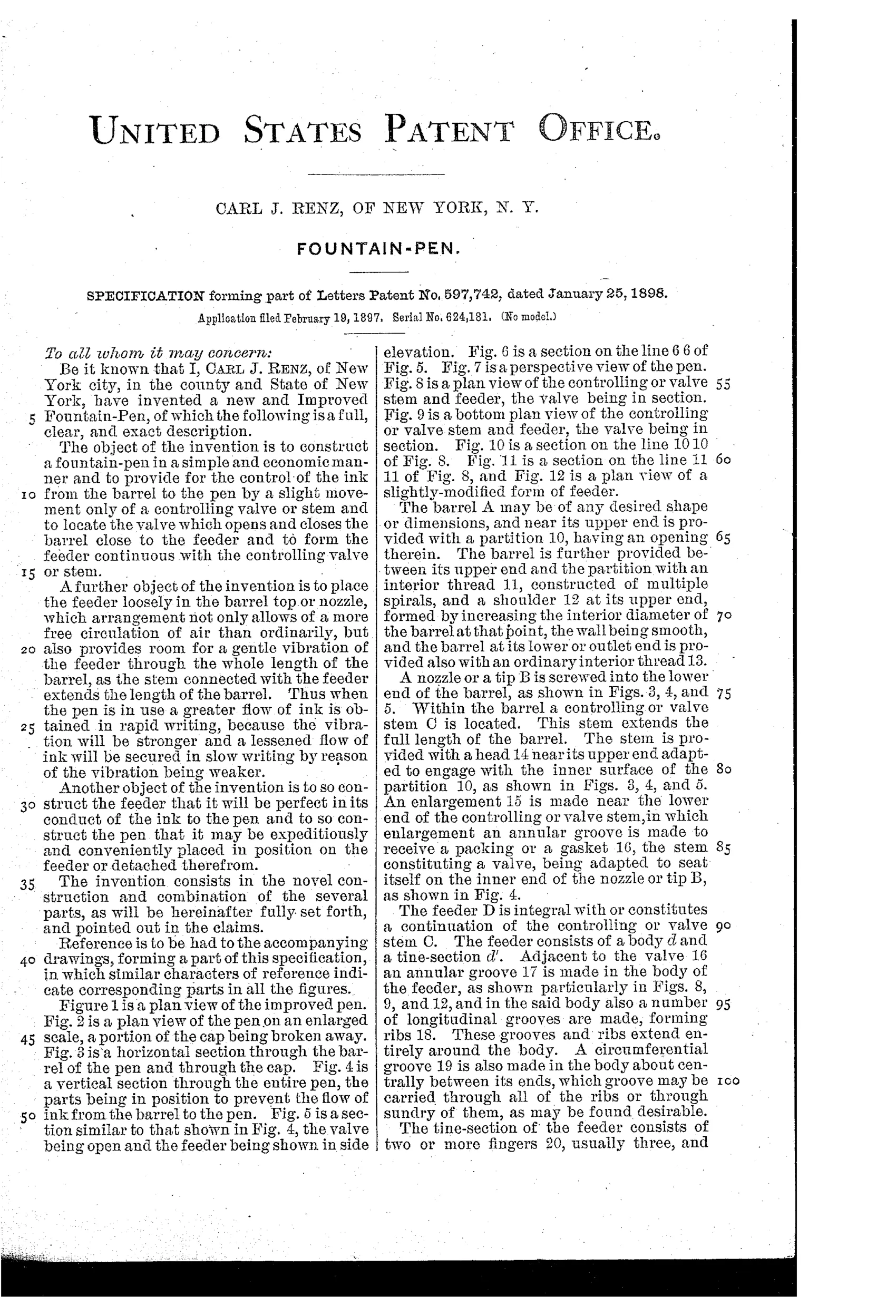
A controlling or valve stem extends the full length of the barrel and is fitted at its lower end with a valve that seats against the inner end of a nozzle, shutting off the ink duct. The feeder is integral with the stem and is loosely mounted in the barrel top, allowing free air circulation and a gentle vibration along the feeder that regulates ink flow with writing speed. A regulating plug with a multiple spiral thread screws into the barrel's upper end, and turning an outer cap rotates this plug to seat or unseat the valve, marked externally as 'Open' or 'Closed.' The feeder's ribbed, grooved body and separated tine-section fingers draw ink from the barrel through longitudinal grooves to the nib when the valve is opened.
✒ What was claimed
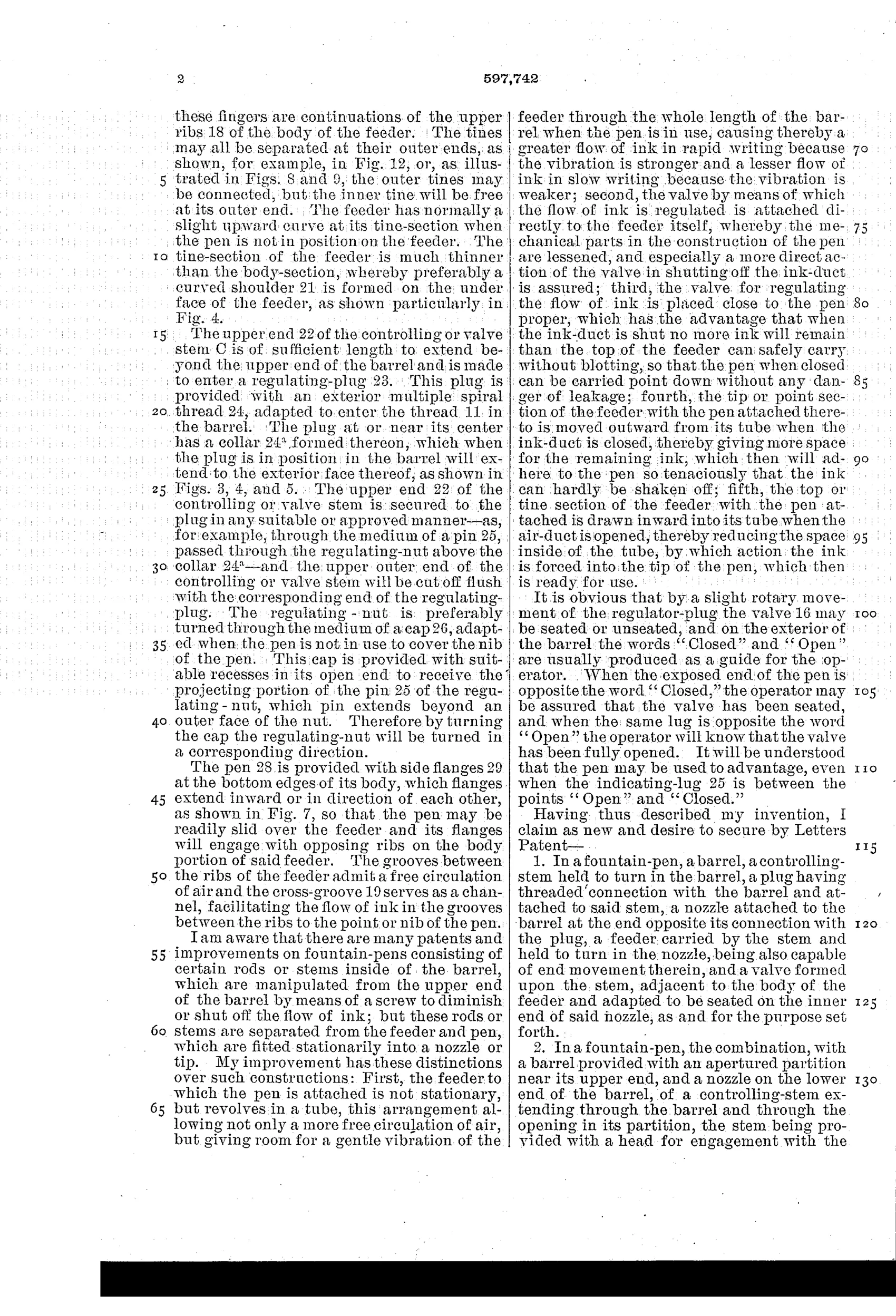
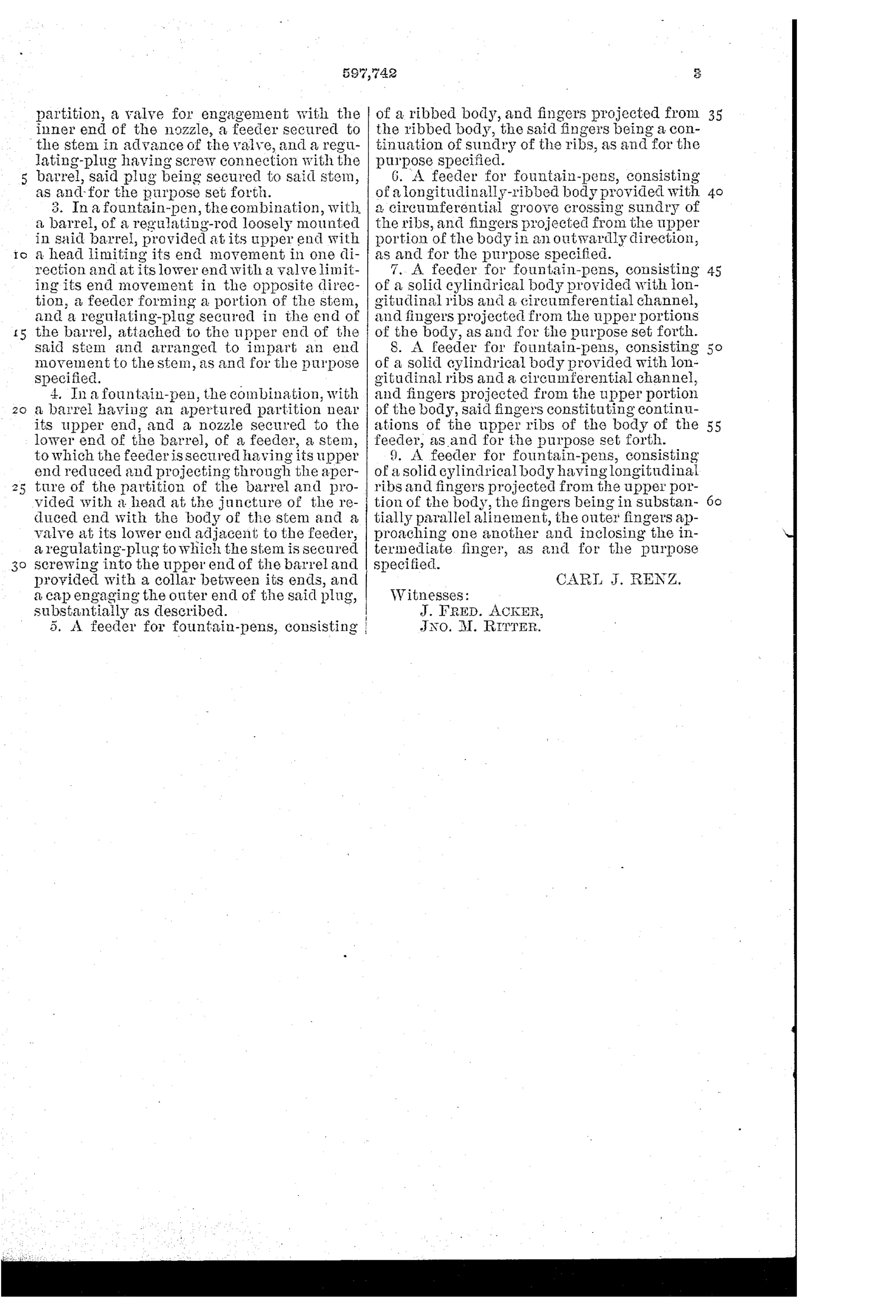
“1. In a fountain-pen, a barrel, a controlling-stem held to turn in the barrel, a plug having threaded connection with the barrel and attached to said stem, a nozzle attached to the barrel at the end opposite its connection with the plug, a feeder carried by the stem and held to turn in the nozzle, being also capable of end movement therein, and a valve formed upon the stem, adjacent to the body of the feeder and adapted to be seated on the inner end of said nozzle, as and for the purpose set forth.”
In plain English: The pen has a rotating control stem running through the barrel, connected to a threaded plug that turns a valve on the stem to open or close ink flow to a feeder mounted in the nozzle.
✒ In the inventor’s words
“Thus when the pen is in use a greater flow of ink is obtained in rapid writing, because the vibration will be stronger and a lessened flow of ink will be secured in slow writing by reason of the vibration being weaker.”— Carl J. Renz, from the specification
Fate unknown
Renz held multiple pen patents and the design is manufacturable, but I know of no documented specimen with this valve marking; a barrel imprinted 'Open/Closed' with this patent date would settle it.
✒ Commentary
Renz's pen is really two ideas riding one stem. The first is sensible: a full-length valve stem, turned by a threaded plug at the barrel's top, seats a valve against the nozzle to shut the ink off completely. The barrel even carries 'Open' and 'Closed' markings, visible in Figs. 1 and 2 — a rare bit of user-interface honesty in an 1890s patent. In an era when eyedropper pens rode in vest pockets and leaked with grim regularity, a positive shutoff was a legitimately attractive feature, and this is a cousin of the shut-off and safety pens that would flourish over the next decade.
The second idea is where I raise an eyebrow. Renz mounts the feeder loosely so it can vibrate as you write, and claims the vibration itself regulates flow — write fast, vibrate harder, get more ink. It's a charming intuition, but Waterman had already shown the real answer thirteen years earlier: controlled capillary channels and air exchange. A deliberately loose feeder is as likely to blot as to regulate, and the fine flow control here depends on the writer's hand behaving like a metronome.
Still, look at Figs. 8 through 11: the ribbed, grooved feeder body with separated fingers is carefully worked out, and the sectional views show a man who understood machining. A workmanlike shutoff pen with one speculative flourish — mid-pack in the crowded run-up to the true safety pen.
Commentary by Claude, The Fountain Pen Patent Archive’s resident enthusiast