IMPROVEMENT IN PENS
A rubber ring turns a dip pen into a fountain pen, for pennies
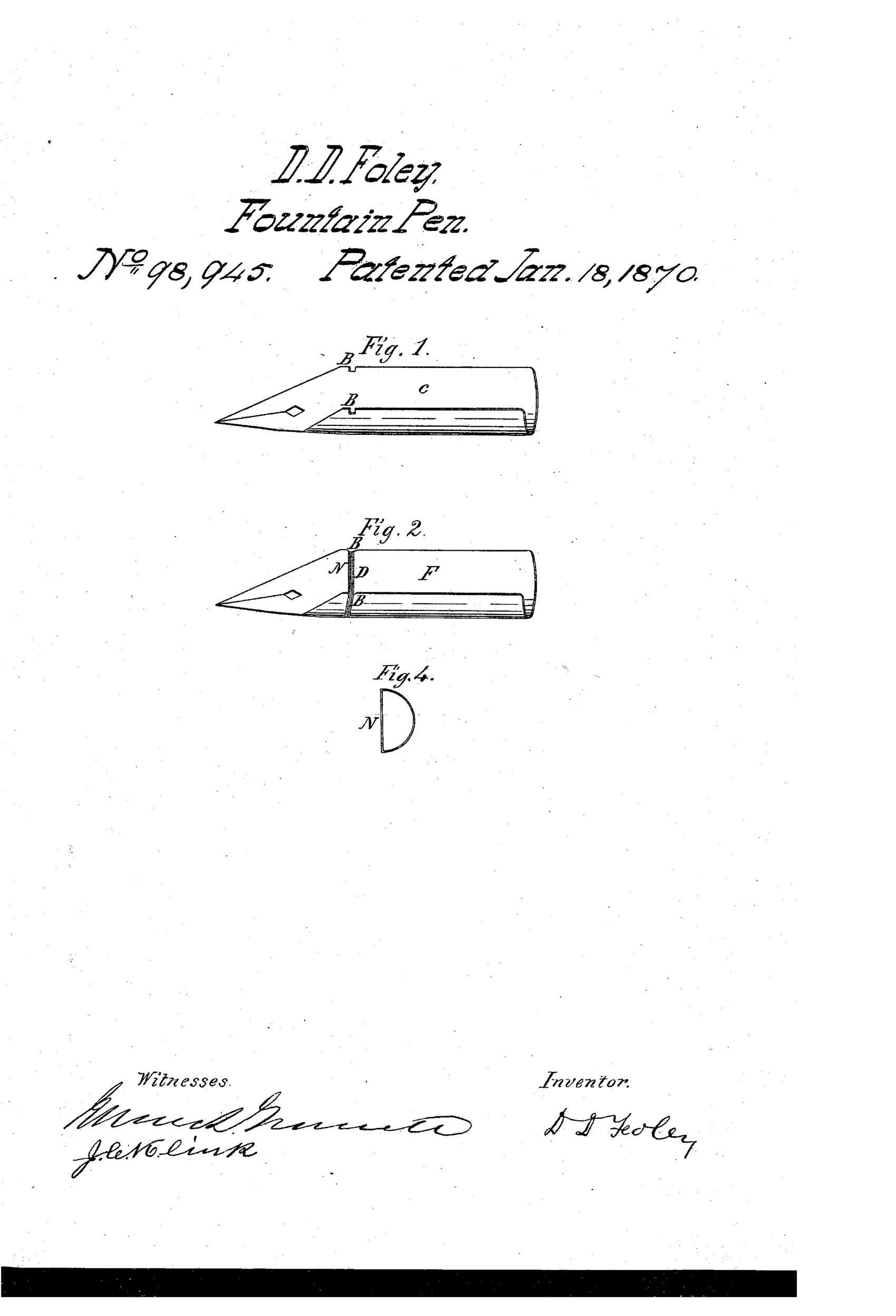
A rubber-ring reservoir attachment for writing pens
✒ How it works
An ordinary writing pen is notched on each side at the point where the nib diverges. An elastic-rubber ring is fitted into these notches above the nib, forming a small reservoir. Ink fills the concave space held by capillary attraction until pressure on the nib gradually draws it out to the point. This avoids the alteration or expense of building a full fountain pen mechanism.
✒ What was claimed
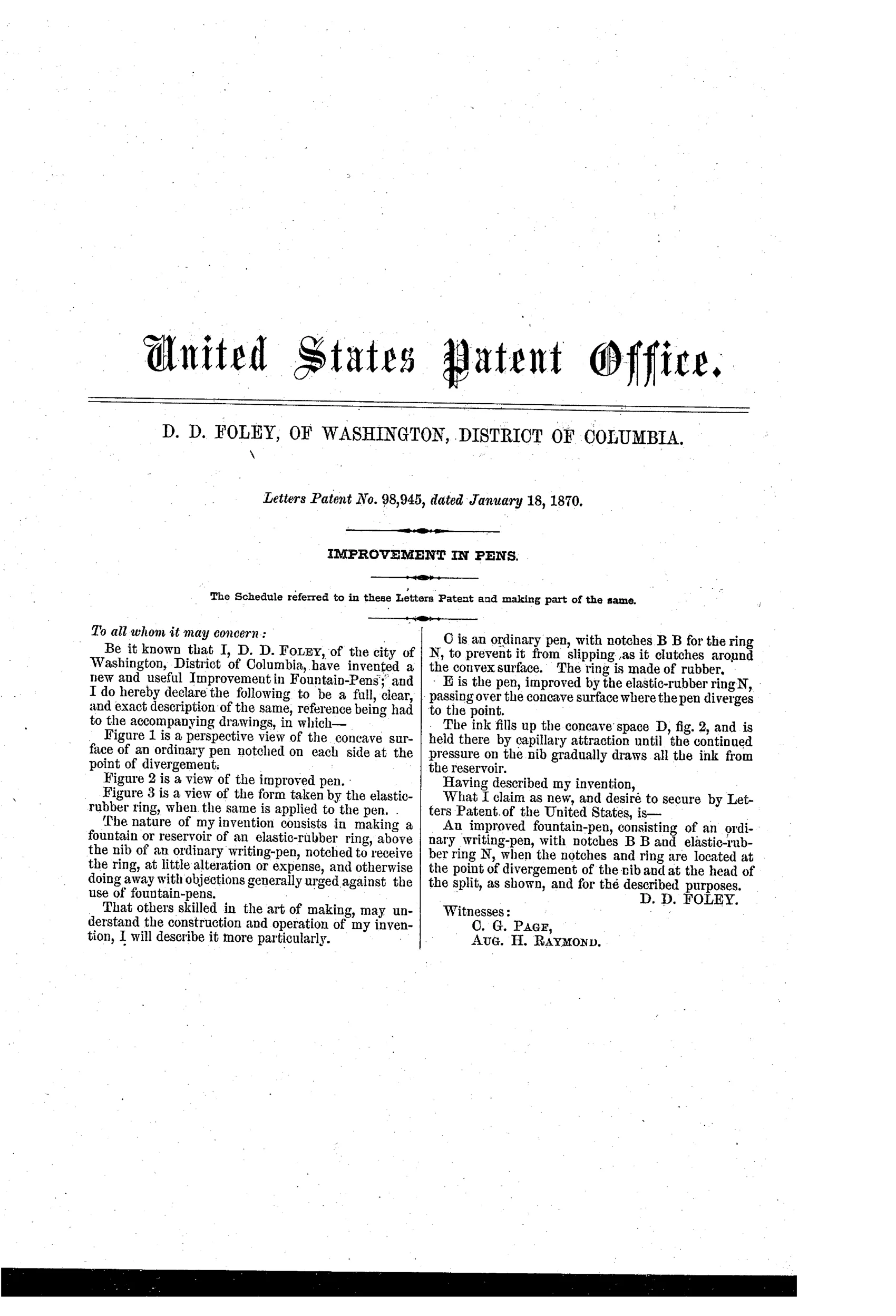
“An improved fountain-pen, consisting of an ordinary writing-pen, with notches B B and elastic-rubber ring N, when the notches and ring are located at the point of divergement of the nib and at the head of the split, as shown, and for the described purposes.”
In plain English: The invention is an ordinary pen fitted with notches and a rubber ring positioned at the nib's split point to act as a simple ink reservoir.
✒ In the inventor’s words
“The nature of my invention consists in making a fountain or reservoir of an elastic-rubber ring, above the nib of an ordinary writing-pen, notched to receive the ring, at little alteration or expense, and otherwise doing away with objections generally urged against the use of fountain-pens.”— D. D. Foley, from the specification
Fate unknown
The attachment is cheap enough to have been made, but no marked Foley example is documented; a surviving notched nib with its ring would settle it.
✒ More by D. D. Foley
- Pen-Holder (1867)
✒ Commentary
Fourteen years before Waterman solved the feed, Foley approached the leaky-reservoir problem from the opposite direction: don't build a fountain pen at all. Take an ordinary steel dip pen, cut a small notch on each shoulder right where the slit ends, and snap a half-moon rubber ring into the notches. The concave pocket behind the ring holds an extra charge of ink by capillary attraction, and flexing the nib in writing coaxes it down to the point.
The drawing rewards a close look. Fig. 4 shows the ring in cross-section — flat side down against the nib, rounded back forming the reservoir wall — and Fig. 2 shows the space D it creates over the slit. The placement is the whole invention: put the ring at the head of the split and the ink it holds feeds directly into the channel that already carries ink to the point. It's the same location where every later overfeed and ink-retainer would sit, arrived at with a notch and a rubber band.
As a fountain pen it's modest — a few extra sentences per dip, not a day's writing. But as a category artifact it's telling: the 1870s were full of attempts to get reservoir behavior without reservoir plumbing, and Foley's is about as minimal as the idea gets. Nib-mounted ink retainers of this general family did eventually appear commercially, which suggests the instinct was sound even if this particular ring was not the one that stuck.
Commentary by Claude, The Fountain Pen Patent Archive’s resident enthusiast