FOUNTAIN PEN-HOLDER.
A wedge key that tunes nib flex and line width, two years after Waterman
Adjustable fountain pen holder with capillary ink control
✒ How it works
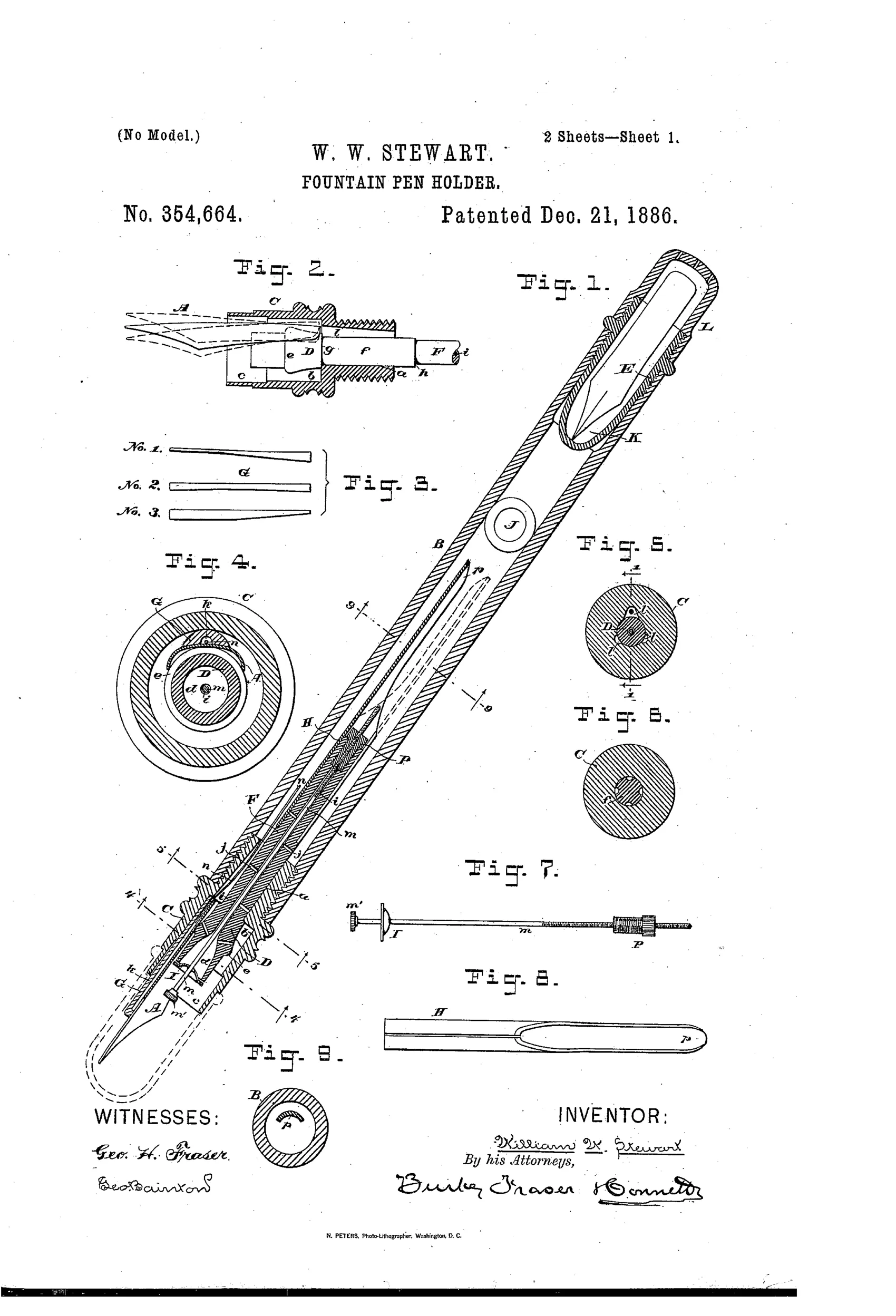
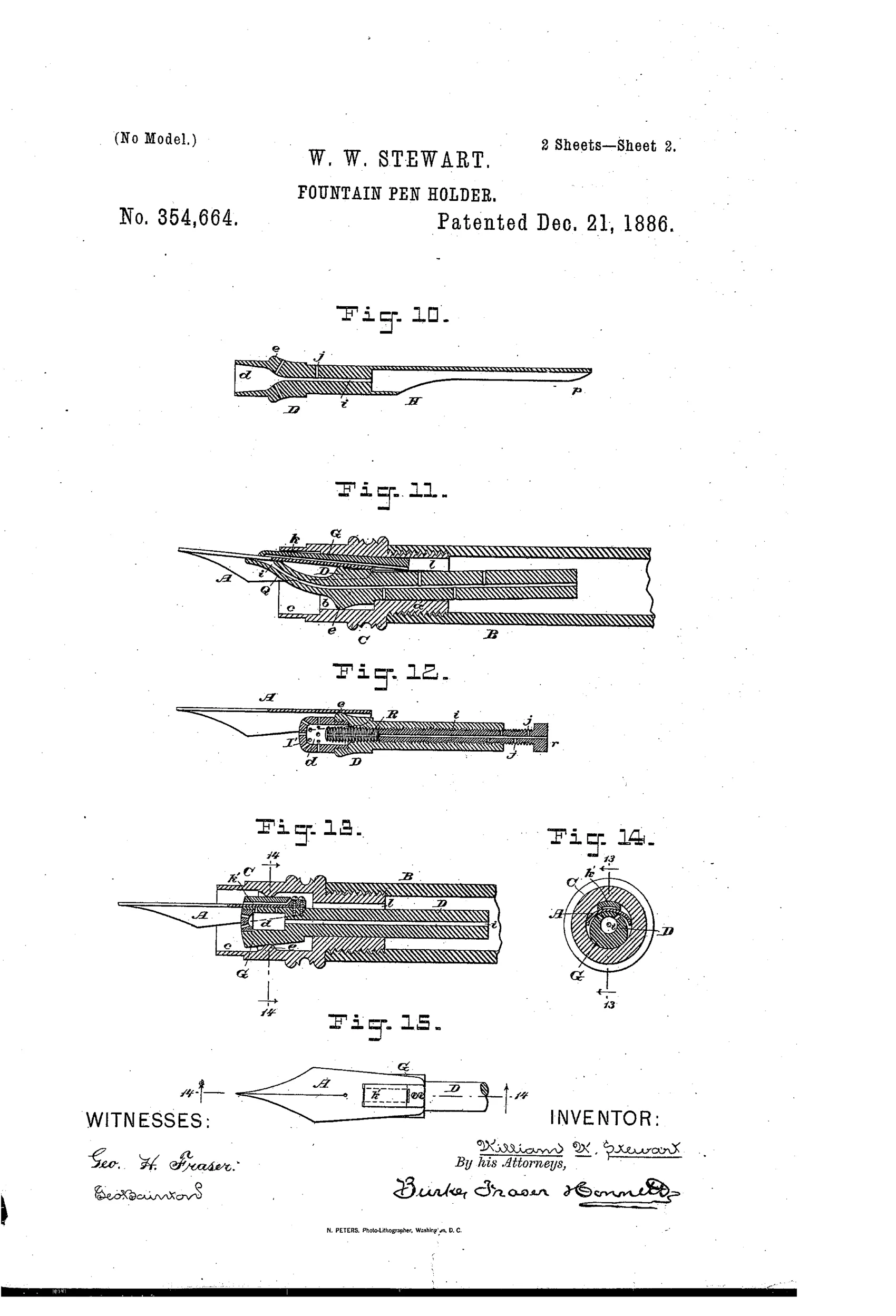
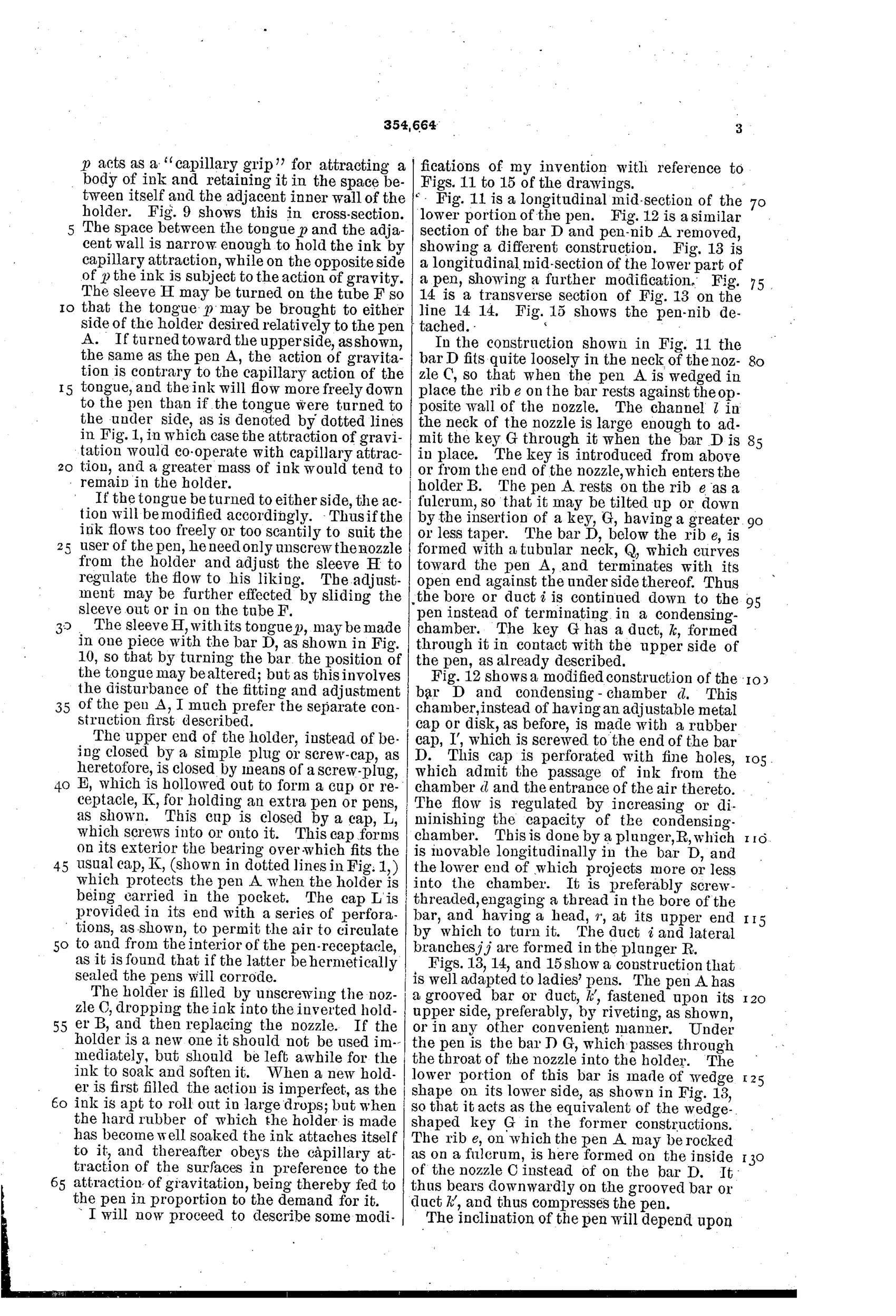
A pen is wedged into a nozzle against a fulcrum flange by a removable key, allowing the nib's spread and angle to be tuned. Dual ink/air ducts run above and below the pen, one through the key's groove and one through a bar with a condensing chamber. A gold wire 'irritant' keeps the duct clear by attracting moisture, while elastic capillary rings and an adjustable tongue-bearing sleeve regulate ink flow and prevent air bubbles from blocking the feed. Screw-adjustable caps and plugs let the writer vary the size of the condensing chamber and outlet to control flow rate.
✒ What was claimed
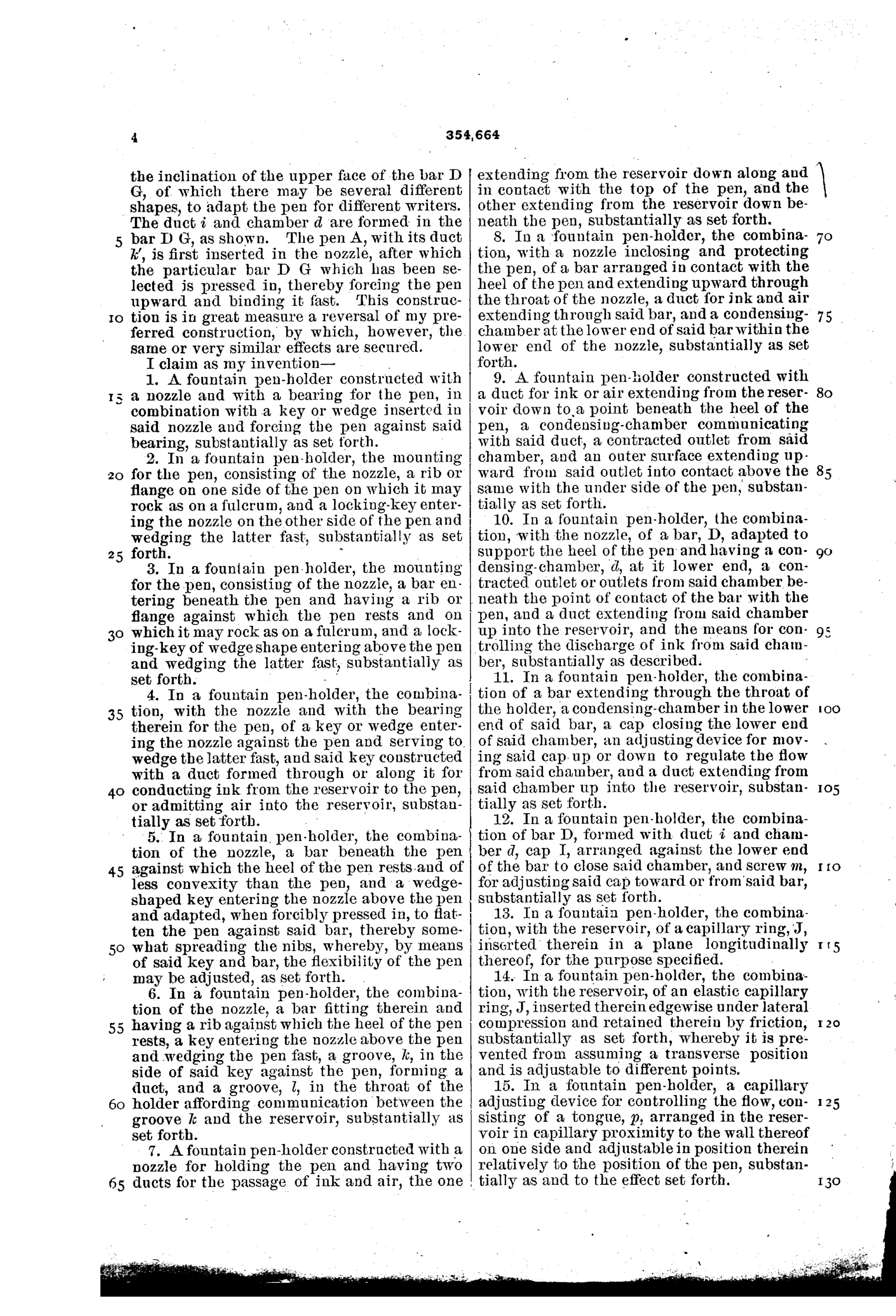
“A fountain pen-holder constructed with a nozzle and with a bearing for the pen, in combination with a key or wedge inserted in said nozzle and forcing the pen against said bearing, substantially as set forth.”
In plain English: The pen holder has a nozzle with a bearing surface, and a wedge-shaped key is inserted into the nozzle to press the pen firmly against that bearing.
✒ In the inventor’s words
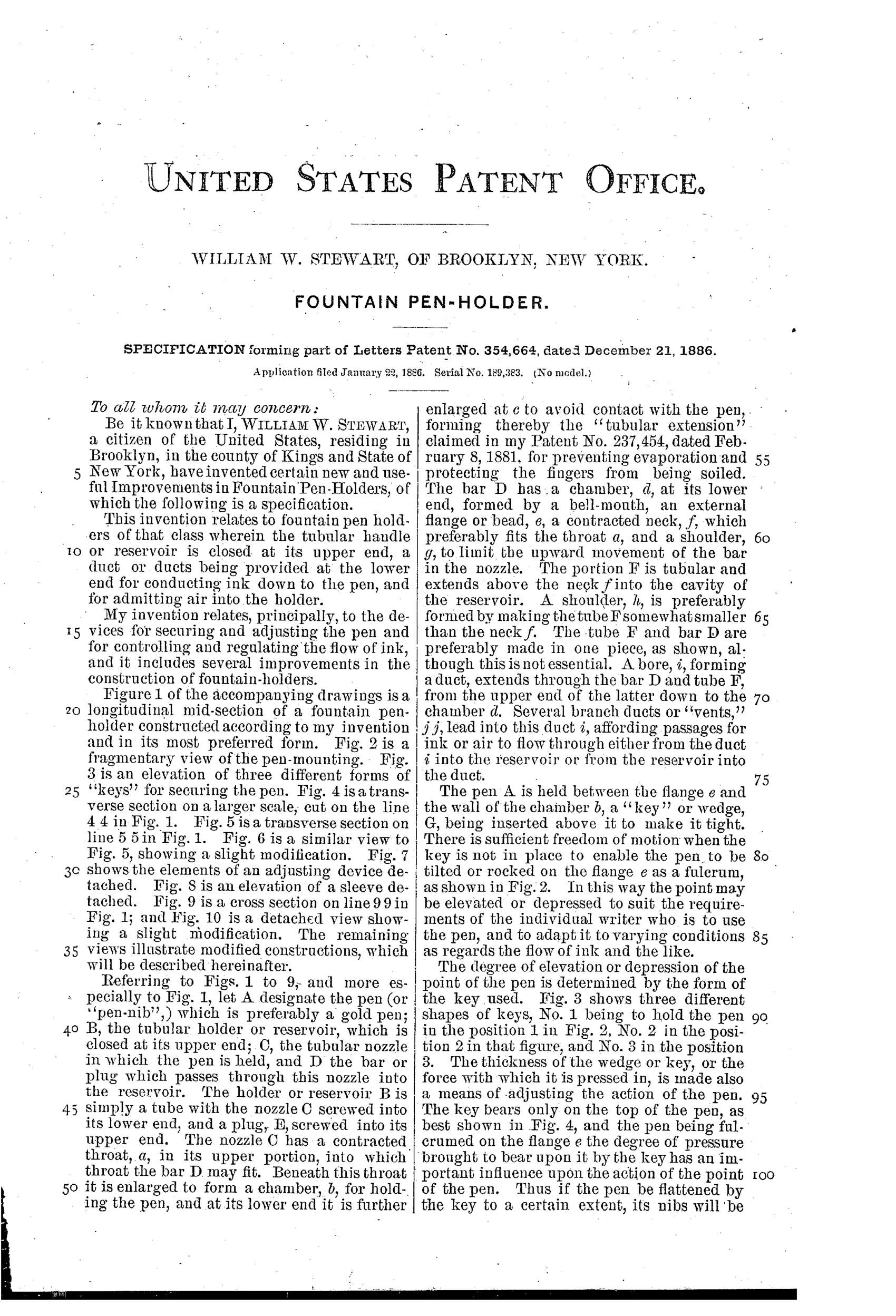
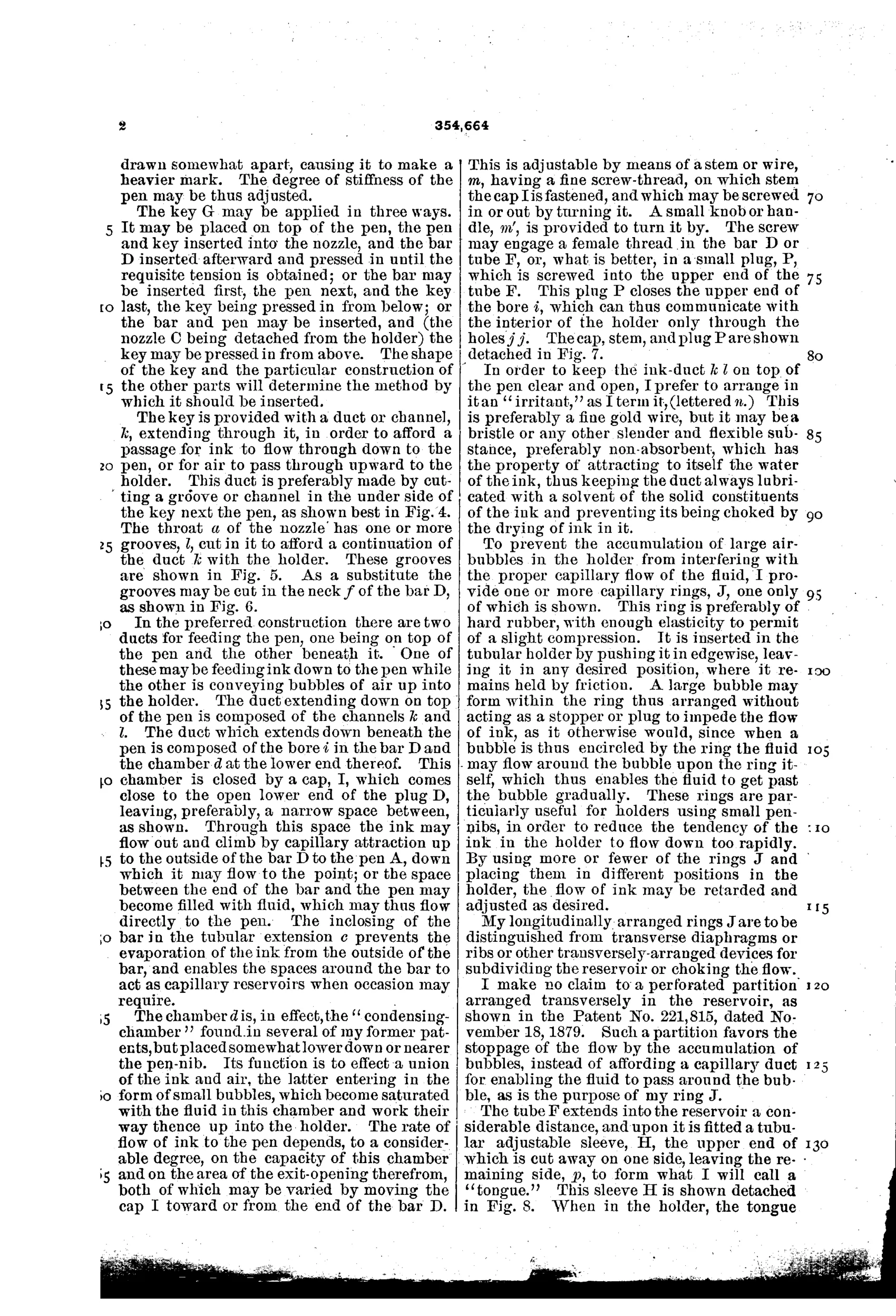
“Thus if the pen be flattened by the key to a certain extent, its nibs will be drawn somewhat apart, causing it to make a heavier mark.”— William W. Stewart, from the specification
Paper patent — likely never produced
The complexity and lack of any known Stewart production pen make manufacture implausible, though a marked specimen would overturn this.
✒ More by William W. Stewart
- FOUNTAIN STYLUS-PEN. (1884)
- FOUNTAIN-PEN. (1897)
- FOUNTAIN-PEN. (1897)
- FOUNTAIN-PEN (1899)
✒ Commentary
Stewart is chasing two problems at once here, and the second one is the interesting part. The first is the standard 1886 obsession: ink flow regulation, handled with a small arsenal of tricks — dual ink and air ducts, a 'condensing chamber' whose volume can be varied by screw, elastic capillary rings, and a gold wire 'irritant' meant to keep the duct wetted and clear. This is the feed-wars toolkit, applied thickly. Some of it is sound capillary thinking; some of it, like the moisture-attracting wire, is period faith more than physics.
The second problem is one almost nobody else was patenting: adjustable nib behavior. The wedge key that clamps the pen against its bearing doubles as a tuning device — flatten the nib more and the tines spread, giving a broader, wetter line. Fig. 3 shows three key profiles, essentially interchangeable 'settings.' His own line says it plainly: flatten the pen 'to a certain extent, its nibs will be drawn somewhat apart, causing it to make a heavier mark.' That is a genuinely clever reuse of a mounting part.
The trouble is the parts count. Fifteen figures, screw caps, plugs, sleeves, and a removable key the writer must not lose — all in an era when Waterman's fissure feed was winning precisely by having no moving parts. A dead end, but a thoughtful one.
Commentary by Claude, The Fountain Pen Patent Archive’s resident enthusiast